
Craniosacral Fascial Therapy and Airway Health: The Missing Piece Healthcare Professionals Should Understand
Jun 28, 2026
Airway health begins with the whole body, not just the nose, mouth, or tongue.
Airway health is rarely a single-system issue. Breathing disorders, sleep-disordered breathing, tongue dysfunction, oral restrictions, craniofacial growth concerns, feeding challenges, and myofunctional disorders often involve multiple layers of function across the body.
For healthcare professionals working in dentistry, orthodontics, myofunctional therapy, speech-language pathology, lactation, sleep medicine, bodywork, pediatrics, or airway-focused care, this creates an important clinical question:
Are we looking only at the airway, or are we looking at the body systems that influence the airway?
In a recent Airway Circle Thursday Night Live presentation, Dr. Barry Gillespie, founder of the Gillespie Approach, discussed Craniosacral Fascial Therapy and why he believes it may be an important missing piece in the airway health conversation.
Dr. Gillespie began his career in 1975 as a conventional periodontist. After experiencing chronic headaches that did not resolve with medication, he began exploring craniosacral and myofascial approaches. His clinical journey eventually led him to develop Craniosacral Fascial Therapy, also known as CFT, with a special focus on infants, children, and the long-term effects of soft-tissue trauma from birth.
His central message was clear: airway health cannot be separated from the fascial system, craniosacral motion, oral function, and birth history.
What Is Craniosacral Fascial Therapy?

Craniosacral Fascial Therapy uses gentle touch to support the body’s fascial and craniosacral systems.
Craniosacral Fascial Therapy is a gentle manual therapy developed by Dr. Barry Gillespie. It focuses on releasing restrictions within the fascial web while also considering the craniosacral system, which includes the brain, spinal cord, cranial structures, sacrum, and cerebrospinal fluid dynamics.
Fascia is connective tissue that surrounds, supports, and connects structures throughout the body. It is not limited to one muscle, one joint, or one region. Instead, fascia forms a continuous web that can transmit tension from one area of the body to another.
From an airway perspective, this matters because tension patterns in the body may influence the tongue, jaw, palate, throat, neck, diaphragm, and cranial structures. When these systems are restricted, a patient may struggle with nasal breathing, oral rest posture, swallowing, feeding, sleep quality, tongue mobility, or overall airway function.
Why Airway Professionals Should Pay Attention to Fascia
Airway-focused providers often evaluate tongue posture, lip seal, nasal breathing, palatal development, oral restrictions, sleep symptoms, malocclusion, and myofunctional patterns. These are essential components of care.
However, Dr. Gillespie emphasized that fascial restrictions may be an underlying contributor to some of the dysfunctions providers see every day.
For example, tension in the diaphragm, pelvis, neck, shoulders, or cranial system may create strain patterns that affect the upper airway. This may contribute to compensations in the jaw, tongue, throat, and head. In other words, the patient’s airway symptoms may not be isolated to the airway itself.
This is especially relevant for patients who do not respond as expected to myofunctional therapy, orthodontic treatment, tongue-tie release, speech therapy, or other airway interventions.
When a patient’s symptoms persist despite appropriate care, the fascial system may need to be considered as part of the interdisciplinary evaluation.
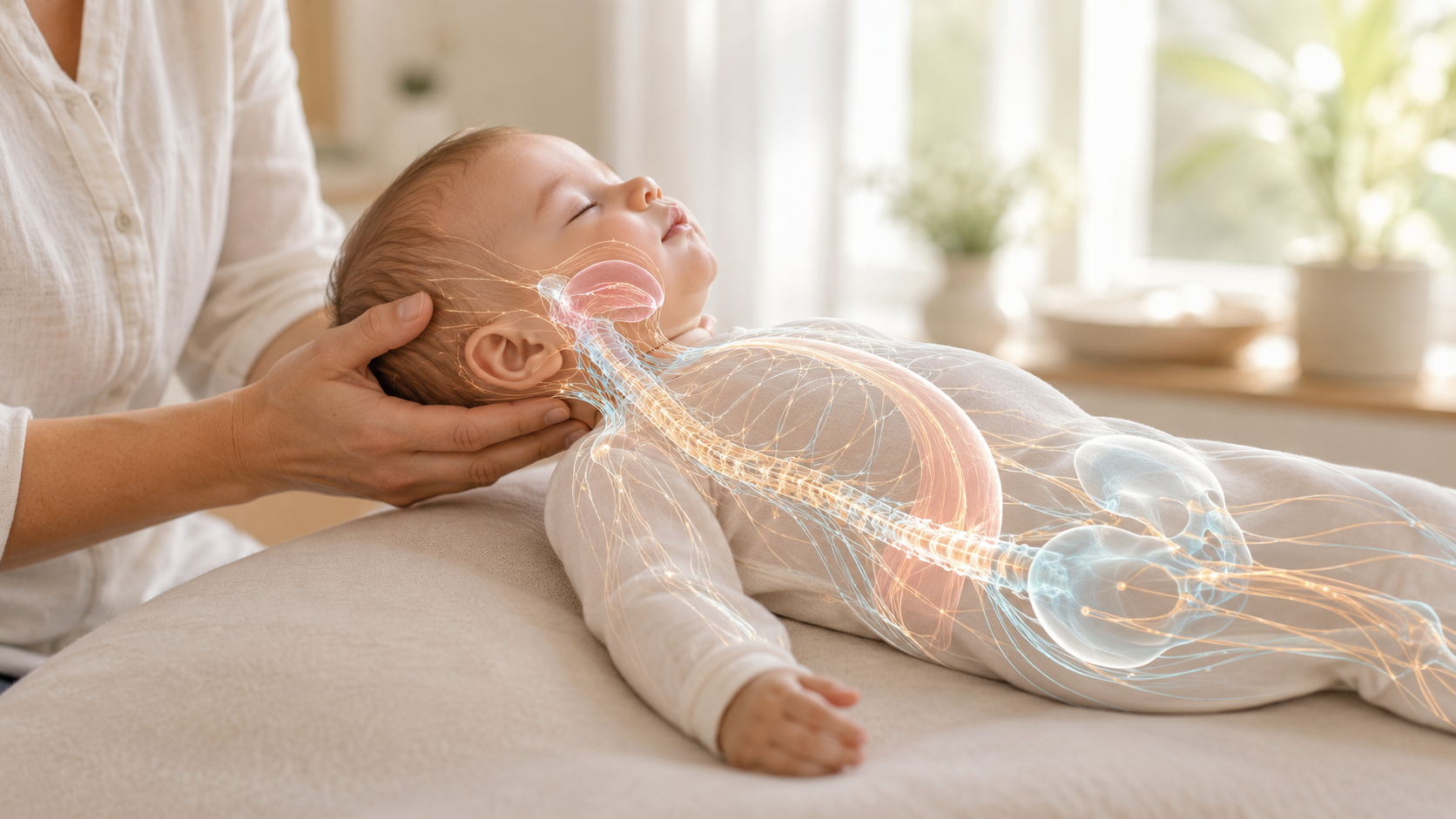
Fascial restrictions may influence oral function, airway patterns, posture, and nervous system regulation.
Key Takeaways for Healthcare Professionals
1. The Fascial Web May Influence Airway Function
The fascial system connects the entire body. Restrictions in one area may affect function elsewhere, including the oral cavity, cranial structures, cervical region, diaphragm, and airway.
For airway professionals, this reinforces the importance of a whole-body lens. The tongue, jaw, lips, palate, airway, posture, and breathing mechanics are deeply connected.
2. Brain Motion and Craniosacral Function Matter
Dr. Gillespie discussed the importance of what he refers to as brain motion, describing the brain’s subtle expansion and contraction as part of healthy neurophysiology. In his clinical perspective, tightness in the fascial system may create strain patterns that affect the cranial bones, head, neck, and nervous system.
This may be relevant in patients presenting with headaches, concentration challenges, cranial tension, TMJ symptoms, sleep concerns, or persistent airway dysfunction.
3. Birth History Can Provide Critical Clinical Clues
Birth history is often underexplored in airway evaluations. Dr. Gillespie emphasized that soft-tissue trauma during pregnancy, labor, or delivery may contribute to fascial strain patterns that continue into infancy, childhood, and adulthood.
Important birth history questions may include:
- Was labor long, fast, or difficult?
- Was there cord entanglement?
- Was the baby in an unusual position?
- Were forceps, vacuum, C-section, or other interventions involved?
- Did the infant have difficulty breastfeeding, latching, sucking, or swallowing?
- Were reflux, colic, torticollis, plagiocephaly, or body tension present?
These details may help providers better understand why a patient presents with oral dysfunction, breathing challenges, sleep-disordered breathing, or myofunctional concerns.
4. Infant Feeding Challenges May Be Connected to Whole-Body Tension
In infants, airway and oral function are closely connected to feeding. Poor latch, difficulty sucking, swallowing challenges, reflux, colic, and body tension may not be purely oral issues.
Dr. Gillespie’s perspective invites providers to consider whether fascial restrictions are contributing to feeding dysfunction. This is especially important when evaluating infants for tongue tie, lip tie, or other oral restrictions.
A collaborative approach that includes lactation support, oral function assessment, bodywork, and airway-aware providers may help families receive more complete care.
5. Oral Ties Are Part of the Fascial System
Tongue tie and oral restrictions are important clinical considerations in airway health, feeding, speech, sleep, and myofunctional therapy. However, Dr. Gillespie emphasized that oral ties should not be viewed in isolation.
Because the tongue and oral tissues are part of the fascial web, tension may exist beyond the visible restriction. In some cases, addressing fascial strain before and after a release may help support better function and outcomes.
This does not mean every oral restriction can be resolved without surgical intervention. Rather, it highlights the importance of evaluating the whole system before deciding on treatment.
For healthcare professionals, this supports a more comprehensive approach to tongue-tie care, including functional assessment, appropriate referrals, pre- and post-release therapy, and whole-body support.
Conditions That May Benefit From a Craniosacral Fascial Perspective
According to Dr. Gillespie’s clinical experience, Craniosacral Fascial Therapy may be relevant for patients with a wide range of concerns.
In infants, these may include:
- Breastfeeding difficulties
- Poor latch
- Difficulty sucking or swallowing
- Reflux
- Colic
- Torticollis
- Plagiocephaly
- Breathing issues
- Body tension
- Sleep challenges
In children and adults, these may include:
- Mouth breathing
- Sleep-disordered breathing
- Myofunctional disorders
- Tongue dysfunction
- TMJ disorders
- Headaches
- Speech challenges
- Sinus and ear issues
- Asthma or breathing difficulties
- Orthodontic relapse concerns
- Persistent tension patterns
For airway professionals, this does not mean CFT replaces dentistry, orthodontics, myofunctional therapy, speech therapy, ENT care, lactation support, or sleep medicine. Instead, it may serve as a complementary piece within a broader interdisciplinary model.
Craniosacral Fascial Therapy and Myofunctional Therapy
Myofunctional therapy focuses on the function of the tongue, lips, jaw, cheeks, nasal breathing, swallowing, chewing, and oral rest posture. It plays an important role in airway health, sleep apnea support, orthodontic stability, tongue-tie recovery, and overall oral function.
However, some patients may have fascial restrictions that make myofunctional progress more difficult.
For example, a patient may struggle to achieve proper tongue suction, nasal breathing, lip seal, or relaxed oral rest posture because of deeper tension patterns in the body. In these cases, collaboration with a trained bodyworker or Craniosacral Fascial Therapy provider may support better outcomes.
This is where airway care becomes truly interdisciplinary.
The goal is not simply to give exercises. The goal is to identify why the patient cannot access normal function and then build a treatment plan that supports the body as a whole.
Orthodontics, Craniofacial Growth, and Airway Health
Dr. Gillespie also discussed the potential relationship between orthodontics, craniosacral motion, and fascial strain. From an airway-centered perspective, this is an important reminder that orthodontic treatment should consider more than tooth alignment.
Airway-focused orthodontics often evaluates craniofacial growth, palatal development, nasal breathing, tongue posture, oral habits, sleep-disordered breathing, and long-term functional stability.
When orthodontics, myofunctional therapy, airway assessment, and bodywork are integrated thoughtfully, patients may receive more comprehensive support.
This is especially important for children with narrow palates, mouth breathing, sleep issues, tongue dysfunction, oral restrictions, or early signs of craniofacial underdevelopment.
Why This Matters in Airway Health
Airway health is not just about anatomy. It is about function.
A patient may have a narrow airway, but they may also have poor tongue posture, low muscle tone, chronic mouth breathing, restricted nasal airflow, fascial tension, poor sleep quality, unresolved oral restrictions, and compensatory posture patterns.
Healthcare professionals who work in airway health must be willing to look beyond one diagnosis or one procedure.
Sleep apnea, breathing disorders, tongue tie, TMJ dysfunction, orthodontic relapse, pediatric mouth breathing, and myofunctional disorders often require collaboration.
Craniosacral Fascial Therapy offers one more lens for understanding why the body may be struggling to adapt, breathe, feed, sleep, and function well.
Clinical Questions to Consider
For providers evaluating airway health, consider asking:
- Has this patient had difficulty with breastfeeding, latch, reflux, or colic?
- Is there a history of torticollis, plagiocephaly, or body tension?
- Was there a difficult birth, long labor, C-section, vacuum, forceps, or cord involvement?
- Does the patient have persistent mouth breathing, snoring, or restless sleep?
- Is myofunctional therapy progressing as expected?
- Is tongue mobility limited by an oral restriction, fascial tension, or both?
- Are symptoms recurring despite orthodontic, dental, ENT, or myofunctional intervention?
- Would this patient benefit from interdisciplinary care?
These questions can help providers move from symptom management toward root-cause evaluation.

Airway care works best when providers collaborate across structure, function, breathing, sleep, and whole-body health.
The Airway Circle Perspective
At Airway Circle, we believe airway health is best understood through collaboration. No single provider can address every piece of the airway puzzle alone.
Dentists, orthodontists, myofunctional therapists, ENTs, sleep physicians, pediatricians, lactation consultants, speech-language pathologists, physical therapists, osteopaths, chiropractors, and bodyworkers all bring important perspectives to the table.
Dr. Barry Gillespie’s presentation reminds us that the fascial system may be an important part of the conversation, especially for patients with complex airway, feeding, sleep, and oral function concerns.
When healthcare professionals understand how the airway connects to the rest of the body, they are better equipped to identify red flags, make appropriate referrals, and support better long-term outcomes.
Final Thoughts
Craniosacral Fascial Therapy may be an important consideration in airway health, especially for patients with feeding challenges, tongue dysfunction, sleep-disordered breathing, myofunctional disorders, TMJ symptoms, headaches, oral restrictions, or persistent body tension.
For healthcare professionals, the takeaway is not that CFT replaces existing airway therapies. The takeaway is that fascia, birth history, craniosacral function, and whole-body tension patterns may influence the airway more than we once realized.
The future of airway health is interdisciplinary. The more we understand the relationship between structure, function, fascia, breathing, and sleep, the more effective we can become in helping patients thrive.
Need Guidance With an Airway Case?
Finding the right support for airway health, breathing, sleep, tongue function, or oral restrictions does not have to feel overwhelming. With the right guidance, you can better understand your symptoms and explore the next best steps.
Whether your care involves myofunctional therapy, an airway-focused evaluation, tongue-tie assessment, sleep support, or referrals to the right provider, the goal is to improve function and quality of life.
Your journey to better breathing, better sleep, and better oral function starts here.