
Fight-or-Flight Response Hijacking Your Health? How Breathing and Balance Compete
Aug 23, 2026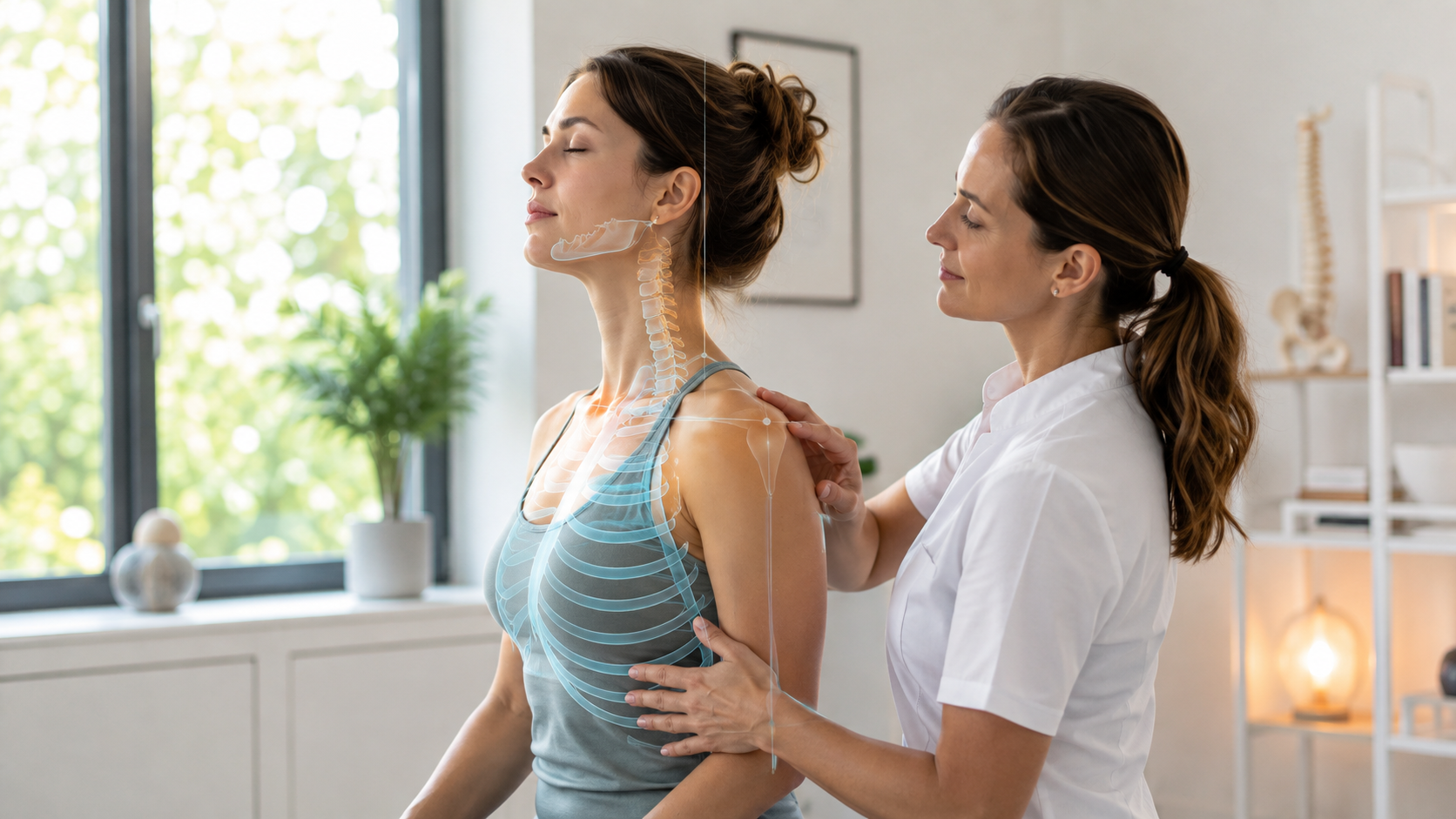
Airway health is not only about the nose, tongue, or airway space. It is also about how the nervous system, posture, breathing, and balance work together.
When the body feels unsafe, unstable, unsupported, or unable to breathe efficiently, it may shift into a protective state. Muscles tighten. Breathing becomes more effortful. Posture changes. The jaw may clench. The neck may compensate. The body may begin to prioritize survival over ease, mobility, and regulation.
In an Airway Circle Thursday Night Live presentation, physical therapist Craig Stasio shared an important perspective on the relationship between breathing, balance, posture, the fight-or-flight response, and whole-body health.
His message was clear: breathing and balance are deeply connected, and when the body cannot find center, the nervous system may remain in a state of protection.
For dentists, myofunctional therapists, orthodontists, physical therapists, chiropractors, bodyworkers, speech-language pathologists, ENTs, sleep professionals, and airway-focused providers, this conversation opens an important clinical question:
Is the patient’s airway problem also a postural and nervous system problem?
Why Fight-or-Flight Matters in Airway Health
The fight-or-flight response is part of the sympathetic nervous system. It is designed to protect the body when danger is perceived.
But danger is not always emotional. It can also be physical or sensory.
The body may perceive threat when it cannot breathe well, balance well, move well, or orient itself safely in space. If the brain does not feel confident about where the body is in relationship to gravity, the ground, vision, bite, or breath, it may increase tension to protect itself.
This can show up as:
- Neck tension
- Jaw clenching
- Bruxism
- Shallow breathing
- Upper chest breathing
- Forward head posture
- Shoulder asymmetry
- Pelvic floor tension
- Tongue tension
- Poor sleep
- Anxiety
- Chronic pain
- Difficulty relaxing
- Poor postural control
- Compensatory movement patterns
In other words, the body may not simply be “tight.” It may be protecting itself.
Breathing and Balance Are Always Competing
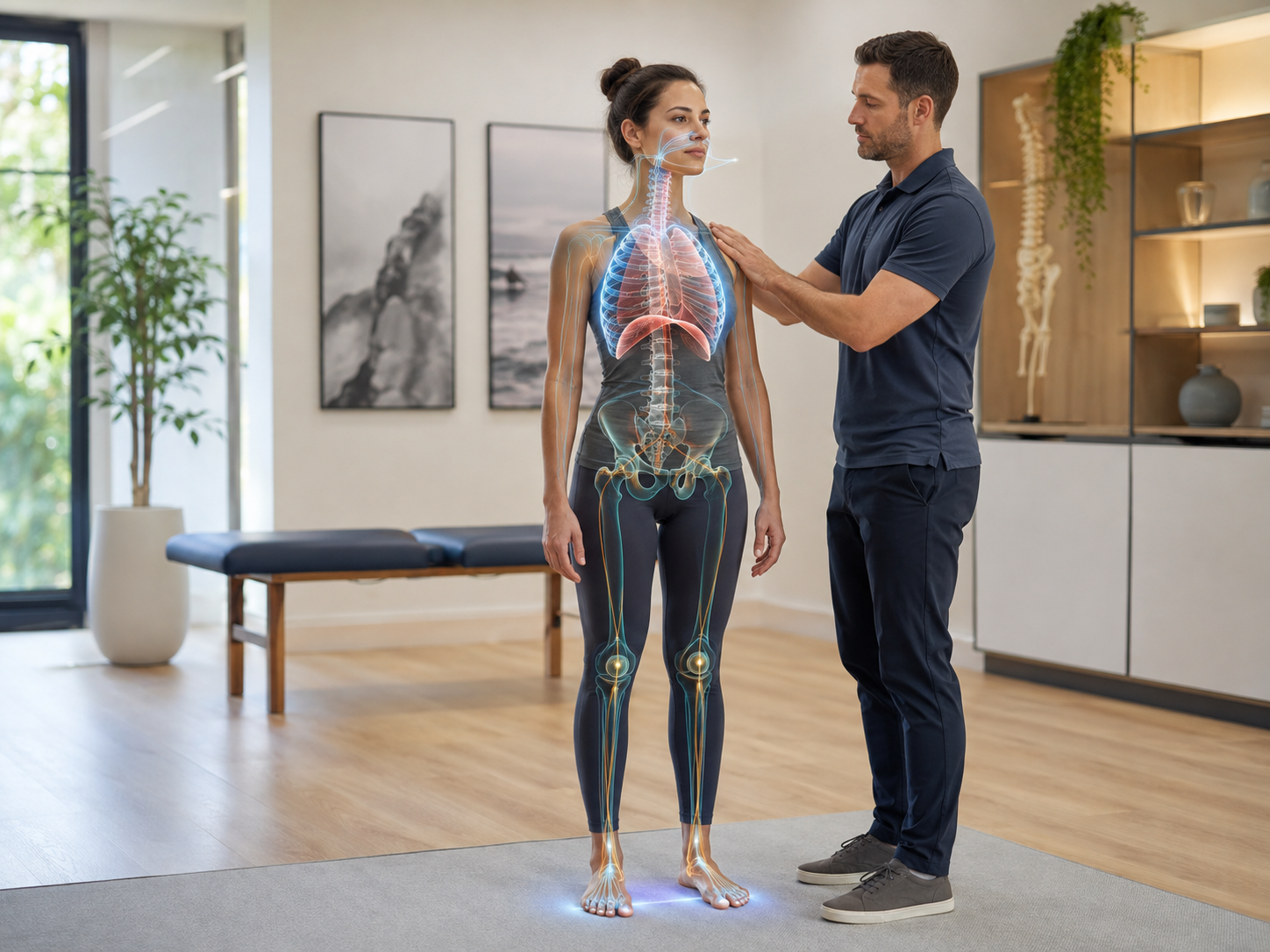
Breathing and balance are survival functions. When one system struggles, the body may compensate through posture, tension, and altered breathing mechanics.
Craig explained that breathing and balance are two essential survival functions. The body must breathe, and the body must stay upright and oriented in gravity.
If breathing is difficult, posture may compensate.
If balance is unstable, breathing may compensate.
This is why a person’s breathing pattern cannot be fully understood without looking at their posture, feet, pelvis, rib cage, neck, jaw, and sensory systems.
The body is always trying to answer these questions:
- Can I breathe?
- Can I stay upright?
- Can I orient my head and eyes to the horizon?
- Can I feel the ground?
- Can I keep my airway centered?
- Can I move without threat?
If the answer is no, the nervous system may shift toward fight-or-flight.
Posture Is Not Simply “Good” or “Bad”
One of the important clinical takeaways from Craig’s presentation is that posture should not be reduced to good posture or bad posture.
Posture is a reflection of how the body organizes itself for breathing, balance, movement, vision, and safety.
A patient may stand with one shoulder lower, one rib cage more expanded, the head tilted, the jaw shifted, or the pelvis rotated. These findings may not be random. They may reflect the body’s current strategy for managing gravity, airflow, pressure, and sensory input.
Instead of asking, “How do we force this patient to stand straighter?” we should ask:
- Why is the body choosing this position?
- What is it trying to protect?
- Where does it feel unstable?
- Where is airflow limited?
- Where is pressure not being managed well?
This changes the clinical lens from correction to understanding.
Patterned Human Asymmetry
Human beings are not perfectly symmetrical. We have asymmetrical organs, asymmetrical breathing mechanics, asymmetrical neurologic patterns, and asymmetrical movement strategies.
Craig discussed patterned human asymmetry and how different systems in the body may influence the way a person stands, breathes, walks, chews, and holds the jaw.
These systems may include:
- Feet
- Pelvis
- Respiratory diaphragm
- Pelvic diaphragm
- Rib cage
- Sternum
- Neck
- Tongue
- Palate
- Mandible
- Cranium
- Eyes
- Vestibular system
- Airway
When one area becomes restricted or overused, another area may compensate. For example, a person who cannot expand one side of the rib cage well may use the neck, jaw, or accessory breathing muscles to help bring in air.
This may contribute to tension patterns that show up in the mouth and face.
The Body as a Stack of Spheres
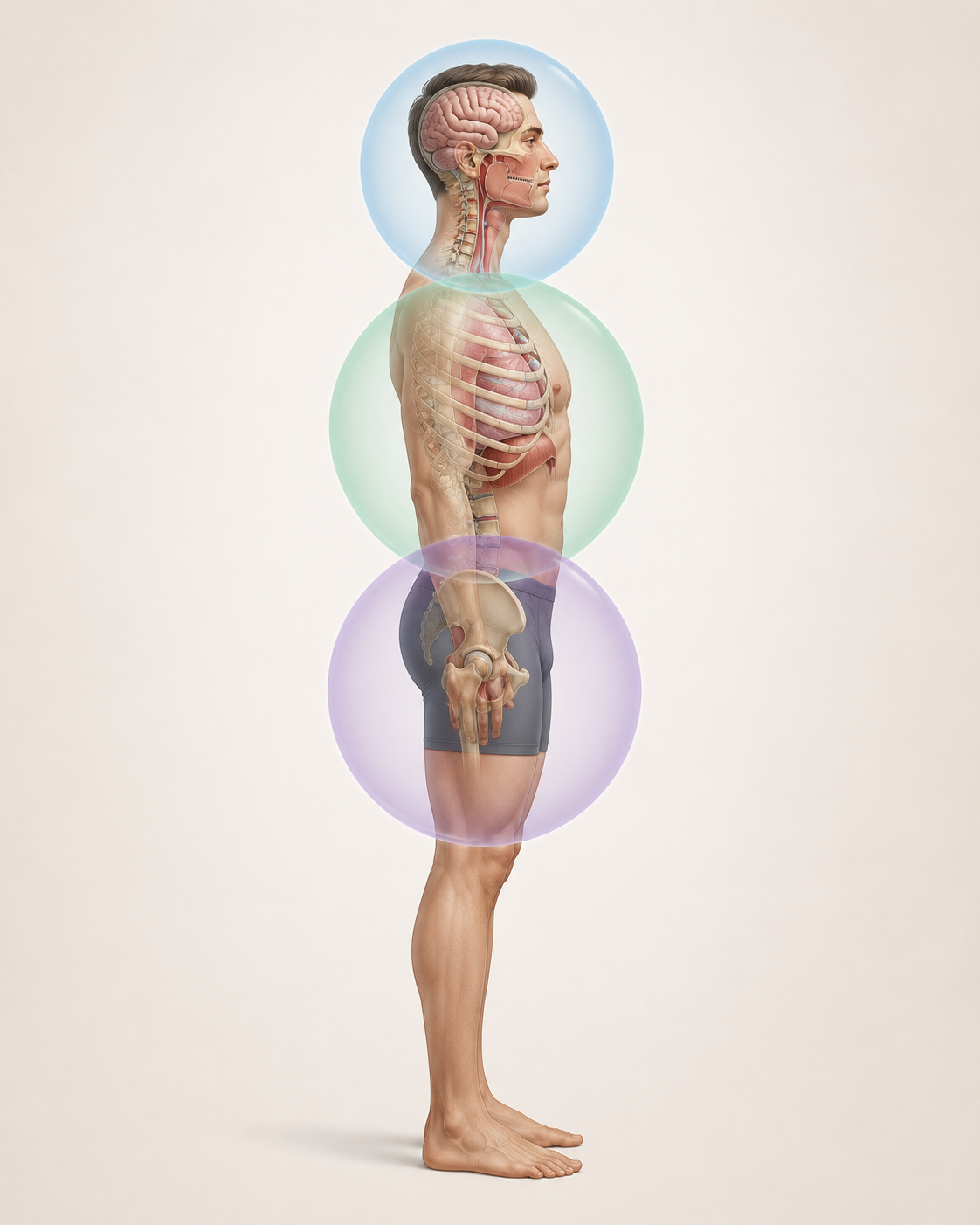
The pelvis, rib cage, and head must organize around gravity so the body can breathe, balance, move, and feel safe.
Craig used a helpful visual model of the body as a stack of spheres, similar to a snowman.
The bottom sphere represents the pelvis and lower body.
The middle sphere represents the rib cage and respiratory system.
The top sphere represents the skull, jaw, airway, eyes, and brain.
For the body to feel safe, these spheres must communicate and organize around gravity. The head needs to orient to the horizon. The rib cage needs to expand and compress appropriately. The pelvis needs to support movement. The feet need to sense the ground.
When one sphere is not well centered, the others adapt.
This is why the jaw cannot be evaluated completely apart from the body. The tongue, bite, palate, airway, neck, rib cage, pelvis, and feet are all part of the same functional system.
Why the Neck Matters: The Tube of Tubes
Craig described the neck as the “tube of tubes.”
The neck contains several critical pathways, including the airway, esophagus, spinal cord, blood vessels, lymphatic structures, and nerves. For the body to feel safe, the airway must remain open and centered.
If the neck cannot move well, or if the head cannot orient properly over the body, the brain may perceive threat. This can increase muscular tension and sympathetic activity.
Patients may then develop compensations such as:
- Forward head posture
- Neck tightness
- Jaw clenching
- Accessory breathing
- Tongue tension
- Shoulder elevation
- Limited cervical rotation
- Difficulty with nasal breathing
- Poor oral posture
For airway providers, this means that neck function should be part of the broader clinical picture.
Diaphragm Function and Accessory Breathing
The diaphragm is the primary muscle of breathing, but it does not work alone. Breathing depends on the relationship between the diaphragm, rib cage, abdominal wall, pelvic floor, neck, and upper airway.
When the diaphragm cannot provide enough airflow efficiently, the body may recruit accessory muscles to help.
These may include:
- Sternocleidomastoid
- Scalenes
- Upper trapezius
- Pectoralis minor
- Paraspinals
- Quadratus lumborum
- Jaw and suprahyoid muscles
This matters because many of these muscles connect to the neck, jaw, ribs, and airway. If they are overused during breathing, patients may present with jaw tension, neck pain, headaches, bruxism, postural strain, and difficulty relaxing.
A patient who is breathing inefficiently may be “running a marathon” with accessory muscles all night long.
The Jaw, Tongue, and Body Are Connected
Craig emphasized that the mouth and body cannot be separated.
The jaw is not just a chewing structure. It is also a sensory and postural structure. The mandible helps provide information to the nervous system about head position, bite, grounding, and orientation.
The tongue is also not isolated. Tongue posture and tongue function may reflect broader body patterns.
In some patients, tongue deviation, tongue tension, poor palatal contact, or oral dysfunction may be connected to postural asymmetry, rib cage position, pelvic position, or difficulty finding center.
This is especially relevant for myofunctional therapists, dentists, orthodontists, and bodyworkers.
A patient may struggle with tongue posture not only because of the tongue itself, but because the body below the tongue is not organized.
Feet, Grounding, and the Airway
One of the most fascinating parts of Craig’s presentation was the relationship between the feet, the ground, posture, and airway function.
The feet provide critical sensory information to the brain. The arches of the feet help the body understand pressure, balance, and orientation in space.
When the feet cannot sense the ground well, the body may struggle to organize the pelvis, rib cage, head, jaw, and airway.
This may influence:
- Posture
- Balance
- Gait
- Pelvic position
- Rib cage mechanics
- Neck position
- Jaw position
- Breathing pattern
- Tongue posture
For airway professionals, this is a reminder that the airway does not exist above the body. It exists within the body.
Chewing and Gait: A Shared Pattern
Craig also discussed the relationship between chewing and gait.
Walking is an alternating pattern. Chewing is also an alternating pattern. Both require coordination between left and right sides of the body.
When a person walks, the body shifts from one side to the other. The pelvis, rib cage, neck, jaw, and cranial structures all respond. Similarly, when a person chews, the mandible should move rhythmically and efficiently between sides.
If the body cannot alternate well, chewing, breathing, and oral function may be affected.
This may be clinically relevant in patients with:
- One-sided chewing
- Jaw deviation
- Crossbite
- TMJ symptoms
- Postural asymmetry
- Tongue deviation
- Poor coordination
- Scoliosis patterns
- Chronic neck tension
- Airway dysfunction
The mouth may reveal what the body is doing, and the body may reveal what the mouth is trying to manage.
Breathing, Posture, and Sleep
Sleep-related breathing issues can become worse when the body cannot support efficient breathing mechanics.
During sleep, the body should be able to rest while the diaphragm supplies most of the respiratory demand. If the diaphragm cannot work efficiently, the body may recruit accessory muscles throughout the night.
This can contribute to:
- Restless sleep
- Bruxism
- Neck tension
- Jaw clenching
- Mouth breathing
- Poor recovery
- Morning headaches
- Upper airway strain
- Sympathetic activation
For patients with airway dysfunction, sleep-disordered breathing, or chronic tension, it may be important to evaluate not only the airway space, but also the breathing mechanics and postural system.
Why Interdisciplinary Care Is Essential
Craig emphasized that no single provider can solve every layer of airway, posture, breathing, and nervous system dysfunction.
A comprehensive team may include:
- Myofunctional therapists
- Dentists
- Orthodontists
- Physical therapists
- Chiropractors
- Optometrists
- Podiatrists
- ENTs
- Sleep physicians
- Bodyworkers
- Speech-language pathologists
- Mental health providers
Each provider brings a different lens.
- The dentist may see the bite.
- The myofunctional therapist may see the tongue.
- The physical therapist may see the rib cage, pelvis, and gait.
- The optometrist may see visual orientation.
- The podiatrist may see grounding.
- The ENT may see nasal obstruction.
- The sleep physician may see disrupted sleep physiology.
The best outcomes often happen when these providers communicate and work together.
When to Consider a Postural or Physical Therapy Referral
Airway-focused providers may consider referral to a qualified physical therapist, postural therapist, or body-based provider when patients present with:
- Chronic neck tension
- Jaw clenching
- Bruxism
- Forward head posture
- Shoulder asymmetry
- Rib flare
- Poor diaphragmatic breathing
- Pelvic floor dysfunction
- Scoliosis
- Chronic pain
- Poor balance
- One-sided chewing
- Tongue deviation
- Poor body awareness
- Difficulty relaxing
- Persistent symptoms despite airway treatment
- Orthodontic or myofunctional relapse
- Difficulty finding stable occlusion
- Poor sleep despite airway intervention
These signs may indicate that the body is still compensating.
Clinical Questions to Consider
When evaluating a patient with airway, oral function, or sleep concerns, healthcare professionals may ask:
- Can this patient breathe efficiently at rest?
- Is the rib cage expanding symmetrically?
- Is the neck centered or compensating?
- Does the patient use accessory breathing muscles?
- Is the jaw clenching to create stability?
- Can the tongue rest comfortably in the palate?
- Does the patient have pelvic floor tension or postural asymmetry?
- Can the patient feel the ground and balance well?
- Does the patient chew equally on both sides?
- Are the eyes and head oriented to the horizon?
- Is the body stuck in a protective pattern?
These questions help providers see the patient as a whole system rather than a collection of isolated symptoms.
Key Takeaways for Healthcare Professionals
- Breathing and balance are connected survival functions.
- The fight-or-flight response may remain active when the body feels unsafe, unstable, or unable to breathe efficiently.
- Posture is not simply good or bad. It reflects how the body organizes itself for airflow, balance, gravity, and safety.
- The airway is influenced by the feet, pelvis, rib cage, diaphragm, neck, jaw, tongue, eyes, and nervous system.
- Accessory breathing may contribute to jaw tension, neck pain, bruxism, and poor sleep recovery.
- The tongue and mandible are part of a whole-body postural and sensory system.
- Chewing and gait are both alternating patterns and may influence each other.
- Interdisciplinary care is essential for complex airway, posture, and nervous system cases.
The Airway Circle Perspective
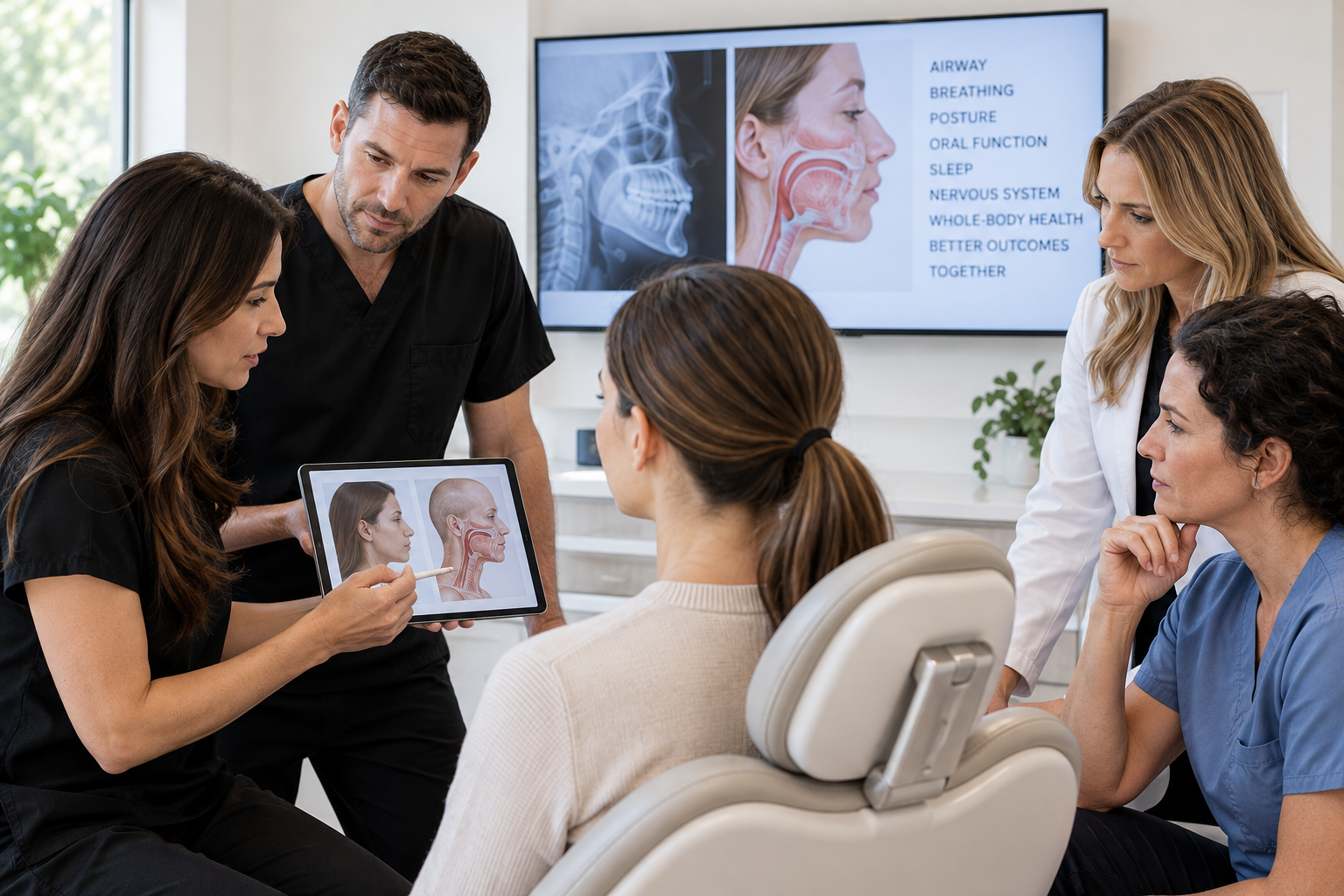
Complex airway cases often improve when providers collaborate across breathing, posture, balance, oral function, sleep, and nervous system regulation.
At Airway Circle, we believe airway health requires a whole-body, interdisciplinary approach.
Craig Stasio’s presentation reminds us that breathing is not just a respiratory event. It is a neurological, postural, sensory, and survival-based process.
When providers understand the relationship between airway, posture, balance, fight-or-flight physiology, and the body’s need for safety, they can better support patients who do not respond to isolated treatment.
The future of airway care is not about choosing between the mouth and the body.
It is about understanding how they communicate.
Final Thoughts
If the fight-or-flight response is hijacking a patient’s health, the airway may be part of the story, but so may balance, posture, vision, gait, feet, rib cage mechanics, pelvic function, jaw position, and nervous system regulation.
Patients with airway dysfunction may not only need more space to breathe. They may also need a body that feels safe enough to use that space.
For healthcare professionals, the call to action is clear:
- Look beyond the teeth.
- Look beyond the tongue.
- Look beyond the airway alone.
- Evaluate the whole system.
- Collaborate with providers who understand breathing, balance, posture, and nervous system regulation.
Because when breathing and balance are restored, the body has a better chance to leave survival mode and return to function.
Need Guidance With Airway, Breathing, or Myofunctional Therapy?
Finding the right support for airway health, breathing, sleep, tongue function, posture, oral restrictions, or whole-body compensation patterns does not have to feel overwhelming. With the right guidance, patients and providers can better understand the clinical picture and explore the next best steps.
Whether care involves myofunctional therapy, airway-focused dentistry, orthodontics, ENT evaluation, sleep testing, postural therapy, physical therapy, or referrals to the right provider, the goal is to improve function and quality of life.
Your journey to better breathing, better sleep, and better oral function starts here.