
From a Studio Apartment to a Comfortable Home: The Impact of Maxillary Expansion on OSA in Adults
Aug 30, 2026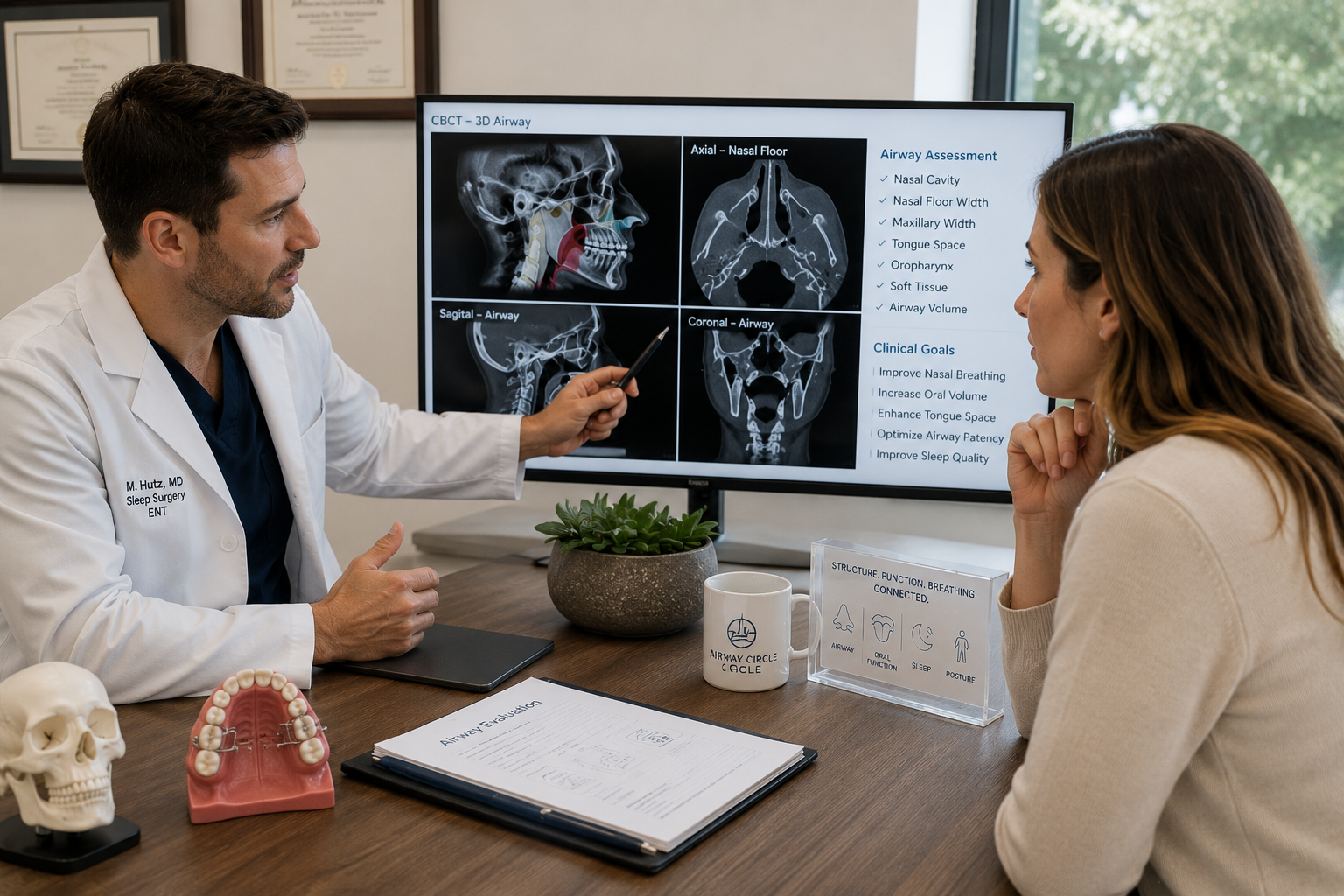
Adult obstructive sleep apnea is not always only a soft tissue problem. In some patients, the skeletal space may be part of the story.
For many adults with obstructive sleep apnea, nasal obstruction, poor sleep quality, or persistent airway symptoms, the problem is not always only the septum, turbinates, tongue, soft palate, or tonsils.
Sometimes, the problem is the size of the room.
In an Airway Circle Thursday Night Live presentation, Dr. Michael Hutz, ENT and Chief of Sleep Surgery at Rush University Medical Center, shared an important perspective on adult obstructive sleep apnea and maxillary expansion.
His analogy was simple and powerful: if the airway is like a studio apartment, there may not be enough space for everything to function comfortably. You can rearrange the furniture, but if the room itself is too small, symptoms may persist.
For healthcare professionals working in airway health, sleep medicine, ENT, orthodontics, myofunctional therapy, oral surgery, dentistry, and craniofacial development, this conversation highlights a critical question:
Are we treating the obstruction, or are we missing the skeletal deficiency that created the problem?
Why Maxillary Expansion Matters in Adult OSA
Maxillary expansion is commonly discussed in children, but it is becoming an increasingly important conversation in adults with obstructive sleep apnea, nasal obstruction, and limited oral volume.
The maxilla forms the upper jaw, palate, and part of the nasal floor. When the maxilla is narrow or underdeveloped, patients may present with:
- Narrow, high-arched palate
- Dental crowding
- Crossbite
- Limited tongue space
- Mouth breathing
- Nasal obstruction
- Sleep-disordered breathing
- Poor CPAP tolerance
- Persistent symptoms after nasal surgery
- A feeling that the tongue is too large for the mouth
In these patients, the issue may not simply be soft tissue collapse. It may also be a skeletal space problem.
The Evolutionary Shift in Craniofacial Development
Dr. Hutz discussed how modern craniofacial structures differ from pre-industrial skulls. Pre-industrial populations often had broader jaws, wider palates, better dental arch form, and more room for the tongue and teeth.
Modern populations, by contrast, often show narrower palates, dental crowding, retrognathic jaws, high-arched palates, and increased malocclusion.
Several factors may contribute to this shift, including:
- Softer modern diets
- Reduced chewing demand
- Bottle feeding or reduced breastfeeding duration
- Prolonged pacifier use
- Chronic nasal obstruction
- Mouth breathing
- Allergies
- Environmental factors
- Reduced oral and facial muscle stimulation during growth
For airway professionals, this matters because craniofacial underdevelopment may influence nasal breathing, tongue posture, sleep quality, and airway stability.
Breastfeeding, Chewing, and Jaw Development
Dr. Hutz reviewed research suggesting that breastfeeding and chewing harder foods may support healthier jaw and facial development.
Breastfeeding requires coordinated tongue, jaw, and facial muscle activity. Chewing harder, fibrous foods also stimulates the jaws, muscles, and craniofacial structures during growth.
When children grow up with softer diets, reduced chewing demand, chronic mouth breathing, or prolonged non-nutritive sucking habits, the jaws may not receive the same developmental stimulation.
This does not mean one factor determines the entire outcome. Craniofacial development is multifactorial. However, function matters.
How a child breathes, feeds, chews, swallows, and rests the tongue can influence how the jaws grow.
Nasal Obstruction and the “Small Room” Problem
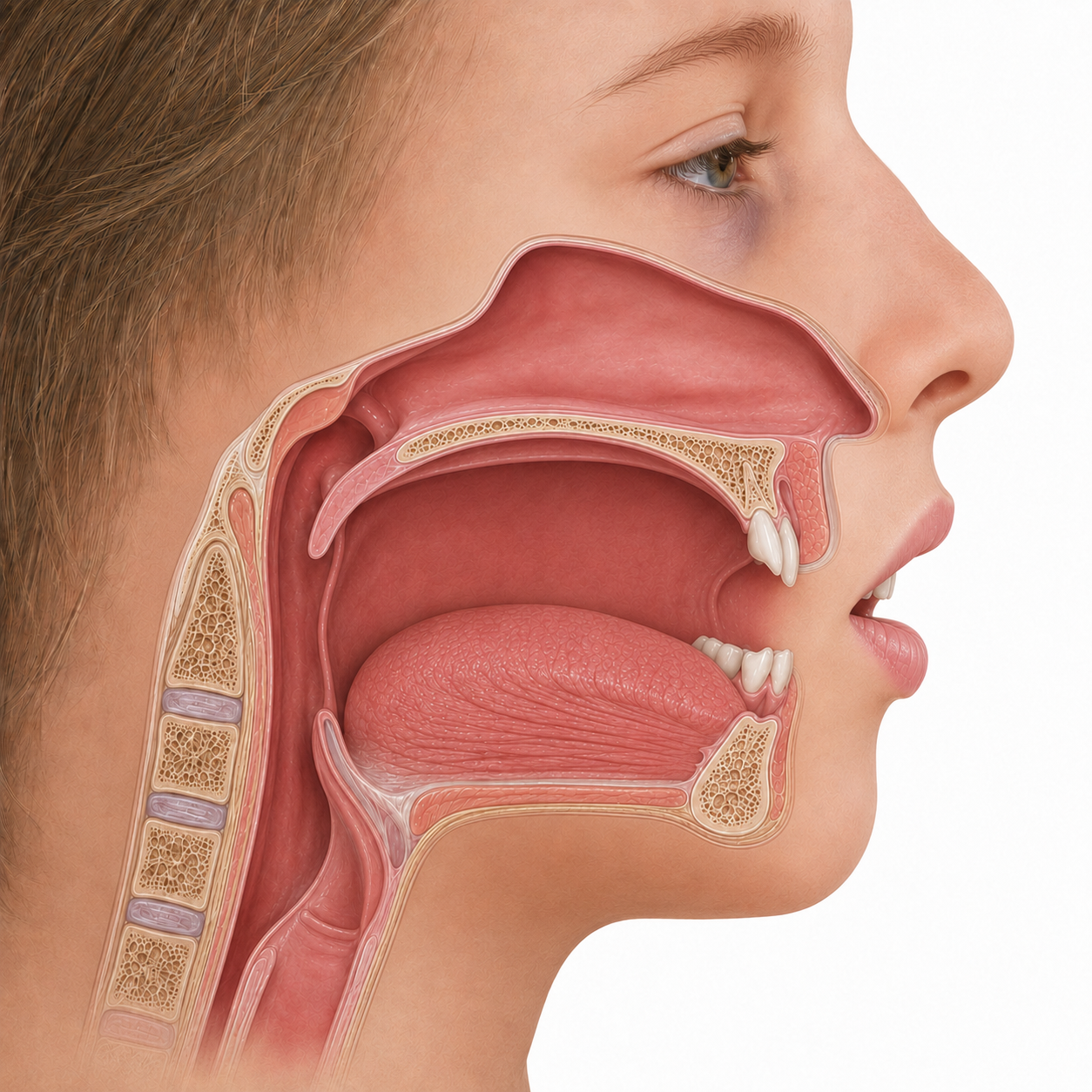
If the nasal floor and maxilla are too narrow, improving the septum or turbinates may not fully resolve the patient’s breathing concerns.
Traditional ENT treatment for nasal obstruction may include:
- Intranasal steroid sprays
- Antihistamine sprays
- Saline rinses
- Septoplasty
- Turbinate reduction
- Nasal valve repair
- Sinus surgery
These treatments can be very helpful, and many patients need them. However, Dr. Hutz emphasized that some patients continue to feel obstructed even after appropriate nasal surgery because the skeletal container is still too small.
A narrow maxilla can create a narrow nasal floor. If the nasal floor is constrained, improving the septum or turbinates may not fully resolve the patient’s breathing concerns.
This is where the “studio apartment” analogy becomes clinically useful.
If the room is too small, rearranging the furniture may help, but it may not solve the space problem.
Narrow Palate and Persistent Nasal Obstruction
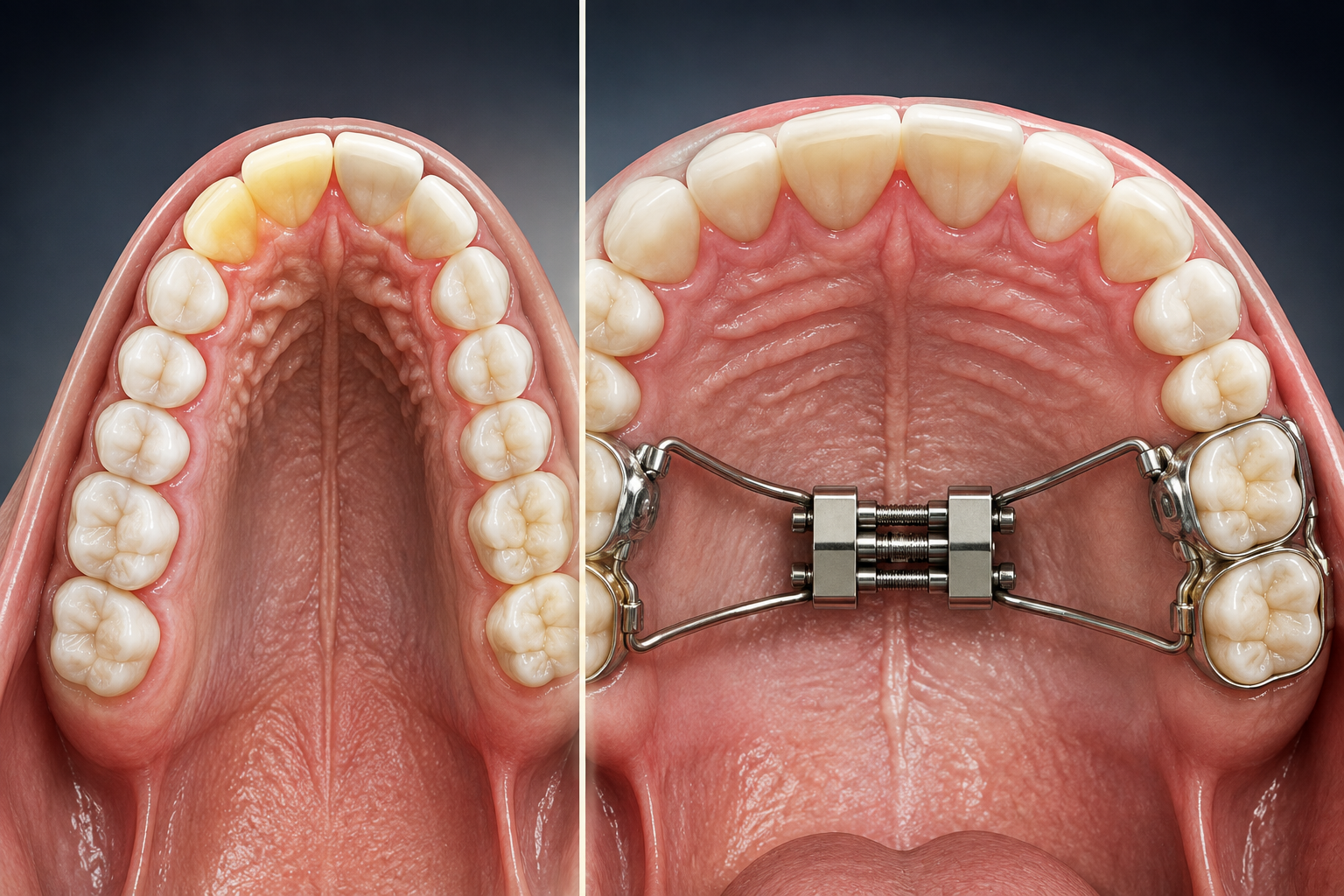
Adult maxillary expansion may help selected patients when narrow skeletal structure contributes to nasal obstruction, limited tongue space, poor CPAP tolerance, or sleep-disordered breathing.
Dr. Hutz discussed research showing that patients with a narrow, high-arched palate may be more likely to have persistent nasal obstruction after septoplasty or nasal surgery.
This is an important point for ENTs and airway-focused providers.
A patient may have a straight septum and reduced turbinates but still struggle with nasal breathing because the nasal floor and maxilla remain narrow.
Clinical signs that may suggest skeletal contribution include:
- High-arched palate
- Narrow dental arch
- Crossbite
- Dental crowding
- Buccally flared teeth
- Limited tongue space
- Narrow smile corridors
- Persistent nasal obstruction after nasal surgery
- Sleep-disordered breathing symptoms
These findings should prompt clinicians to think beyond the inside of the nose and evaluate the craniofacial structure as a whole.
Pediatric Expansion and Sleep-Disordered Breathing
Although Dr. Hutz primarily treats adults, he reviewed important evidence on rapid maxillary expansion in children.
In children, expansion may be considered for narrow maxilla, crossbite, crowding, persistent sleep-disordered breathing after adenotonsillectomy, and craniofacial underdevelopment.
Research has shown that maxillary expansion may improve nasal breathing, nasal valve dimensions, oxygenation, and apnea-hypopnea index in selected pediatric patients.
However, Dr. Hutz emphasized that expansion alone does not automatically guarantee long-term airway health. Structure and function must both be addressed.
A child may need expansion, but they may also need support with nasal breathing, tongue posture, myofunctional therapy, allergy management, ENT care, and healthy oral function.
Adult Maxillary Expansion: Who May Benefit?
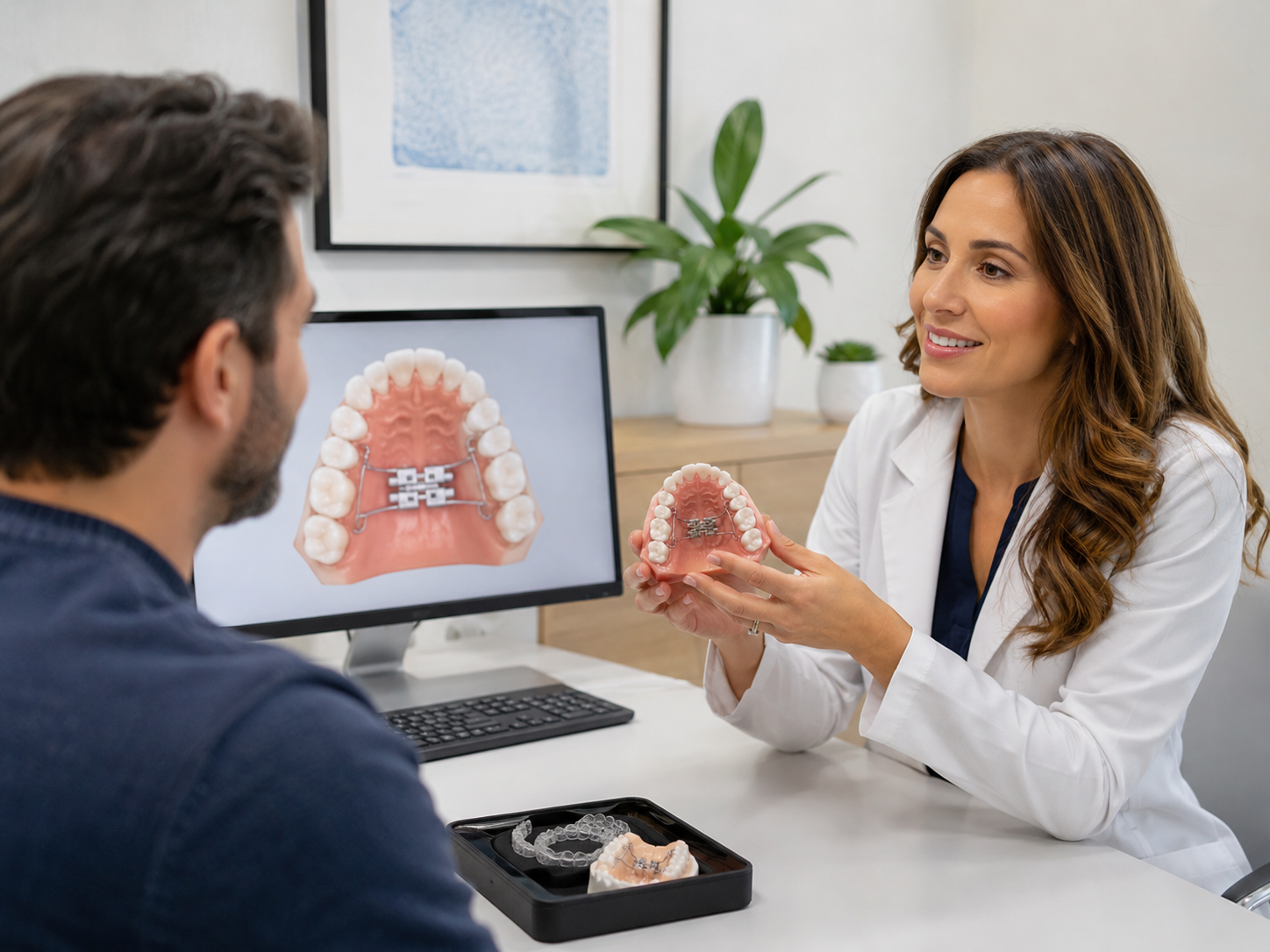
Adult maxillary expansion may help selected patients when narrow skeletal structure contributes to nasal obstruction, limited tongue space, poor CPAP tolerance, or sleep-disordered breathing.
Adult maxillary expansion may be considered in patients with obstructive sleep apnea, nasal obstruction, or limited oral volume when the clinical picture suggests skeletal restriction.
Possible candidates may include adults with:
- Narrow, high-arched palate
- Dental or skeletal crossbite
- Maxillary transverse deficiency
- Persistent nasal obstruction
- Poor CPAP tolerance
- Limited tongue space
- Residual symptoms after nasal surgery
- Mild to moderate OSA with craniofacial contribution
- Tongue base collapse related to limited oral volume
- History of orthodontic relapse or extraction patterns
- Symptoms of mouth breathing or sleep-disordered breathing
Not every adult with OSA needs expansion. The key is careful diagnosis, imaging, airway evaluation, and interdisciplinary planning.
Surgically Assisted Maxillary Expansion
In children, maxillary expansion is often possible because the craniofacial sutures are still more flexible. In adults, the sutures are more mature, and expansion can be more challenging.
Dr. Hutz discussed surgically assisted maxillary expansion approaches, including DOME and a hybrid surgical technique known as 2-PENN, which was developed through work at the University of Pennsylvania.
These procedures are designed to help separate the skeletal structures enough for expansion to occur more predictably in adults.
The goal is to widen the maxilla and nasal floor, increase oral volume, improve nasal breathing, and potentially reduce airway collapsibility.
What Is 2-PENN?
Dr. Hutz described 2-PENN as a hybrid approach between DOME and EASE. The procedure involves surgical assistance to separate the midpalatal suture and related structures so that expansion can occur more effectively.
Using endoscopic visualization and surgical planning, the surgeon can help release resistance points that may prevent successful adult expansion.
The goal is not to simply create a large gap between the front teeth. The goal is to create controlled skeletal expansion of the maxilla and nasal floor.
Potential benefits may include:
- Wider nasal cavity
- Improved nasal airflow
- Increased tongue space
- Improved oral volume
- Reduced nasal obstruction
- Potential improvement in sleep-disordered breathing symptoms
- Better support for future orthodontic and airway treatment
DOME, EASE, MARPE, and Adult Expansion
Several approaches exist for adult maxillary expansion, including:
- DOME, or distraction osteogenesis maxillary expansion
- EASE, or endoscopically assisted surgical expansion
- MARPE, or miniscrew-assisted rapid palatal expansion
- Custom MARPE appliances
- Hybrid surgically assisted approaches such as 2-PENN
Each approach has different indications, advantages, limitations, and levels of invasiveness.
Dr. Hutz emphasized that the field is evolving. Non-surgical adult expansion may work well in selected patients, especially some women and younger adults, but success can be less predictable in men over age thirty.
More research is needed to understand which patients need surgery, which patients can expand non-surgically, and how to personalize treatment.
Drug-Induced Sleep Endoscopy and Adult Airway Evaluation
Dr. Hutz also discussed the use of drug-induced sleep endoscopy, or DISE, in adult OSA evaluation.
DISE allows the sleep surgeon to observe airway collapse patterns while the patient is sedated. This may help identify whether collapse is occurring at the palate, tongue base, lateral walls, epiglottis, or multiple levels.
In some cases, DISE can reveal tongue base collapse in patients who feel they do not have enough tongue space. This may help support the decision to evaluate skeletal options such as maxillary expansion or maxillomandibular advancement.
DISE does not replace sleep testing or clinical judgment, but it can provide another valuable layer of airway information.
When the Tongue Has No Room
One of the most important clinical insights from this lecture is that some patients feel their tongue is too large for their mouth.
Sometimes, the tongue is not actually too large. The room may be too small.
A narrow maxilla and limited oral cavity volume can leave the tongue with inadequate space. During sleep, this can contribute to tongue base collapse, mouth breathing, poor tongue posture, and airway obstruction.
In selected adult patients, expansion may help increase oral volume and create a better environment for the tongue to rest and function.
This is where myofunctional therapy becomes especially important.
Why Myofunctional Therapy Matters
Maxillary expansion changes structure. Myofunctional therapy helps the patient adapt function.
After expansion, the tongue has a new space to occupy. But if a patient has spent years with low tongue posture, mouth breathing, improper swallowing, poor nasal breathing, or oral compensations, they may need therapy to retrain function.
Myofunctional therapy can support:
- Nasal breathing
- Tongue-to-palate rest posture
- Lip seal
- Swallowing patterns
- Chewing patterns
- Oral awareness
- Post-expansion adaptation
- Sleep-disordered breathing support
- Long-term orthodontic stability
Expansion without functional retraining may lead to incomplete adaptation. Structure and function must work together.
The Role of ENT and Orthodontic Collaboration
Dr. Hutz emphasized that ENT providers must look beyond the nose, and orthodontists must understand the airway.
The nasal airway, palate, maxilla, tongue, septum, turbinates, and sleep physiology are deeply connected.
An ideal team may include:
- Sleep surgeon
- ENT
- Airway-focused orthodontist
- Myofunctional therapist
- Dentist
- Oral and maxillofacial surgeon
- Sleep physician
- Physical therapist or bodyworker when indicated
This interdisciplinary approach helps ensure the patient is not treated in fragments.
Clinical Questions to Consider
When evaluating an adult with nasal obstruction, OSA, poor CPAP tolerance, or persistent symptoms, healthcare professionals may ask:
- Does the patient have a narrow or high-arched palate?
- Is there dental crowding or crossbite?
- Does the patient report that their tongue feels too large for their mouth?
- Has nasal surgery helped only partially?
- Is the septum straight but the patient still feels obstructed?
- Is the maxilla narrow?
- Is there limited oral volume?
- Does the patient have tongue base collapse on DISE?
- Does the patient tolerate CPAP?
- Has the patient had orthodontic relapse?
- Would expansion, MMA, oral appliance therapy, myofunctional therapy, or ENT care be appropriate?
- Is the problem the furniture, the room, or both?
These questions help providers identify when skeletal evaluation should be part of the airway plan.
Key Takeaways for Healthcare Professionals
- Modern craniofacial structures are often narrower than pre-industrial skulls.
- Soft modern diets, reduced chewing demand, altered infant feeding, mouth breathing, allergies, and nasal obstruction may influence craniofacial development.
- A narrow maxilla can contribute to nasal obstruction, limited tongue space, dental crowding, and sleep-disordered breathing.
- Some adults with OSA may benefit from maxillary expansion when skeletal restriction contributes to symptoms.
- Nasal surgery may improve obstruction, but persistent symptoms can occur when the skeletal container remains too small.
- Surgically assisted adult expansion can help selected patients achieve more predictable skeletal change.
- Non-surgical adult expansion is evolving, but more research is needed to clarify success rates and patient selection.
- DISE can help identify airway collapse patterns and guide treatment planning.
- Myofunctional therapy is important for functional adaptation after structural change.
- Airway care requires collaboration between ENT, sleep surgery, orthodontics, dentistry, and myofunctional therapy.
The Airway Circle Perspective
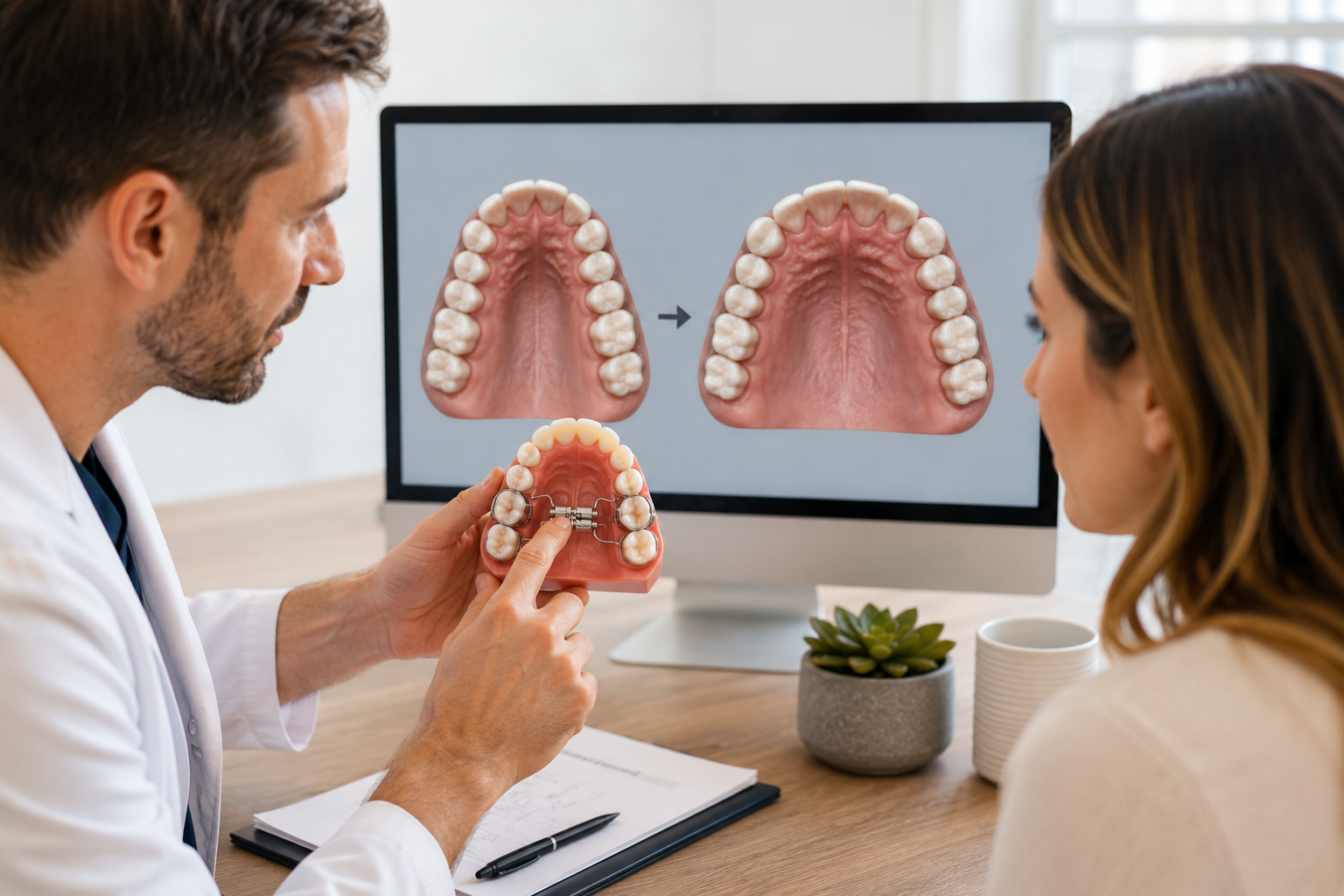
Adult airway care is strongest when ENT, sleep surgery, orthodontics, dentistry, and myofunctional therapy work together.
At Airway Circle, we believe airway care must move beyond isolated treatment.
Dr. Michael Hutz’s presentation reminds us that obstructive sleep apnea and nasal obstruction are not always only soft tissue problems. In many patients, the skeletal structure matters.
The maxilla forms the roof of the mouth and the floor of the nose. If the maxilla is too narrow, the tongue, nasal airway, and oral structures may not have the space they need to function well.
For healthcare professionals, this means we must ask better questions, evaluate the full craniofacial system, and collaborate across disciplines.
Final Thoughts
Adult obstructive sleep apnea is complex. CPAP, oral appliances, nasal surgery, soft tissue surgery, hypoglossal nerve stimulation, MMA, and maxillary expansion all have roles in selected patients.
The key is understanding why the airway is collapsing and what the patient needs.
For some adults, the issue may be the furniture. For others, the issue may be the room.
And for many, it may be both.
Maxillary expansion offers an important option for selected adult patients with narrow palates, nasal obstruction, limited tongue space, poor CPAP tolerance, and sleep-disordered breathing.
When skeletal expansion is paired with functional retraining, nasal breathing support, and interdisciplinary care, patients may gain more than a wider palate.
They may gain a more comfortable airway.
Need Guidance With Airway, Sleep, or Myofunctional Therapy?
Finding the right support for airway health, nasal breathing, sleep, tongue function, oral restrictions, or adult airway concerns does not have to feel overwhelming. With the right guidance, patients and providers can better understand the clinical picture and explore the next best steps.
Whether care involves myofunctional therapy, ENT evaluation, airway-focused orthodontics, maxillary expansion, sleep testing, tongue-tie assessment, CPAP support, oral appliance therapy, or referrals to the right provider, the goal is to improve function and quality of life.
Your journey to better breathing, better sleep, and better oral function starts here.