
How Maxillary Expansion Advanced Sleep Surgery
Oct 05, 2026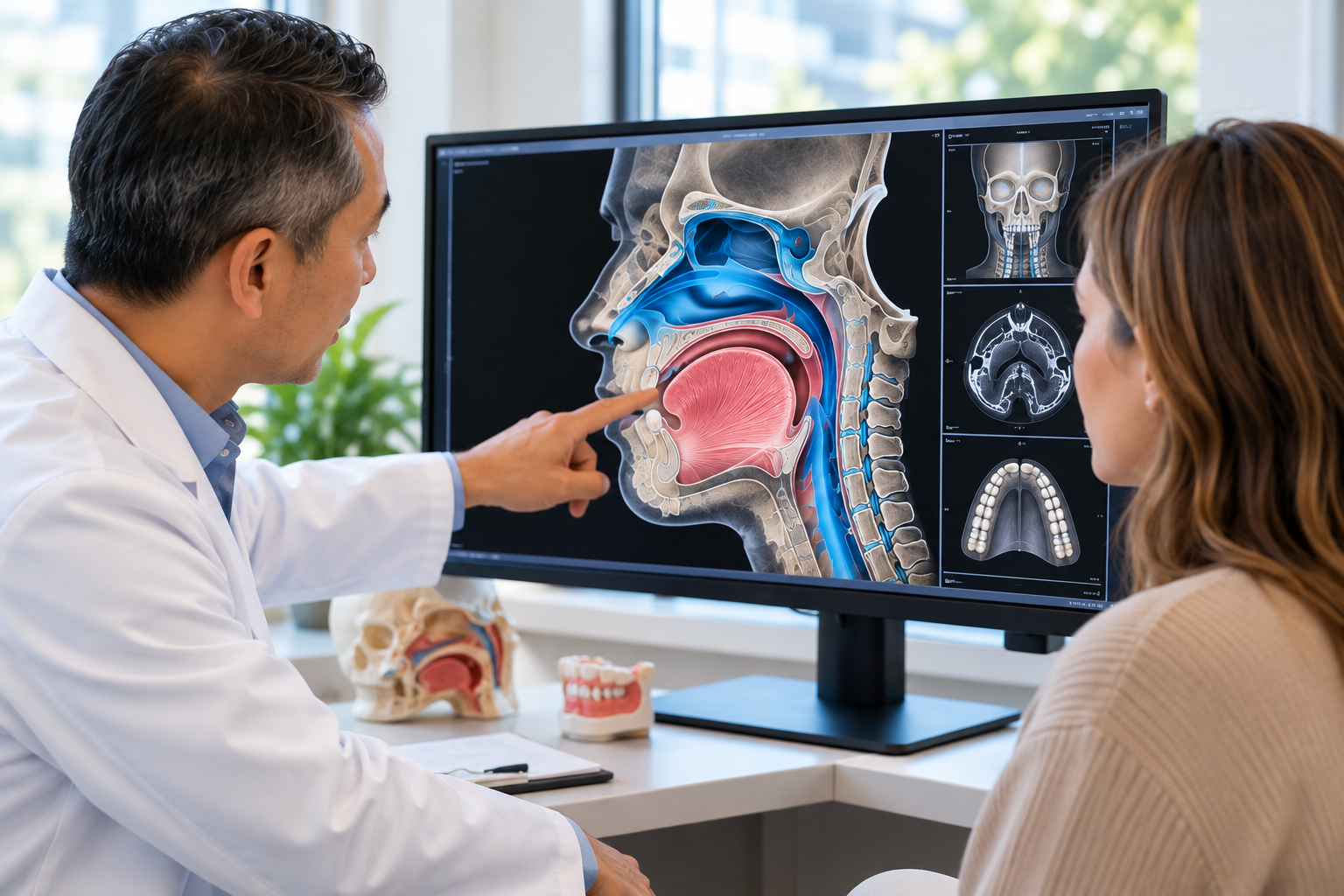
Maxillary expansion has changed the way sleep surgeons think about nasal breathing, tongue space, airway structure, and sleep-breathing health.
Sleep surgery has changed dramatically over the last several decades.
For a long time, obstructive sleep apnea was viewed primarily as a soft tissue problem. Surgeons focused on removing or reshaping tissues in the throat, soft palate, tonsils, tongue base, or nasal airway. While these procedures can still be important in selected patients, the field has evolved.
In an Airway Circle Thursday Night Live presentation, Dr. Stanley Liu shared how maxillary expansion has helped advance sleep surgery by changing the way clinicians understand nasal breathing, tongue space, airway collapse, upper airway muscle function, and long-term sleep-breathing health.
Dr. Liu is a dual board-certified oral and maxillofacial surgeon and sleep surgeon. He spent a decade at Stanford, where he served as associate professor and director of the Sleep Surgery Fellowship, trained under leaders of the Stanford Protocol, authored more than 120 publications, and pioneered techniques including distraction osteogenesis maxillary expansion, known as DOME. He now serves as chair of oral and maxillofacial surgery and assistant dean of hospital affairs at Nova Southeastern University.
His message was clear: maxillary expansion is not simply an orthodontic procedure. It has changed the way sleep surgeons think about airway structure, nasal breathing, tongue function, and the physiology of sleep.
Sleep Medicine Has Come a Long Way
Dr. Liu opened by reminding the audience that sleep medicine is still a relatively young field.
For much of modern medicine, clinical thinking essentially stopped when the patient fell asleep. Breathing, swallowing, recovery, digestion, growth, and airway function during sleep were not central to medical or dental training.
Even dentistry has historically overlooked sleep-disordered breathing. Oral health and systemic health have been discussed for decades, but sleep apnea and sleep-disordered breathing were not always included in major oral health conversations.
This matters because the mouth, jaws, tongue, nose, and airway are central to breathing during sleep.
For airway-focused professionals, the question is no longer whether dentistry belongs in the sleep conversation.
The question is how dentistry, orthodontics, oral surgery, ENT, sleep medicine, and myofunctional therapy can work together to restore better sleep-breathing health.
What Sleep Surgery Is Really Treating
Dr. Liu emphasized that sleep surgery primarily treats airway collapsibility, obstruction, and airflow.
Obstructive sleep apnea occurs when the airway becomes unstable, narrow, or collapsible during sleep. The goal of treatment is to make the airway less likely to collapse and to improve airflow through the system.
This may involve the nose, soft palate, lateral pharyngeal walls, tongue, epiglottis, jaws, or upper airway muscles.
Maxillary expansion entered this conversation because the maxilla is not separate from the airway. It forms the roof of the mouth, the floor of the nose, and part of the structural environment that determines how the tongue and airway function.
When the maxilla is narrow, the nose may be narrow, the tongue may lack space, and the airway may become more vulnerable during sleep.
Why the AHI Falls Short
Dr. Liu also discussed the limitations of the apnea-hypopnea index, or AHI.
AHI is commonly used to classify sleep apnea severity, but it does not always tell the whole story. It can fall short, especially in children and women.
Children may be significantly affected by sleep-disordered breathing even when their numbers appear low by adult standards. Women may also have significant symptoms such as fatigue, insomnia, anxiety, depression, poor sleep quality, and daytime dysfunction with lower AHI values than men.
This is clinically important because if providers treat only the number, they may miss the patient.
Sleep-disordered breathing should be understood through symptoms, development, anatomy, function, sleep quality, oxygenation, arousals, and patient-reported outcomes.
The goal is not only to reduce an index.
The goal is to restore breathing, sleep, and health.
Sleep-Disordered Breathing Is a Continuum
One of Dr. Liu’s most powerful points was that sleep-disordered breathing should be viewed longitudinally, not only at one moment in time.
Sleep apnea does not usually appear overnight. It often develops along a continuum that may begin in childhood.
A child may start with mouth breathing, malocclusion, ADHD-like behavior, bedwetting, poor school performance, restless sleep, or facial growth concerns. If these early signs are missed, the same individual may later develop anxiety, fatigue, depression, myofascial pain, diabetes, cardiovascular concerns, cognitive decline, or more severe obstructive sleep apnea.
This does not mean every child with airway signs will develop severe disease. But it does mean early signs should not be dismissed.
By the time a patient is older, treatment may improve the airway, but it may not reverse years of poor sleep, poor oxygenation, or systemic effects.
This is why early airway recognition matters.
Why Nasal Breathing Changes Everything
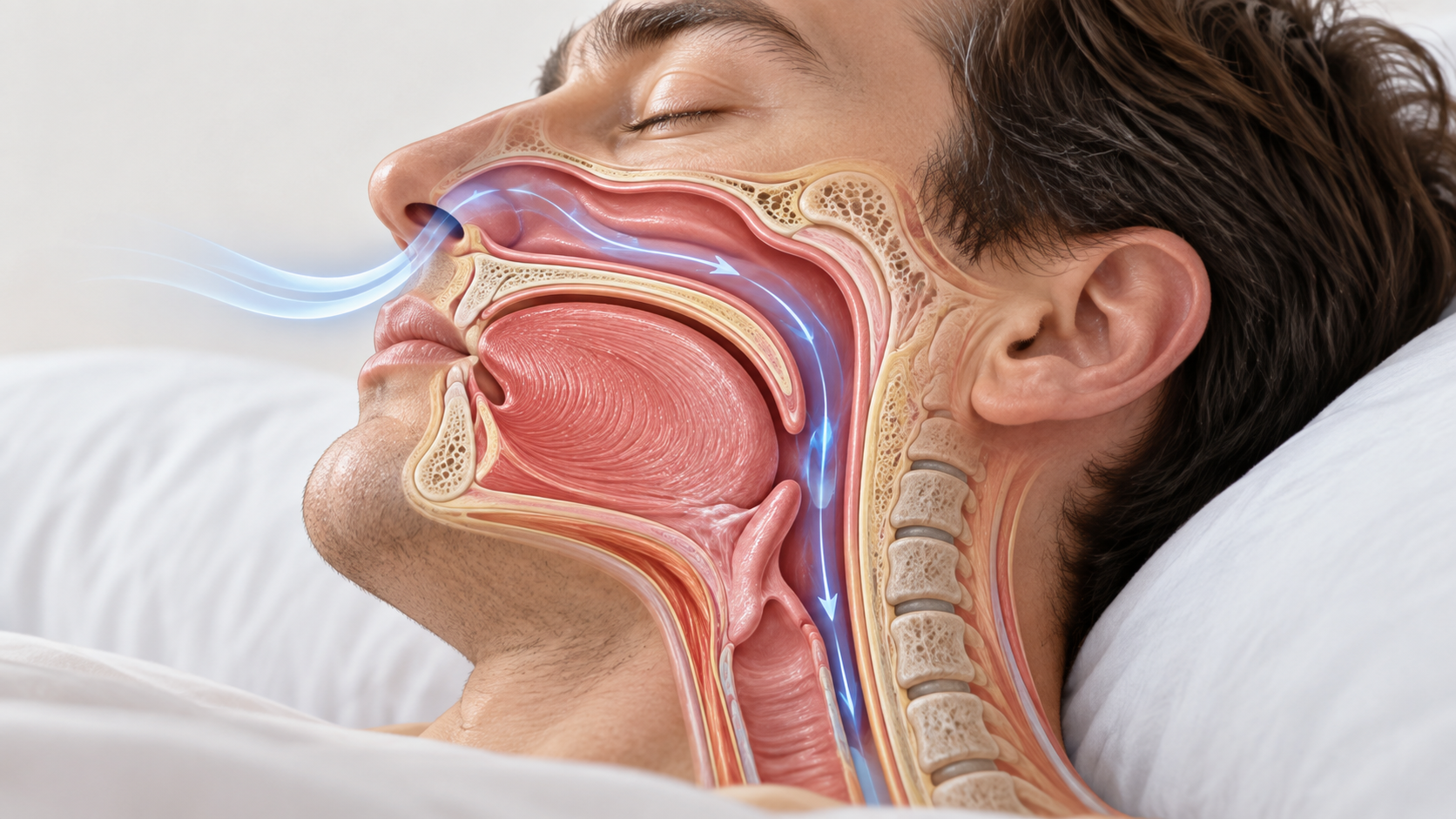
Nasal breathing can influence airway muscle behavior, tongue position, airflow, and sleep quality.
Nasal breathing was a major theme of Dr. Liu’s lecture.
Research and clinical observation continue to show that nasal breathing during sleep creates less resistance than oral breathing. Nasal breathing also appears to stimulate upper airway dilator muscles in a way that helps stabilize the airway.
In simple terms, when a patient can breathe through the nose, the airway muscles may behave differently.
During sleep endoscopy, Dr. Liu demonstrated how the airway can improve when the lips close and nasal breathing is established. With better nasal breathing and jaw support, the tongue and epiglottis may move forward more effectively.
This is critical for airway providers.
Mouth breathing is not simply an alternative route for air. It can change airway mechanics, sleep quality, tongue position, and upper airway muscle behavior.
Mouth Open, Nose Breathing: Is It Still a Problem?
A common clinical question is whether it matters if a child sleeps with the mouth open but still appears to be breathing through the nose.
Dr. Liu explained that even when nasal airflow is present, an open mouth can reduce support for upper airway muscles and contribute to microarousals, altered airflow, and poorer sleep quality.
The mouth may open when nasal resistance is too high, when the jaw drops, when the lips cannot seal, or when the airway system is struggling to maintain airflow.
Clinically, an open mouth during sleep should not be dismissed.
It may be a sign that the system is unstable, even when oxygen levels do not dramatically drop.
The Internal Nasal Valve and Airway Resistance
Dr. Liu highlighted the internal nasal valve as a key area of nasal resistance.
The internal nasal valve accounts for a significant portion of upper airway resistance. When this area is narrow, patients may struggle to breathe comfortably through the nose.
Traditional nasal surgeries may address the septum, turbinates, or nasal valve structures. These interventions can be helpful, but they may not solve the problem if the skeletal foundation is too narrow.
This is where maxillary expansion became a major advance.
Instead of only rearranging structures inside the nose, expansion can change the skeletal container of the nasal airway.
Why Maxillary Expansion Matters in Sleep Surgery
Maxillary expansion matters because it can influence several parts of the sleep-breathing system at once.
Expansion may help:
- Increase nasal floor width
- Improve nasal airflow
- Reduce nasal resistance
- Increase tongue space
- Support nasal breathing during sleep
- Improve airway muscle behavior
- Change soft palate mechanics
- Improve the functional environment for the tongue
- Support other sleep surgery procedures
- Improve patient-reported nasal breathing
Dr. Liu explained that if he were rewriting a sleep surgery algorithm, he would place maxillary expansion across multiple areas, not only the nasal category, because it can affect the nose, soft palate, and tongue.
This is why maxillary expansion has become so important.
It is not just making the palate wider.
It is changing the functional airway system.
From High-Arched Palate to Dome-Shaped Palate
DOME stands for distraction osteogenesis maxillary expansion.
Dr. Liu explained that the name came from the clinical goal: transforming a high-arched palate into a more dome-shaped palate.
The goal is not simply to push teeth outward. The goal is to create skeletal change in the maxilla, grow bone in the right place, improve the nasal floor, and create a shape that better supports nasal breathing and tongue space.
A dome-shaped palate is easier for patients to understand because it describes what the procedure is trying to accomplish functionally.
The goal is not a larger dental arch alone.
The goal is a healthier airway structure.
DOME and Nasal Breathing
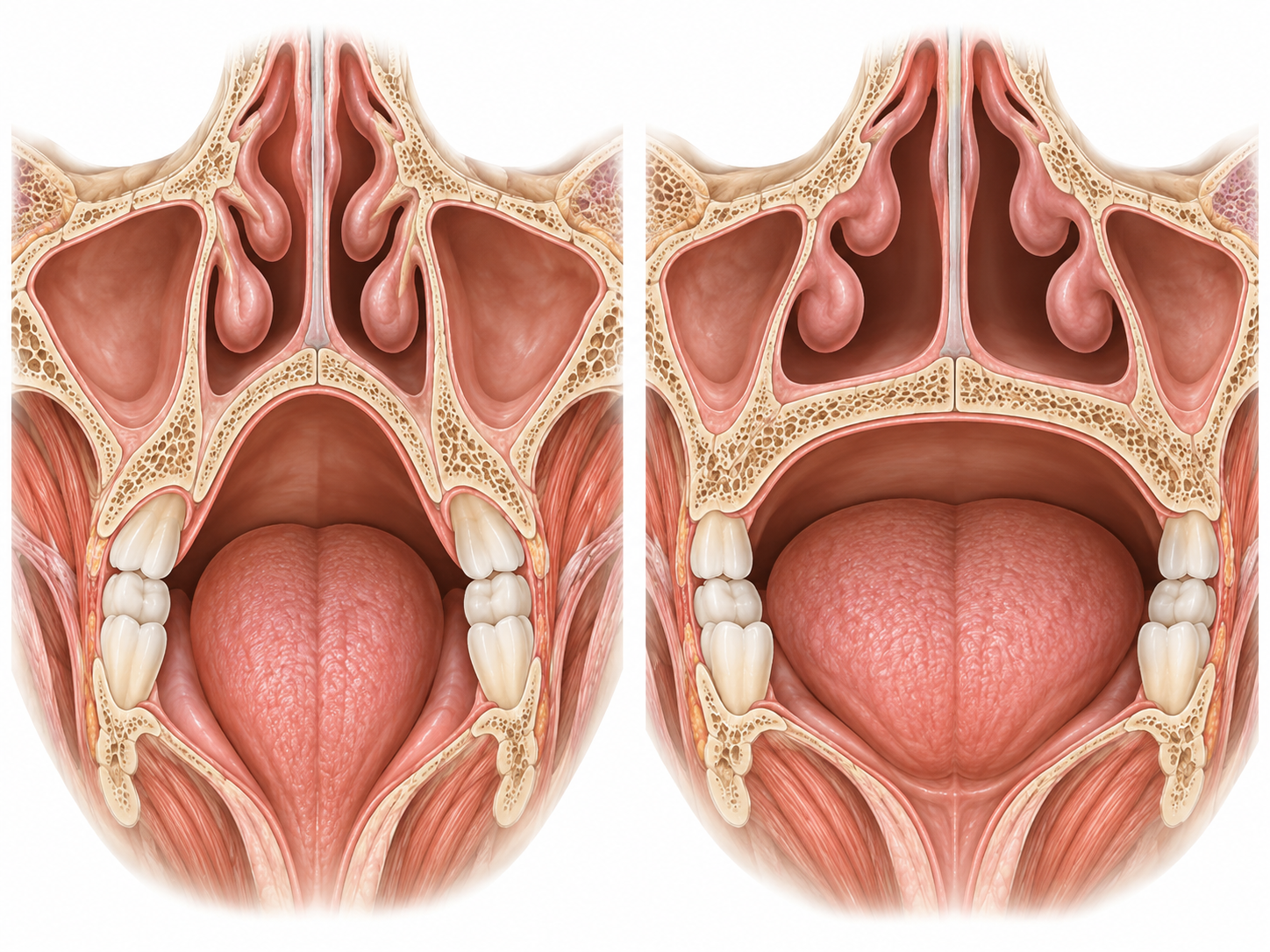
DOME aims to widen the maxilla and nasal floor, helping transform a high-arched palate into a broader, more supportive structure for nasal breathing and tongue space.
DOME was developed in response to a clinical need.
Dr. Liu and colleagues were seeing patients who still struggled with nasal obstruction after traditional nasal surgery. Many of these patients had narrow maxillas and high-arched palates.
The question became: what if the issue is not only inside the nose?
What if the skeletal floor of the nose is too narrow?
By expanding the maxilla, DOME aims to improve nasal breathing by changing the size and shape of the nasal floor and maxillary structure.
This can be especially important for patients with upper airway resistance, narrow palates, nasal obstruction, tongue space limitation, and sleep-disordered breathing symptoms.
Why Distraction Matters
Dr. Liu made an important distinction between simply cutting and moving bone versus distraction osteogenesis.
With distraction, the body grows new tissue gradually as expansion occurs.
This may include:
- New bone
- Nasal mucosa
- Palatal mucosa
This matters because nasal mucosa is not just a lining. It has important physiologic functions. It helps patients sense airflow and supports nasal breathing function.
In Dr. Liu’s view, the physiologic effect of growing more nasal mucosa may be one of the major reasons maxillary expansion helps patients breathe better.
This is a powerful concept for airway professionals.
Expansion is not only structural. It may also be physiologic.
Maxillary Expansion and the Soft Palate
Maxillary expansion may also affect the soft palate.
Dr. Liu discussed how a wider maxillary structure can provide a different foundation for soft palate procedures. If the palate and maxilla are narrow, the soft tissue environment may be more constrained.
When the maxilla is expanded, there may be more lateral room and better tissue relationships, which may support improved airway mechanics and surgical outcomes.
This does not mean expansion replaces soft palate surgery in every patient. It means expansion can change the environment in which the soft palate functions.
Maxillary Expansion and the Tongue
The tongue is central to sleep-disordered breathing.
A narrow maxilla reduces oral volume and tongue space. When the tongue does not have enough room, it may sit low, fall back, or contribute to airway obstruction during sleep.
Dr. Liu emphasized that improving the space for the tongue is a major part of why expansion matters.
He also showed that when nasal breathing is established and the genioglossus muscle functions properly, the tongue can move forward on its own during sleep. This is why tongue mobility and tongue space are both important.
The tongue needs to be able to move.
It also needs somewhere to go.
Tongue-Tie and Sleep Surgery
Dr. Liu shared a memorable case of a patient with a very open airway but a tongue that appeared “lazy” during sleep endoscopy. The issue was not obvious airway collapse from the usual structures. The patient had a severe tongue restriction.
After tongue-tie release, the tongue moved more effectively.
This case illustrated an important point: the tongue must be mobile enough to participate in airway function.
A restricted tongue is not helpful simply because it is “tied down.” The airway needs coordinated tongue movement, adequate tongue space, and appropriate muscle function.
This is a key bridge between sleep surgery and myofunctional therapy.
Hypoglossal Nerve Stimulation and Tongue Space
Dr. Liu also discussed hypoglossal nerve stimulation.
This procedure stimulates branches of the hypoglossal nerve to move the tongue forward during sleep. It can be very helpful in selected patients.
However, he explained that if the palate is too narrow and the tongue has nowhere to go, stimulation may not work as well. The tongue may push forward into a restricted space and then fall back again.
This reinforces a critical airway principle:
Technology cannot overcome a lack of space.
Even advanced treatments depend on anatomy, physiology, nasal breathing, jaw support, and tongue room.
Why Myofunctional Therapy Matters
Dr. Liu emphasized that all upper airway intervention is muscle intervention.
Even when treatment changes structure, the muscles must function within that new structure.
Myofunctional therapy is therefore an important part of comprehensive airway care. It can support:
- Nasal breathing
- Tongue mobility
- Tongue strength
- Tongue-to-palate posture
- Lip seal
- Soft palate and tongue coordination
- Swallowing patterns
- Post-expansion adaptation
- Post-surgical function
- Long-term stability
Expansion can create space. Surgery can improve anatomy. But the patient still needs functional retraining.
This is where myofunctional therapy becomes essential.
Patient-Reported Outcomes Matter
During the Q&A, Dr. Liu was asked whether computational fluid dynamics or rhinomanometry is more reliable for measuring airway function.
His answer was clinically important: neither is enough by itself.
He emphasized that the most accurate way to assess functional change is to ask the patient. Patient-reported outcome measures, such as the NOSE questionnaire, are essential before and after treatment.
Airflow models and measurements may show anatomical or airflow changes, but they do not always tell us whether the patient feels better, breathes better, or sleeps better.
Clinicians should not only measure the airway.
They should measure the patient’s experience.
Expansion and Ehlers-Danlos Syndrome
Dr. Liu was also asked about patients with Ehlers-Danlos syndrome and hypermobility.
He explained that these patients can be challenging because their tissues and joints may respond differently to surgery or oral appliance therapy. Jaw surgery may carry risks for some hypermobile patients, and long-term oral appliance therapy may not be ideal for certain joints.
In some cases, expansion may be considered because it can optimize nasal breathing and let the body’s physiology function better without creating unnecessary additional surgical strain.
The broader lesson is that airway care must be individualized.
Patients with hypermobility, connective tissue disorders, TMJ instability, or complex pain patterns need careful interdisciplinary planning.
Expansion, TMJ, and the Second Jaw
Dr. Liu pointed out that the maxilla has received much of the recent attention, but clinicians must not forget the mandible and TMJ.
A narrow maxilla may influence the temporomandibular joint, occlusion, and mandibular function. He discussed emerging observations suggesting that narrow maxillas may be associated with TMJ issues, particularly in women with upper airway resistance patterns.
This area needs more research, but it is clinically important.
Airway professionals should evaluate the whole system, including:
- Maxilla
- Mandible
- TMJ
- Tongue space
- Occlusion
- Nasal breathing
- Airway collapsibility
- Myofunctional patterns
- Patient symptoms
The airway does not exist separately from the joints or the bite.
Earlier Treatment Is Better
One of the strongest messages in Dr. Liu’s presentation was the importance of early recognition.
He described a continuum from children with airway signs such as ADHD-like behavior, malocclusion, bedwetting, school performance challenges, large tonsils, or adenoids, to adults with anxiety, depression, myofascial pain, diabetes, dementia risk, and sleep-disordered breathing.
By adulthood, providers may still improve the airway, but they may not be able to reverse all the effects of years of poor sleep and poor breathing.
This is why pediatric screening matters so much.
Children with sleep-disordered breathing may already show changes in brain development, behavior, growth, and function.
Airway care should not wait until the problem becomes severe.
Clinical Questions for Healthcare Professionals
When evaluating patients with airway symptoms, clinicians may consider asking:
- Can the patient breathe comfortably through the nose?
- Does the patient mouth breathe during sleep?
- Is the mouth open even when nasal breathing appears present?
- Is the palate narrow or high?
- Does the tongue have enough room?
- Is there a tongue-tie or reduced tongue mobility?
- Does the patient have nasal obstruction despite prior nasal surgery?
- Is there upper airway resistance with low AHI but significant symptoms?
- Does the patient have TMJ pain, hypermobility, or connective tissue concerns?
- Would maxillary expansion improve nasal breathing and tongue space?
- Does the patient need myofunctional therapy before or after structural treatment?
- Are we measuring only anatomy, or are we tracking patient-reported outcomes?
These questions help providers think beyond isolated procedures and toward whole-system airway care.
Key Takeaways for Healthcare Professionals
- Maxillary expansion has advanced sleep surgery by changing how providers think about the nose, palate, tongue, and airway muscles.
- The AHI can fall short, especially in children and women.
- Sleep-disordered breathing should be understood as a continuum that often begins in childhood.
- Nasal breathing improves upper airway stability and may stimulate airway dilator muscles.
- Mouth-open sleep can still contribute to poor airway support and microarousals, even when nasal airflow is present.
- DOME was developed to transform a high-arched palate into a dome-shaped palate and improve nasal breathing and tongue space.
- Distraction osteogenesis may grow bone, nasal mucosa, and palatal mucosa.
- Maxillary expansion can influence the nose, soft palate, tongue, and sleep surgery outcomes.
- Tongue mobility and tongue space are both essential.
- Hypoglossal nerve stimulation works best when the tongue has room to move.
- Myofunctional therapy is critical because upper airway interventions depend on muscle function.
- Patient-reported outcomes should be tracked before and after treatment.
- Early recognition and treatment can help prevent patients from moving further along the sleep-disordered breathing continuum.
The Airway Circle Perspective

Airway care is strongest when providers collaborate across sleep surgery, orthodontics, ENT, dentistry, and myofunctional therapy.
At Airway Circle, we believe airway care must be interdisciplinary, function-focused, and rooted in early recognition.
Dr. Stanley Liu’s presentation reminds us that maxillary expansion is not only an orthodontic or surgical topic. It is a sleep medicine topic. It is a nasal breathing topic. It is a myofunctional therapy topic. It is a pediatric growth topic. It is a whole-health topic.
The future of airway care requires collaboration between oral surgeons, orthodontists, ENTs, dentists, sleep physicians, myofunctional therapists, pediatric providers, bodyworkers, and researchers.
No single provider owns the airway.
The airway belongs to the patient.
Final Thoughts
Maxillary expansion has advanced sleep surgery because it helped the field move beyond a narrow view of obstruction.
It reminded us that the nose, palate, tongue, soft palate, muscles, jaws, mucosa, sleep quality, and patient symptoms all matter.
It showed us that structure and function are inseparable.
It also taught us that if we restore form and retrain function, the body may be able to do more of what it was designed to do.
As Dr. Liu emphasized, sleep and breathing are more complicated than any single procedure can solve. But sometimes simple, foundational changes can help the body recover function.
Restore form.
Retrain function.
Trust the body’s ability to breathe, sleep, and heal when the system is supported.
Need Guidance With Airway, Sleep, or Myofunctional Therapy?
Finding the right support for airway health, nasal breathing, sleep-disordered breathing, maxillary expansion, tongue function, oral restrictions, or TMJ-related concerns does not have to feel overwhelming. With the right guidance, patients and providers can better understand the clinical picture and explore the next best steps.
Whether care involves myofunctional therapy, airway-focused orthodontics, ENT evaluation, sleep surgery, maxillary expansion, tongue-tie assessment, sleep testing, or referrals to the right provider, the goal is to improve function and quality of life.
Your journey to better breathing, better sleep, and better oral function starts here.