
Myofunctional Therapy in Obstructive Sleep Apnea: An ENT Perspective on Function, Evidence, and Clinical Application
Oct 12, 2026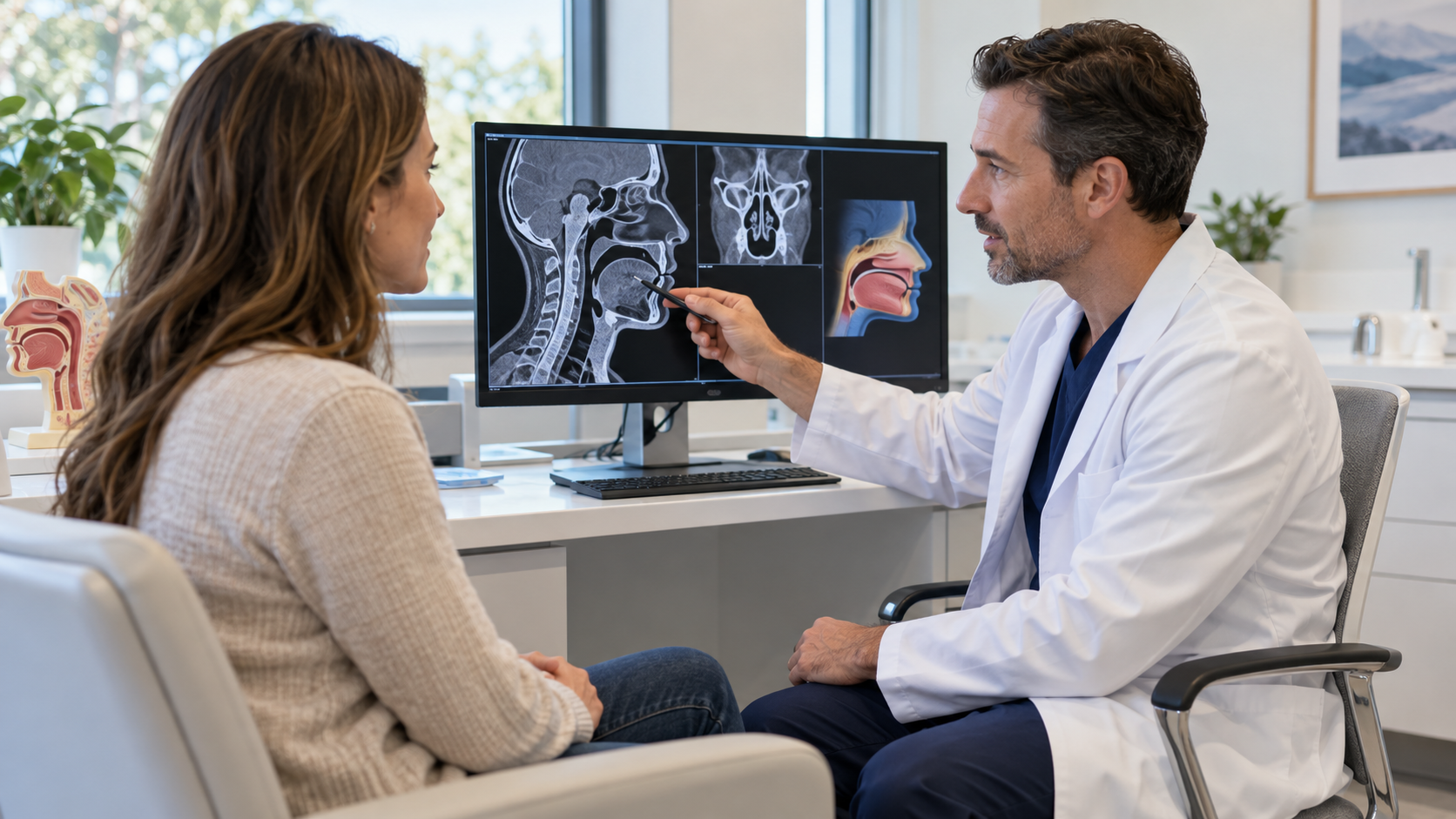
Obstructive sleep apnea is not only an anatomical problem. Function, muscle tone, nasal breathing, and airway stability matter too.
Obstructive sleep apnea is not only an anatomical problem.
For many years, sleep apnea has been primarily discussed through the lens of obstruction: a narrow airway, enlarged tonsils, nasal blockage, retruded jaws, excess weight, or soft tissue collapse. While anatomy remains a major part of the conversation, sleep apnea is also a functional disorder.
In an Airway Circle Thursday Night Live presentation, Dr. Eduardo Javier Correa shared his ENT perspective on myofunctional therapy in obstructive sleep apnea.
Dr. Correa is an otorhinolaryngologist from Argentina currently working in Spain. He has specialized in sleep apnea for almost 15 years, completed a degree in Sleep Medicine in Argentina, is certified by the European Board of Otorhinolaryngology Head and Neck Surgery, and is certified by the Spanish Sleep Society as an expert in sleep medicine. His primary research focus is myofunctional therapy in sleep apnea.
His message was clear: myofunctional therapy has meaningful potential in obstructive sleep apnea care, but the field needs more research, more standardized protocols, better access, and stronger interdisciplinary collaboration.
Why Myofunctional Therapy Matters in Sleep Apnea
Obstructive sleep apnea is multifactorial.
Dr. Correa discussed several recognized sleep apnea phenotypes, including anatomical obstruction, high loop gain, low arousal threshold, and muscular hypotonia.
For airway-focused professionals, muscular hypotonia is especially important.
Muscular hypotonia refers to reduced effectiveness of the upper airway muscles in maintaining airway patency during sleep. In other words, even when anatomy is not the only issue, the muscles of the tongue, lips, soft palate, pharynx, and orofacial complex may not be functioning efficiently enough to help stabilize the airway.
This is where myofunctional therapy becomes relevant.
Myofunctional therapy does not simply strengthen the tongue in isolation. It works with the broader orofacial system, including strength, endurance, mobility, praxia, sensory awareness, stereognosis, breathing, swallowing, and coordinated muscle recruitment.
The Tongue Is More Than a Muscle
Dr. Correa emphasized that the tongue and orofacial muscles should be viewed as a complex functional system.
The tongue is involved in eating and speaking, but it is also involved in breathing, swallowing, airway stability, taste, sensory function, motor coordination, and oral posture.
Important features of tongue and orofacial function include:
- Strength
- Endurance
- Mobility
- Praxia
- Coordination
- Stereognosis
- Sensory feedback
- Swallowing
- Breathing
- Feeding
- Speech
- Upper airway support
Stereognosis is especially interesting. It refers to the tongue’s ability to identify shapes or structures through touch. For example, when a person feels something on the gum and can locate it with the tongue, that is part of the tongue’s sensory and tactile awareness.
In airway care, this matters because oral function is not only muscular. It is also neurological and sensory.
What Is Myofunctional Therapy?
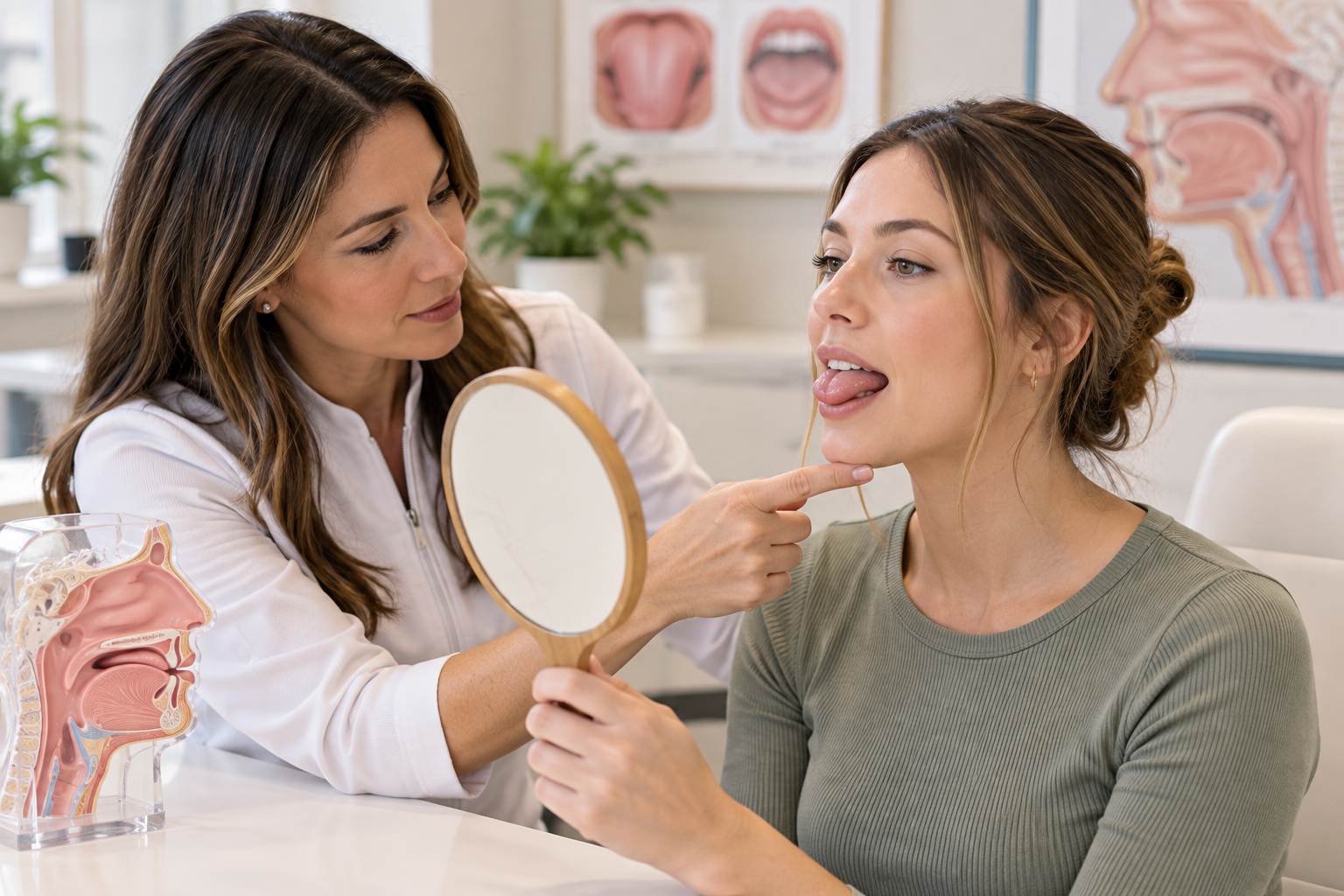
Myofunctional therapy supports tongue strength, endurance, lip seal, nasal breathing, swallowing, and coordinated upper airway muscle function.
Myofunctional therapy is a set of orofacial exercises and functional training strategies designed to improve the strength, endurance, responsiveness, and coordinated recruitment of the tongue and orofacial muscles.
The goal is to help provide a more stable upper airway.
Myofunctional therapy may support:
- Tongue strength
- Tongue endurance
- Lip seal
- Nasal breathing
- Tongue posture
- Swallowing
- Orofacial coordination
- Praxia
- Stereognosis
- Breathing patterns
- Upper airway muscle recruitment
For patients with obstructive sleep apnea, this can be especially important when muscular hypotonia, oral breathing, poor tongue posture, reduced tongue mobility, or poor lip competence contribute to airway instability.
What Does the Literature Show?
Dr. Correa reviewed several important studies supporting the role of myofunctional therapy in obstructive sleep apnea.
One of the classic studies he discussed was the 2008 study by Guimarães and colleagues. In this clinical trial, patients were randomized into an orofacial exercise group or sham therapy. After three months, the intervention group showed reduced snoring, improved daytime sleepiness, and decreased apnea-hypopnea index.
He also discussed research by Villa and colleagues in children. This study showed that myofunctional therapy improved lip hypotonia, helped shift breathing from oral to nasal, improved tongue position, increased tongue strength and endurance values, and improved oxygen desaturation index.
Dr. Correa also reviewed Camacho’s 2015 systematic review, which included nine studies and found that myofunctional therapy improved daytime sleepiness, snoring, and AHI. Importantly, the review found that AHI was reduced by approximately half in adults and by 62% in children.
Another key point from the literature is that myofunctional therapy may improve CPAP adherence. This matters because CPAP remains the first-line treatment for many adults with sleep apnea, but adherence is often a major challenge.
Myofunctional therapy may help patients tolerate and use CPAP more effectively.
Why Publishing Results Matters
Dr. Correa made an important point: clinicians may be seeing results in practice, but if they are not publishing those results, the field will not move forward.
He reviewed official sleep guidelines and noted that myofunctional therapy still does not have the place it deserves in many adult sleep apnea guidelines.
This is not necessarily because therapy has no value. It is because the literature is still limited compared to other treatment modalities.
For myofunctional therapists, dentists, ENTs, speech-language pathologists, sleep physicians, and airway-focused providers, this is a call to action.
The field needs more:
- Clinical trials
- Standardized protocols
- Objective measurements
- Patient-reported outcomes
- Long-term follow-up
- Research on adherence
- Research on telemedicine
- Data on pediatric and adult outcomes
- Interdisciplinary publications
If myofunctional therapy is going to become a stronger part of sleep medicine, clinicians must document, measure, publish, and collaborate.
ENT Evaluation in Sleep Apnea Patients
Dr. Correa explained that ENT providers are in a unique position to evaluate the upper airway.
However, he also presented his clinical evaluation in a way that could be useful for non-ENT providers. The goal is not for every clinician to become an ENT, but for airway professionals to recognize signs that require referral or further evaluation.
A comprehensive airway evaluation should include:
- Nose
- Oral cavity
- Oropharynx
- Tonsils
- Soft palate
- Tongue
- Lingual frenulum
- Facial profile
- Dental occlusion
- Breathing pattern
- Signs of chronic oral breathing
Sleep apnea care requires providers to understand that the nose, mouth, tongue, pharynx, palate, and jaws are all connected.
The Nose and Sleep Quality
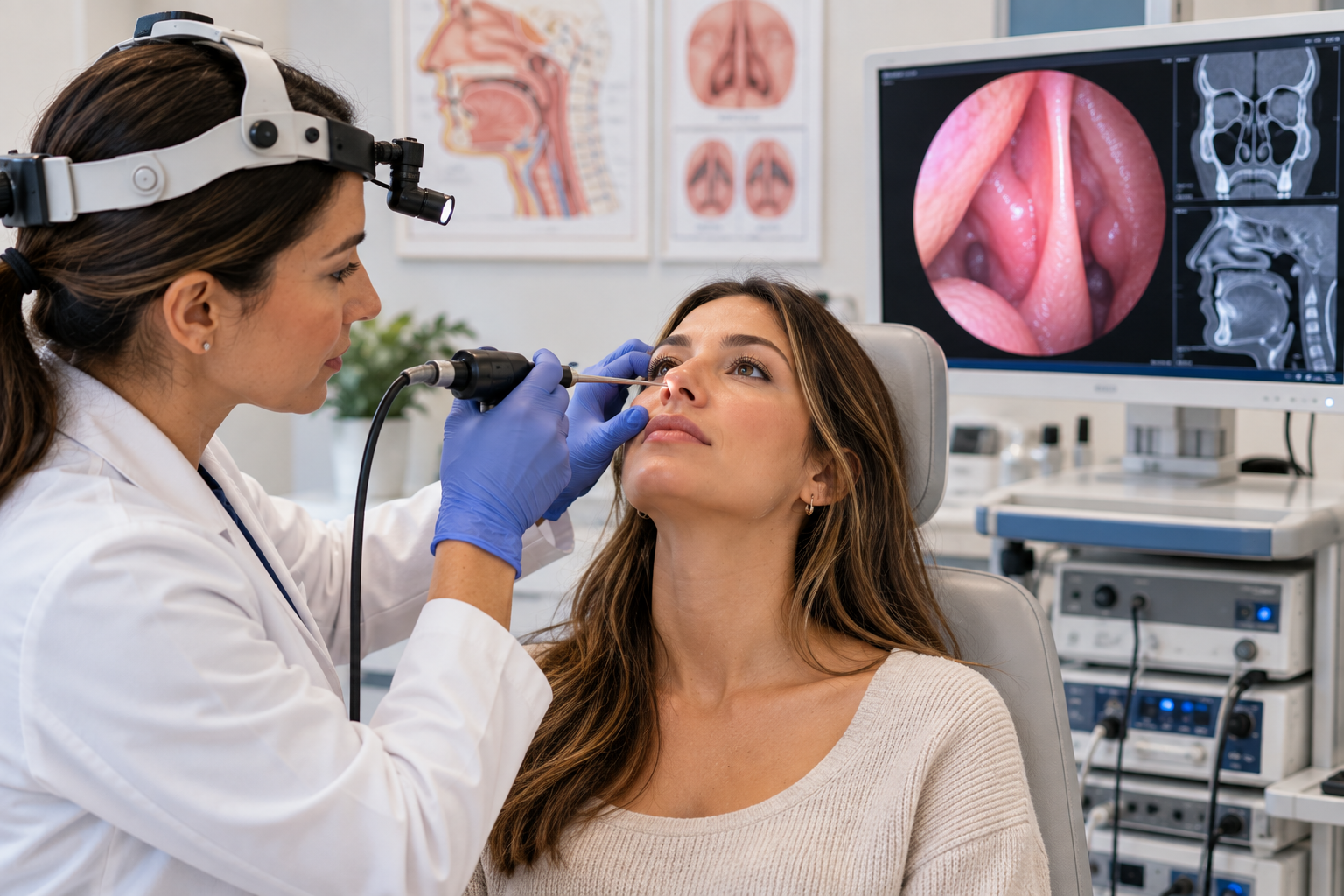
Nasal obstruction can affect sleep quality, mouth breathing, CPAP tolerance, and myofunctional therapy carryover.
Nasal obstruction matters.
Dr. Correa explained that nasal obstruction can impair sleep quality, increase daytime sleepiness, and increase snoring.
One of the most important clinical points was the relationship between nasal obstruction and CPAP adherence. Patients who are reluctant to use CPAP often complain about the mask and nasal symptoms. If the patient cannot breathe comfortably through the nose, CPAP can become much harder to tolerate.
Nasal surgery may improve subjective symptoms, sleep quality, daytime sleepiness, and snoring. However, Dr. Correa noted that nasal surgery has limited impact on objective parameters such as AHI or oxygen saturation index.
The main role of nasal surgery in sleep apnea may be improving CPAP adherence.
This distinction is clinically important.
Nasal treatment may not “cure” sleep apnea, but it may help patients tolerate the therapy they need.
Any Nasal Obstruction Can Lead to Mouth Breathing
Dr. Correa emphasized that any nasal obstruction can lead to compensatory oral breathing.
This is critical in airway and myofunctional therapy.
If a patient cannot breathe comfortably through the nose, they may develop mouth breathing, low tongue posture, open-mouth rest posture, poor lip seal, dry mouth, snoring, altered craniofacial growth patterns, and poor myofunctional therapy carryover.
This means airway providers should not only tell patients to nasal breathe.
They must ask whether nasal breathing is actually possible.
Simple Nasal Screening in Clinical Practice
Dr. Correa demonstrated that severe nasal obstruction can often be identified with simple tools.
ENTs may use a nasal speculum and frontal light for anterior rhinoscopy, but he also explained that clinicians can observe the nasal airway by gently opening the nostril with a thumb or simple instrument.
Providers may look for:
- Septal deviation
- Swollen turbinates
- Pale or inflamed mucosa
- Rhinorrhea
- Nasal polyps
- Signs of allergic rhinitis
- Narrow nasal passages
- Visible obstruction
This does not replace ENT diagnosis, but it helps providers know when referral is appropriate.
Oral Cavity and Oropharyngeal Evaluation
Dr. Correa also discussed evaluation of the oral cavity and oropharynx.
From a sleep perspective, clinicians should observe facial profile, dental occlusion, signs of malocclusion, retrognathia, overbite, overjet, hard palate shape, tongue position, and signs of chronic mouth breathing.
A patient with retrognathia may have a narrower upper airway and may also have limitations with certain treatment options.
For example, mandibular advancement devices can be effective for selected adult sleep apnea patients, but not every patient is an ideal candidate. Dental and skeletal findings matter.
This reinforces the importance of interdisciplinary care between ENT, dentistry, orthodontics, sleep medicine, and myofunctional therapy.
Mallampati, Friedman, and Tonsil Evaluation
Dr. Correa reviewed the Mallampati score and Friedman position score.
He reminded clinicians that the Mallampati score was originally designed for anesthesia, not sleep apnea. These tools may have some correlation with obstructive sleep apnea, but the correlation is limited.
They should not be used alone to diagnose or rule out sleep apnea.
Tonsil evaluation remains important. Adenotonsillectomy is still the first-line treatment for pediatric obstructive sleep apnea when enlarged tonsils and adenoids contribute to obstruction.
In adults, tonsillectomy may be considered in selected patients, including some obese patients, because it may slightly reduce AHI and improve CPAP adherence.
Again, patient selection matters.
Ankyloglossia and Sleep Apnea
Dr. Correa also discussed ankyloglossia, or tongue-tie, as part of the sleep apnea conversation.
In a normal situation, the tongue rests against the hard palate just behind the incisors. In patients with ankyloglossia, the tongue is tied to the floor of the mouth and may be unable to reach the palate. This can contribute to a lower and more posterior tongue posture toward the oropharynx.
Ankyloglossia may contribute to:
- Oral breathing
- Poor tongue posture
- Maxillary deficiency
- Reduced palatal stimulation
- Orofacial dysfunction
- Sleep-disordered breathing risk
- Speech or feeding challenges
- Limited tongue mobility
Dr. Correa emphasized that clinicians should screen for ankyloglossia because it may be asymptomatic or missed until later childhood or adulthood.
Tongue-Tie Release Should Not Be Isolated
One of the most important clinical points from Dr. Correa’s presentation was his approach to frenotomy.
In his hospital, he works closely with a speech therapist and relies on her functional assessment before recommending frenotomy. He does not recommend performing frenotomy without prior work from a trained therapist.
This is an essential message for airway providers.
Tongue-tie release should not be treated as a stand-alone procedure. It should be part of a functional plan that considers tongue mobility, oral posture, swallowing, breathing, sleep, and myofunctional therapy.
A release creates potential. Therapy helps the patient use it.
Measuring Tongue and Lip Strength
Dr. Correa emphasized the value of objectively measuring tongue and lip strength.
He discussed the IOPI, or Iowa Oral Performance Instrument, which measures pressure in kilopascals. It can be used to measure anterior tongue strength and lip strength.
This type of measurement may help clinicians identify muscular hypotonia and endotype sleep apnea patients more accurately.
In his practice, ENT providers use the IOPI to obtain a baseline and then reassess after myofunctional therapy. Follow-up may occur after one month and again after three months.
Objective measurement can help patients see progress, improve adherence, and set therapeutic goals.
IOPI and Drug-Induced Sleep Endoscopy
Dr. Correa discussed research showing that lower IOPI values may correlate with partial or complete obstruction of the tongue during drug-induced sleep endoscopy, also known as DISE.
This is important because DISE allows physicians to observe airway collapse patterns under sedation.
If lower tongue and lip strength values correlate with tongue obstruction, then objective oral pressure measurement may help identify patients whose sleep apnea includes a muscular or tongue-related component.
This is a strong bridge between myofunctional therapy and sleep medicine.
Lower-Cost Alternatives to IOPI
One barrier to IOPI use is cost. Dr. Correa explained that the IOPI may cost around $3,000 and may not be readily available everywhere.
He discussed lower-cost alternatives, including:
- Digital tongue spoon
- Tongometer
- Generic manometer adaptations
Some research groups are working to validate more affordable tools so clinicians can incorporate objective measurements more widely.
This matters because accessibility affects clinical adoption. If providers can measure function affordably and reliably, more patients may benefit.
Challenges in Applying Myofunctional Therapy
Despite its potential, myofunctional therapy faces several barriers.
Dr. Correa identified key challenges, including:
- Limited access to trained therapists
- Lack of insurance coverage
- Cost of therapy
- Time required for patients
- Travel burden
- Poor compliance
- Lack of standardized protocols
- Difficulty comparing research studies
Compliance is one of the biggest issues. Dr. Correa cited adherence to myofunctional therapy as ranging from 10% to 25% in some reports.
This is why telemedicine and digital tools are becoming increasingly important.
Why Telemedicine Matters
Telemedicine may help make myofunctional therapy more accessible, affordable, and scalable.
Dr. Correa highlighted several benefits of telemedicine, including:
- Reduced economic cost
- Improved access
- Closer monitoring
- Better therapy adjustments
- Easier family involvement
- Improved interdisciplinary collaboration
- Improved patient engagement
- Better long-term follow-up
For children, telemedicine can be especially helpful because it allows the family to participate more easily from home.
For adults, it can reduce barriers related to scheduling, transportation, cost, and consistency.
The Airway App
Dr. Correa and his colleagues use the Airway app, designed by Dr. Carlos O’Connor, in their clinical practice and research.
The app includes a set of exercises with videos and written instructions. It provides acoustic, visual, and tactile feedback and works with proprioceptive training, stereognosis, and praxia.
It also provides performance analysis, allowing patients and providers to monitor progress and identify which exercises are more difficult.
In clinical research, the app showed adherence rates up to 90% over a three-month period, which is significantly higher than the low compliance rates often reported with traditional therapy. The intervention group also showed increased IOPI values and reductions in AHI.
Limitations of App-Based Therapy
During the Q&A, Dr. Correa clarified that the Airway app uses a set sequence of exercises. It is not currently tailored by the practitioner in terms of which exercises are prescribed, number of repetitions, or number of sets.
This is an important limitation.
Personalized myofunctional therapy with a trained therapist may be ideal when available, especially for complex patients. However, in areas where access to trained therapists is limited, app-based therapy may offer a practical way to increase access and adherence.
The goal is not to replace skilled clinicians. The goal is to reach more patients and continue building evidence.
Hygiene and Smartphone-Based Exercises
A practical question came up during the Q&A: what about hygiene when the tongue contacts the phone screen?
Dr. Correa explained that some patients use a plastic bag over the phone or clean the screen before use.
This may seem like a small point, but it matters. If digital therapy is going to be used widely, practical implementation details should be addressed clearly with patients.
How Long Should Myofunctional Therapy Continue?
One of the most important Q&A points was therapy duration.
Dr. Correa explained that sleep apnea is often a lifetime condition. Because of this, he recommends that patients continue therapy long term.
Even if research protocols last three months or six months, patients may relapse if they stop practicing and forget the exercises.
This does not mean every patient needs intensive therapy forever. But maintenance may be important.
Myofunctional therapy should be thought of less like a short-term challenge and more like an ongoing functional health habit.
Passive Myofunctional Therapy
Dr. Correa also discussed passive myofunctional therapy.
Passive therapy does not require the patient to actively perform exercises in the same way. Examples may include:
- Tongue retaining devices
- Orthotic devices that maintain lip seal
- Hypoglossal nerve stimulation
- Positional therapy
- Mandibular advancement devices
These tools may influence tongue position, airway stability, muscle activation, mandibular posture, or pharyngeal wall tension.
This expands the way clinicians think about orofacial muscle function in sleep apnea.
Myofunctional Therapy in Official Guidelines
Dr. Correa described myofunctional therapy as having untapped potential.
Most adult sleep apnea guidelines still do not strongly recommend myofunctional therapy as a standard treatment. Some guidelines, including Spanish and European respiratory guidance, consider myofunctional therapy as a complementary treatment option to CPAP rather than an isolated treatment.
Interestingly, the American Academy of Dental Sleep Medicine recommends evaluation of tongue position, tongue mobility, and lingual frenulum length.
This highlights a gap.
If sleep apnea is a breathing disorder, and breathing depends on oral and upper airway function, why are functional signs not more consistently evaluated?
Clinical Questions for Healthcare Professionals
When evaluating patients with obstructive sleep apnea, snoring, mouth breathing, or poor CPAP tolerance, clinicians may ask:
- Can the patient breathe comfortably through the nose?
- Is there nasal obstruction?
- Does the patient mouth breathe during the day or night?
- Is there a high or narrow palate?
- Is there retrognathia or malocclusion?
- Is the tongue able to rest on the palate?
- Is there ankyloglossia or reduced tongue mobility?
- Does the patient have poor lip seal?
- Does the patient have low tongue or lip strength?
- Could objective measurement with IOPI or another tool be useful?
- Is the patient struggling with CPAP due to nasal symptoms?
- Would myofunctional therapy improve function or adherence?
- Would telemedicine or app-based support improve compliance?
- Does this patient need an ENT, dentist, speech therapist, myofunctional therapist, or sleep physician involved?
These questions help providers move beyond a one-size-fits-all approach.
Key Takeaways for Healthcare Professionals
- Obstructive sleep apnea is multifactorial and includes anatomical, neurological, and muscular phenotypes.
- Myofunctional therapy may be especially relevant for the muscular hypotonia phenotype.
- The tongue and orofacial muscles are complex systems involving strength, endurance, mobility, praxia, stereognosis, sensory feedback, and coordinated function.
- Research supports improvements in snoring, daytime sleepiness, AHI, oxygen desaturation, and CPAP adherence in selected patients.
- Nasal obstruction can impair sleep quality and reduce CPAP adherence.
- Any nasal obstruction may contribute to compensatory mouth breathing.
- Ankyloglossia may contribute to oral breathing, maxillary deficiency, orofacial dysfunction, and sleep-disordered breathing risk.
- Tongue-tie release should not be performed without functional assessment and preparation.
- Objective tools such as IOPI may help measure tongue and lip strength.
- Lower tongue and lip pressure values may correlate with tongue obstruction on DISE.
- Telemedicine and app-based tools may improve adherence and access.
- Long-term maintenance may be needed because sleep apnea is often chronic.
- The field needs more published research, standardized protocols, and interdisciplinary collaboration.
The Airway Circle Perspective

Airway care is strongest when providers collaborate across ENT, sleep medicine, dentistry, orthodontics, and myofunctional therapy.
At Airway Circle, we believe airway care must include structure and function.
Dr. Eduardo Correa’s presentation reminds us that sleep apnea cannot be understood only by looking at anatomy. The function of the tongue, lips, nose, palate, pharynx, breathing pattern, and orofacial muscles matters.
Myofunctional therapy is not a replacement for CPAP, ENT care, oral appliance therapy, surgery, orthodontics, or medical treatment. It is a complementary tool that may help improve airway stability, support nasal breathing, improve CPAP adherence, and address functional contributors to sleep-disordered breathing.
The future of airway care requires ENTs, dentists, sleep physicians, myofunctional therapists, speech-language pathologists, orthodontists, and researchers to work together.
Final Thoughts
Myofunctional therapy in obstructive sleep apnea remains an area of significant untapped potential.
The evidence is promising. The clinical need is clear. The barriers are real.
To move the field forward, healthcare professionals must measure outcomes, publish results, improve adherence, use objective tools when possible, and collaborate across disciplines.
Patients need more than a diagnosis.
They need a functional plan that considers the nose, tongue, lips, palate, airway muscles, sleep quality, breathing pattern, and long-term stability.
For selected patients, myofunctional therapy may be one of the missing pieces.
Need Guidance With Airway, Sleep, or Myofunctional Therapy?
Finding the right support for airway health, sleep apnea, breathing, tongue function, oral restrictions, CPAP challenges, or myofunctional therapy does not have to feel overwhelming. With the right guidance, patients and providers can better understand the clinical picture and explore the next best steps.
Whether care involves myofunctional therapy, ENT evaluation, sleep testing, CPAP support, oral appliance therapy, tongue-tie assessment, nasal breathing support, or referrals to the right provider, the goal is to improve function and quality of life.
Your journey to better breathing, better sleep, and better oral function starts here.