
Novel Approaches to Nasal and Upper Airway Rehabilitation
Aug 09, 2026
Nasal breathing rehabilitation looks beyond the nose to include the brain, tongue, diaphragm, upper airway, and nervous system.
Nasal breathing is not simply a habit. It is a vital function that influences airway health, sleep quality, nervous system regulation, oxygen delivery, nitric oxide production, oral posture, craniofacial development, and overall physiology.
For healthcare professionals working in airway health, myofunctional therapy, dentistry, orthodontics, speech-language pathology, sleep medicine, ENT, physical therapy, osteopathy, and functional medicine, the question is no longer whether nasal breathing matters.
The better question is: how do we rehabilitate nasal and upper airway function when a patient has lost it?
In an Airway Circle Thursday Night Live presentation, Dr. Rosalba Courtney shared her integrative approach to nasal and upper airway rehabilitation. Her work focuses on breathing as a multidimensional function that must be assessed, trained, and integrated across the entire breathing system.
Her message was clear: nasal breathing rehabilitation is more than telling a patient to “close your mouth and breathe through your nose.” It requires a functional, individualized, neuroplastic approach.
What Is Integrative Breathing Therapy?
Integrative Breathing Therapy, also known as IBT, is an approach developed by Dr. Rosalba Courtney that looks at breathing as a whole-body, whole-person function.
Rather than focusing on one technique or one breathing pattern, IBT considers the many roles breathing plays in the body. Breathing is not only about air movement. It also influences the nervous system, posture, rhythm, emotional regulation, upper airway tone, sleep, exercise tolerance, and overall health.
Dr. Courtney describes functional breathing through the acronym EARS:
- Efficient
- Adaptive
- Responsive
- Supportive of other body systems
This means functional breathing is not the same for every person. It must be appropriate for the individual, the situation, the task, and the body’s needs.
The Unified Airway: Why the Whole Breathing System Matters
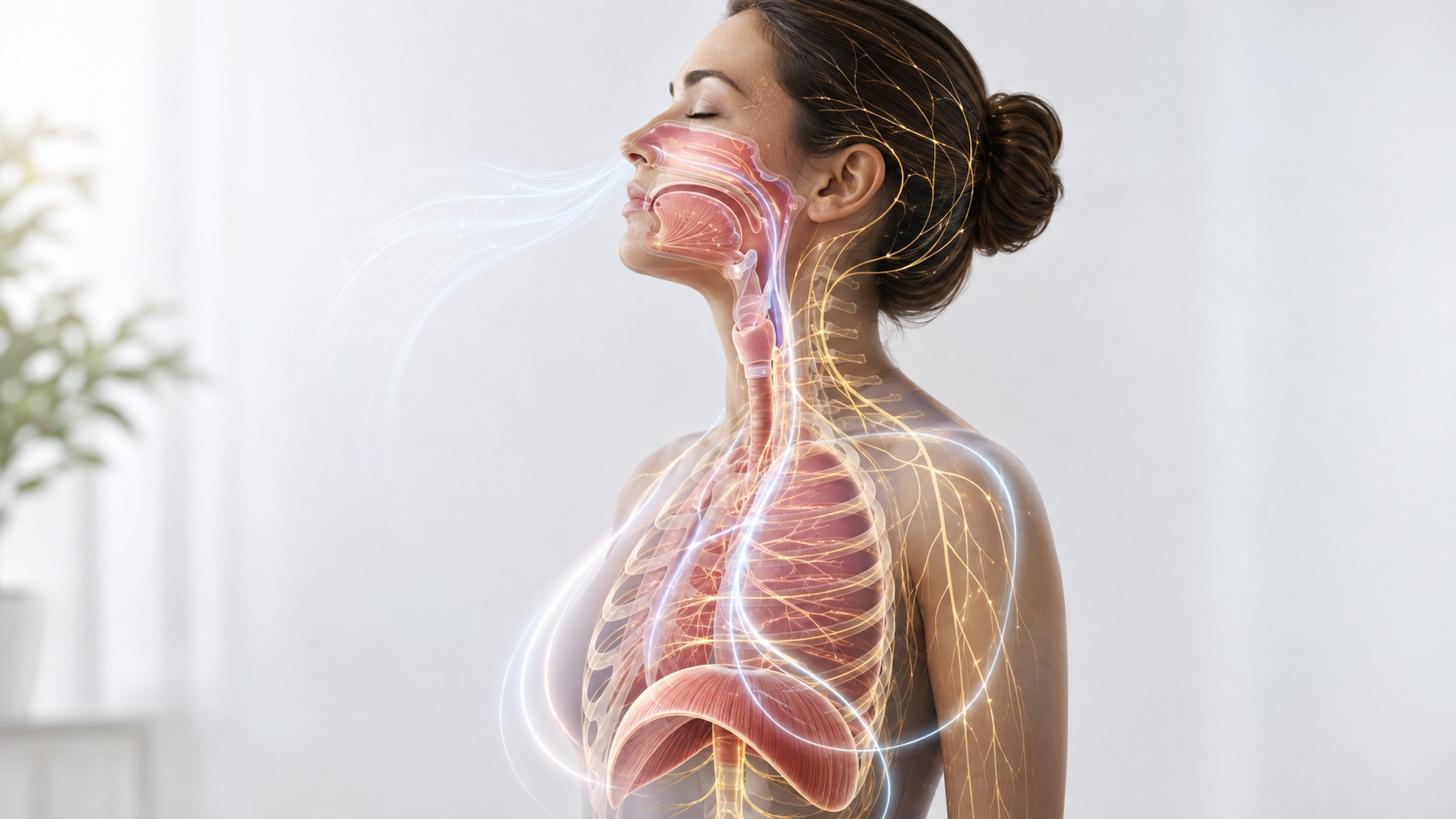
The nose, tongue, throat, diaphragm, rib cage, and nervous system work together as one unified breathing system.
One of the key principles of Integrative Breathing Therapy is the concept of the unified breathing system.
The breathing system includes both thoracic and extrathoracic structures. The thoracic system includes the lungs, rib cage, diaphragm, and respiratory muscles. The extrathoracic system includes the nose, mouth, tongue, pharynx, larynx, and upper airway.
These systems do not work separately. They are anatomically, neurologically, and functionally linked.
This matters because a patient with nasal obstruction may also have dysfunctional breathing mechanics. A patient with upper airway collapse may also have poor tongue coordination. A patient with laryngeal breathing dysfunction may also have stress, reflux, thoracic breathing, or nervous system dysregulation.
For healthcare professionals, this reinforces an important point: the nose, tongue, throat, diaphragm, rib cage, and nervous system must be evaluated as part of one connected system.
Why Mouth Breathing Is a Functional Problem
Mouth breathing is one of the most common airway-related concerns seen in clinical practice. It may occur during the day, at night, or both.
Chronic mouth breathing can contribute to:
- Dry mouth
- Poor oral posture
- Low tongue posture
- Altered craniofacial growth
- Narrow palate
- Dental crowding
- Sleep-disordered breathing
- Snoring
- Poor sleep quality
- Oral inflammation
- Reduced nasal function
- Upper airway dysfunction
- Reduced nitric oxide exposure
- Poor breathing efficiency
Dr. Courtney emphasized that when the nose is not used, it may lose function. This is sometimes referred to as nasal disuse or nasal neglect.
The first rule of nasal rehabilitation is simple: use it, or you may lose it.
What Is Nasal Disuse?
Nasal disuse occurs when a patient does not use the nose consistently for breathing. Over time, the nasal passages may become less efficient, less healthy, and less connected to the brain’s breathing regulation system.
Nasal breathing provides mechanical stimulation to the tissues of the nose. The airflow, pressure changes, and sensory input help maintain nasal health and support communication between the nose and brain.
When a patient chronically mouth breathes, the nose receives less sensory input and less functional stimulation. This can contribute to a cycle of nasal obstruction, discomfort, poor airflow sensation, anxiety with nasal breathing, and continued mouth breathing.
For clinicians, this means nasal rehabilitation must address more than anatomy. It must also address sensory function, breathing pattern, nervous system response, and learned behavior.
Common Upper Airway Problems
Dr. Courtney discussed several common issues that may affect the nasal and upper airway system.
These include:
- Mouth breathing
- Nasal obstruction
- Nasal disuse
- Laryngeal breathing disorders
- Tongue dysfunction
- Poor upper airway dilator muscle function
- Pharyngeal collapse
- Dysfunctional breathing
- Hyperventilation
- Hypoventilation
- Poor coordination between the diaphragm and upper airway
- Stress-related breathing dysfunction
- Reflux-related airway irritation
- Long COVID-related nasal and breathing symptoms
- POTS and dysautonomia-related breathing challenges
These issues can overlap, making treatment more complex. A patient may not respond fully to surgery, medication, myofunctional therapy, or breathing retraining if the broader breathing system is not assessed.
When Standard Treatments Are Not Enough
Common medical treatments for nasal obstruction and upper airway symptoms may include nasal sprays, allergy medications, surgery, mandibular advancement devices, CPAP, ENT care, and dental or orthodontic interventions.
These treatments can be very helpful and are sometimes necessary. However, Dr. Courtney explained that some patients have an incomplete response because they also have functional breathing problems.
Examples include patients who:
- Continue mouth breathing after nasal surgery
- Feel they cannot get enough air through the nose despite an open airway
- Develop anxiety or distress when nasal breathing
- Have upper airway collapse despite appliance or CPAP therapy
- Have laryngeal breathing dysfunction
- Have poor tongue and upper airway coordination
- Have dysautonomia, reflux, mast cell activation, or chronic stress
- Have long COVID symptoms affecting smell, nasal breathing, or airway comfort
These patients may need functional nasal breathing rehabilitation in addition to medical or dental care.
The Brain, Tongue, and Upper Airway Connection
The tongue is not only a speech, swallowing, and feeding organ. It is also part of the breathing system.
Dr. Courtney emphasized that the tongue and upper airway muscles are neurologically integrated with breathing. When the brain sends signals to the diaphragm to initiate a breath, it also sends signals to the tongue and upper airway muscles.
This is important because upper airway rehabilitation should not treat the tongue like a simple skeletal muscle being strengthened in isolation. The tongue must be trained as part of the breathing system.
In other words, upper airway exercises should not only focus on repetition. They should also focus on sensory awareness, coordination, timing, neuroplasticity, relaxation, and integration with breathing.
Why Neuroplasticity Matters in Airway Rehabilitation
Neuroplasticity refers to the brain’s ability to change and adapt through experience, attention, repetition, and sensory input.
Dr. Courtney emphasized that nasal and upper airway rehabilitation should use neuroplasticity principles. This means training should include:
- Awareness
- Attention
- Sensory feedback
- Variation
- Repetition of desired function
- Mindfulness
- Relaxation
- Functional integration
- Appropriate challenge
- Connection between breathing and movement
This is especially relevant for healthcare professionals who work with myofunctional therapy, speech therapy, breathing therapy, sleep-disordered breathing, and upper airway rehabilitation.
The goal is not just to perform an exercise. The goal is to help the brain relearn healthy breathing and upper airway function.
Functional Nasal Breathing Rehabilitation
Dr. Courtney shared research on a functional nasal breathing rehabilitation protocol using Integrative Breathing Therapy principles.
The protocol included education, breath holds, humming, alternate nostril breathing, nasal awareness, tongue posture, diaphragm connection, mindfulness, smelling, and strategies for challenges such as allergies, colds, and exercise.
Participants reported improvements in ease of nasal breathing, daytime nasal breathing, nighttime nasal breathing, sleep, and sense of calm.
This reinforces an important clinical point: nasal breathing can be trained.
For some patients, functional nasal breathing rehabilitation may help reduce mouth breathing and improve comfort, awareness, and confidence with nasal airflow.
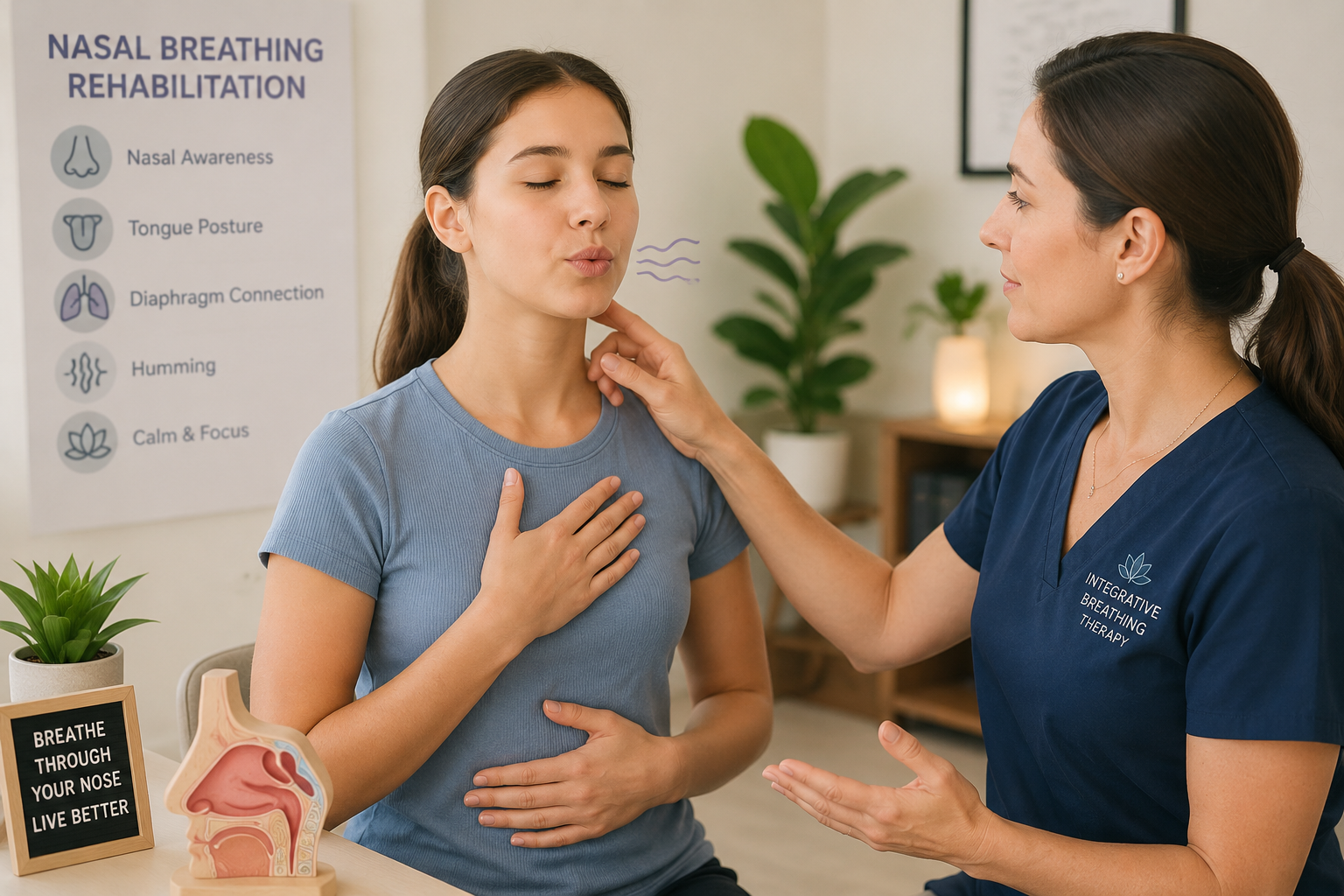
Nasal breathing can be retrained through awareness, sensory feedback, humming, breath work, tongue posture, and functional integration.
The Role of Humming in Nasal Rehabilitation
Humming is one of the techniques Dr. Courtney discussed during the presentation.
Humming creates vibration in the upper airway and nasal passages. It may help increase awareness of the nose, support airflow sensation, and engage the breathing system in a mindful way.
She demonstrated alternate nostril humming, where one nostril is gently closed while the patient hums through the other side. The goal is not simply to hum, but to pay attention to sensation, sound, vibration, pressure, and differences between sides.
This turns the exercise into neuroplastic training rather than a mechanical drill.
For clinicians, this is a powerful reminder: how the patient attends to the exercise matters.
Tongue Training and Breathing Integration
Dr. Courtney also demonstrated tongue techniques that link tongue movement with breathing.
Because the tongue and upper airway muscles are integrated with the respiratory system, training tongue activation during different phases of breathing may help improve coordination.
For example, she demonstrated breathing in through the mouth with the tongue extended and then exhaling through the nose, followed by awareness of how the tongue feels afterward. She also demonstrated linking tongue extension with exhalation.
The goal is not simply strengthening. The goal is sensory-motor integration.
This may be especially relevant for patients with:
- Low tongue tone
- Poor tongue awareness
- Mouth breathing
- Sleep-disordered breathing
- Upper airway collapse
- Poor oral rest posture
- Myofunctional disorders
- Difficulty coordinating breathing and tongue posture
Long COVID, POTS, Dysautonomia, and Breathing
Dr. Courtney shared that in recent years she has treated more patients with long COVID and POTS. Many of these patients present with nasal obstruction, altered smell, dysfunctional breathing, fatigue, dysautonomia, and nervous system hyperarousal.
In these patients, breathing retraining must be carefully individualized. The goal is not to push the patient into aggressive breathing techniques, but to support regulation, airflow comfort, and gradual functional improvement.
This is especially important because patients with dysautonomia or chronic illness may not tolerate standard breathing exercises in the same way as healthy patients.
For providers, this highlights the need for clinical reasoning, not rigid protocols.
The Role of Stress and Nervous System Regulation
Stress is a major driver of dysfunctional breathing. Dr. Courtney emphasized the importance of addressing hyperarousal in the nervous system.
Patients with chronic stress, trauma, anxiety, long COVID, POTS, or chronic illness may have breathing patterns that reflect nervous system dysregulation.
These patients may present with:
- Upper chest breathing
- Air hunger
- Frequent sighing
- Difficulty nasal breathing
- Breath holding
- Hyperventilation
- Throat tightness
- Laryngeal symptoms
- Poor exercise tolerance
- Sleep disruption
- Anxiety with breathing exercises
For these patients, airway rehabilitation should include calming, awareness, regulation, and individualized pacing.
Clinical Questions to Consider
When evaluating patients with mouth breathing, nasal obstruction, or upper airway dysfunction, healthcare professionals may consider asking:
- Does the patient breathe through the nose comfortably during the day?
- Does the patient mouth breathe at night?
- Does nasal breathing create anxiety or distress?
- Has the patient had nasal surgery but still feels obstructed?
- Does the patient have allergies, reflux, long COVID, POTS, or dysautonomia?
- Can the patient sense airflow through the nose?
- Does the patient have low tongue posture or poor tongue awareness?
- Does the patient have upper chest breathing or poor diaphragm coordination?
- Does the patient have laryngeal symptoms such as throat tightness or inspiratory difficulty?
- Does the patient need medical management, functional training, or both?
These questions help guide more individualized care.
Key Takeaways for Healthcare Professionals
- Nasal breathing is a trainable function, not just an anatomical issue.
- Mouth breathing can create nasal disuse, which may reduce nasal function over time.
- The nose, tongue, pharynx, larynx, diaphragm, rib cage, and nervous system are part of one unified breathing system.
- The tongue is part of the breathing system and should be trained in coordination with breathing.
- Upper airway rehabilitation should use neuroplasticity principles, including awareness, attention, sensory feedback, variation, and repetition of desired function.
- Standard treatments such as surgery, allergy management, CPAP, mandibular advancement, and dental care may be necessary but may not fully address functional breathing issues.
- Patients with long COVID, POTS, dysautonomia, reflux, stress, and anxiety may require individualized breathing rehabilitation.
- Functional nasal breathing rehabilitation may support improved nasal breathing, sleep, calm, and airway function.
The Airway Circle Perspective
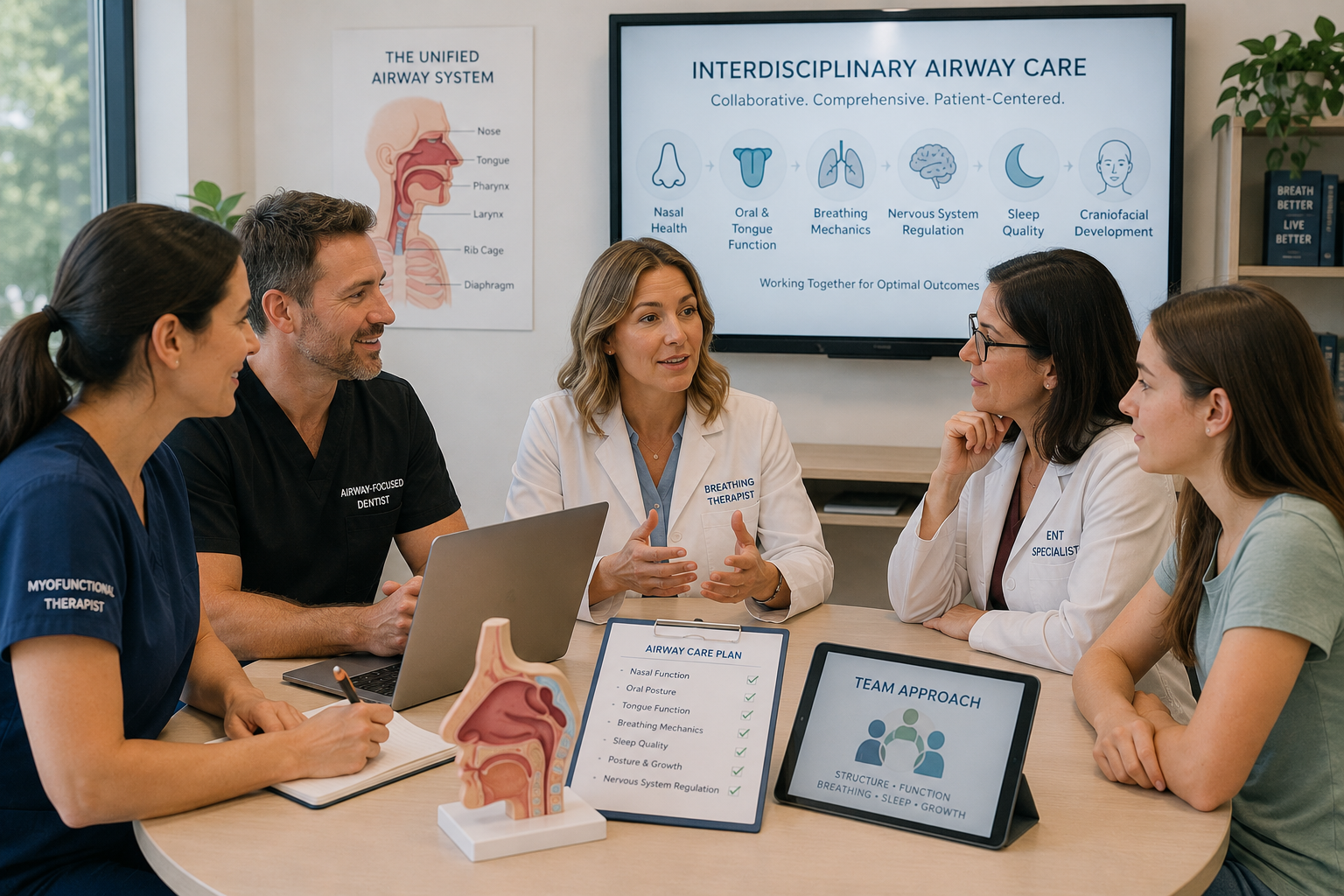
Airway health improves when structure, function, breathing mechanics, nervous system regulation, and interdisciplinary care work together.
At Airway Circle, we believe airway health requires a functional, interdisciplinary, and whole-person approach.
Dr. Rosalba Courtney’s presentation reminds us that nasal breathing is not simply about opening the nose. It is about reconnecting the nose, brain, tongue, diaphragm, upper airway, and nervous system.
For healthcare professionals, this means we need to think beyond anatomy alone. We need to evaluate function, sensory awareness, breathing mechanics, nervous system regulation, and the patient’s ability to integrate new patterns into daily life.
Airway health improves when structure and function are addressed together.
Final Thoughts
Nasal and upper airway rehabilitation is an essential part of airway health.
Patients with mouth breathing, nasal obstruction, sleep-disordered breathing, upper airway collapse, poor tongue function, laryngeal breathing disorders, long COVID, POTS, dysautonomia, and stress-related breathing dysfunction may need more than standard treatment alone.
They may need a functional approach that helps the brain and body relearn how to breathe well.
The future of airway care is not only about treating obstruction. It is about restoring function.
And when clinicians understand the unified breathing system, they can help patients move toward better breathing, better sleep, better regulation, and better overall health.
Need Guidance With Airway, Breathing, or Myofunctional Therapy?
Finding the right support for airway health, nasal breathing, sleep, tongue function, oral restrictions, or breathing dysfunction does not have to feel overwhelming. With the right guidance, patients and providers can better understand the clinical picture and explore the next best steps.
Whether care involves myofunctional therapy, nasal breathing rehabilitation, airway-focused dentistry, ENT evaluation, sleep testing, tongue-tie assessment, or referrals to the right provider, the goal is to improve function and quality of life.
Your journey to better breathing, better sleep, and better oral function starts here.