
Rediscovering Airway Health in Primary and Mixed Dentition: Insights from Dr. Bill Hang
Sep 28, 2026
Early airway-focused orthodontics is not only about straight teeth. It is about supporting breathing, growth, function, and lifelong health.
Airway-focused orthodontics is not a new idea.
Long before airway health became a major topic in dentistry, orthodontics, myofunctional therapy, sleep medicine, and pediatric care, clinicians were already observing the connection between nasal breathing, jaw growth, facial development, behavior, learning, and long-term health.
In an Airway Circle presentation, Dr. William “Bill” Hang shared why modern providers must rediscover the health reasons for treating children earlier, especially during the primary and mixed dentition.
Dr. Hang is a pioneering orthodontist with a 50-year career dedicated to airway-focused, non-retractive orthodontics. After earning his dental degree from the University of Illinois and completing orthodontic training at the University of Minnesota, he began his career using traditional orthodontic methods. Over time, his philosophy changed as he saw the impact orthodontic treatment could have on facial growth, tongue space, airway health, and whole-body function.
He later became a leader in non-retractive orthodontics and founded OrthO2Health™, where he continues to mentor professionals in airway-friendly orthodontic care for patients of all ages. He has also received a Lifetime Achievement Award from the American Academy of Physiological Medicine and Dentistry.
His message was clear: orthodontic treatment should not only create straight teeth. It should support breathing, growth, function, and lifelong health.
Why Early Orthodontic Intervention Matters
Historically, many children were told to wait until all permanent teeth erupted before beginning orthodontic treatment.
Dr. Hang challenges this model.
When providers wait until adolescence, important windows for facial growth, airway development, oral posture, nasal breathing, and jaw development may already have been missed.
The primary and mixed dentition stages offer a powerful opportunity to guide growth while the child is still developing. During this time, providers may be able to support better nasal breathing, improve tongue space, encourage forward jaw development, reduce airway resistance, and help the child establish healthier oral rest posture.
Early intervention does not mean every child needs braces at age four or five. It means providers should screen earlier, ask better questions, and identify children whose growth patterns are already moving in an unhealthy direction.
Nasal Breathing Is Foundational
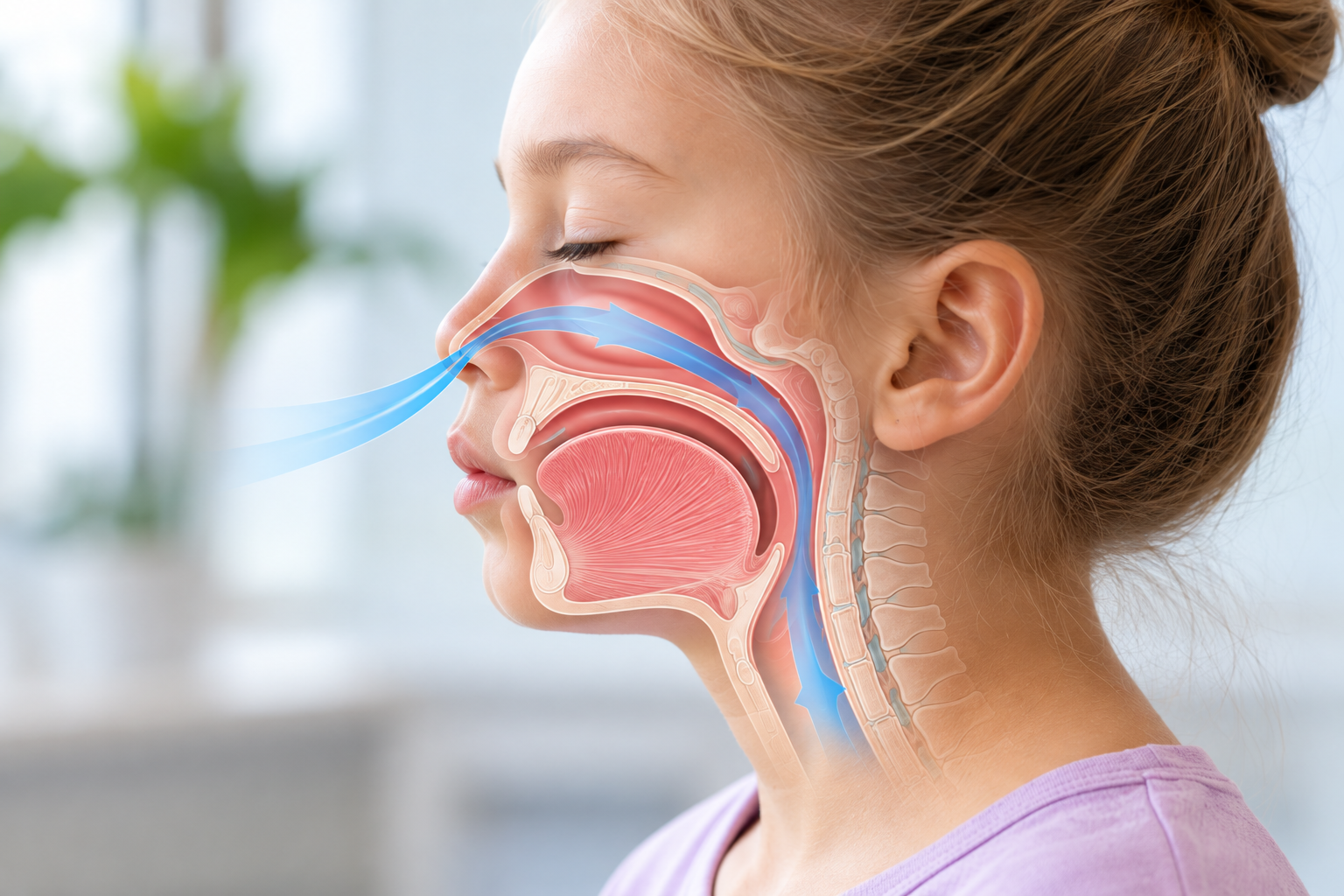
Nasal breathing supports craniofacial growth, sleep quality, oral posture, and airway stability.
One of Dr. Hang’s central messages is the importance of nasal breathing.
Nasal breathing is not optional. It is a foundational function that supports craniofacial growth, sleep quality, oxygenation, nervous system regulation, oral posture, and airway stability.
Chronic mouth breathing can influence how the jaws grow, how the tongue rests, how the lips function, and how the face develops.
Children who chronically mouth breathe may present with:
- Long-face growth patterns
- Recessed jaws
- Open-mouth posture
- Low tongue posture
- Narrow arches
- High palate
- Increased overjet
- Reduced mandibular growth
- Sleep-disordered breathing
- Snoring
- Behavioral concerns
- Learning challenges
- Poor sleep quality
For airway-focused providers, mouth breathing should never be normalized.
A child who breathes through the mouth is not simply choosing a habit. The child may be compensating for nasal obstruction, enlarged tonsils or adenoids, oral restrictions, poor tongue posture, underdeveloped jaws, or poor airway function.
Why “Wait and See” Can Be Risky
Dr. Hang emphasized that “wait and see” is often not the best approach when a child is showing signs of airway dysfunction.
If a child is snoring, mouth breathing, sleeping poorly, growing vertically, developing recessed jaws, or showing signs of poor oral posture, waiting may allow the problem to become more established.
The earlier clinicians identify airway risk, the more opportunity there may be to guide growth in a healthier direction.
Early screening may help identify:
- Nasal obstruction
- Mouth breathing
- Tonsil or adenoid concerns
- High narrow palate
- Poor lip seal
- Tongue restriction
- Low tongue posture
- Crowding
- Overjet
- Retruded jaws
- Vertical facial growth
- Sleep-disordered breathing symptoms
- Behavioral or learning concerns
These signs are not isolated findings. They may be part of a larger developmental pattern.
Airway Health and Childhood Development
Airway restriction in children can affect more than sleep.
Dr. Hang discussed how breathing dysfunction may be associated with facial recession, underdeveloped jaws, sleep apnea, oxygen desaturation, learning challenges, behavioral concerns, and long-term health consequences.
Children need quality sleep and adequate oxygenation for brain development, growth, immune function, emotional regulation, attention, and learning.
When sleep is disrupted by airway resistance, snoring, mouth breathing, or sleep-disordered breathing, the child may not present as “sleepy.” Many children become hyperactive, dysregulated, impulsive, emotional, or inattentive.
This is why pediatric airway screening is so important.
A child’s behavior may be telling us that their sleep and breathing need attention.
Orthodontics Should Protect the Airway
Dr. Hang has long advocated for orthodontic treatment that protects and supports airway health.
Traditional orthodontic models have often focused on straight teeth, occlusion, and esthetics. In some cases, treatment has included extractions or retractive mechanics that may reduce oral volume and tongue space.
Dr. Hang strongly discourages retractive approaches that compromise the airway.
His airway-focused philosophy prioritizes:
- Nasal breathing
- Forward jaw development
- Adequate tongue space
- Lip competence
- Healthy oral rest posture
- Facial balance
- Non-retractive mechanics
- Long-term function
- Whole-body health
The goal is not simply to align teeth.
The goal is to create a healthier structural and functional environment for the child to breathe, sleep, grow, and thrive.
Forward Development Matters
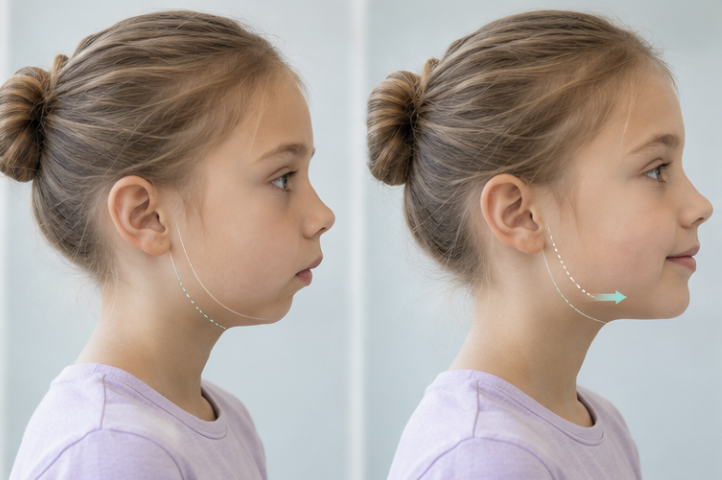
Airway-focused orthodontics must consider forward growth, not only expansion or dental alignment.
Expansion is important, but Dr. Hang emphasized that width alone is not always enough.
Airway-focused orthodontics must also consider anterior-posterior development. In other words, the jaws need to develop forward, not just wider.
When the jaws are recessed, the tongue may not have adequate space. The airway may be more vulnerable to obstruction. The lips may struggle to close comfortably. The face may grow down and back instead of forward.
Forward development may help support:
- Tongue space
- Nasal breathing
- Lip seal
- Airway volume
- Facial profile
- Sleep quality
- Oral rest posture
- Healthy jaw relationships
This is especially important in children with retruded jaws, increased overjet, poor lip competence, sleep-disordered breathing symptoms, or low tongue posture.
The Problem With Retraction
Dr. Hang’s work has consistently challenged the use of retractive orthodontic treatment when it compromises airway health.
When teeth or jaws are moved backward, tongue space may be reduced. If the tongue loses space, it may move backward toward the oropharynx or rest low in the mouth. This can affect airway stability, swallowing, oral posture, and sleep.
Retraction may also affect facial profile and lip support.
For providers, the key question should be:
Will this treatment protect or reduce the space the tongue and airway need?
Airway-friendly orthodontics requires clinicians to consider not only where the teeth end up, but what happens to the tongue, lips, jaws, face, and airway.
Oral Rest Posture: Lips Together, Tongue Up, Teeth Lightly Together
Dr. Hang emphasized the importance of oral rest posture.
A healthy oral rest posture includes lips closed, tongue resting against the palate, and teeth lightly together or near contact, depending on the clinical philosophy and patient needs.
This posture supports nasal breathing and helps guide facial development.
When the mouth is open and the tongue rests low, the face may grow more vertically, the jaws may develop less favorably, and the airway may become more compromised.
For children, oral rest posture is not a small detail. It is a growth signal.
The tongue, lips, cheeks, and facial muscles help shape the developing jaws.
Myofunctional Therapy and Early Growth Guidance
Myofunctional therapy plays an important role in airway-focused care.
Dr. Hang supports early functional intervention, including addressing oral habits, tongue posture, lip seal, nasal breathing, and tethered oral tissues when appropriate.
Myofunctional therapy may help support:
- Nasal breathing
- Lip competence
- Tongue-to-palate rest posture
- Swallowing patterns
- Chewing function
- Oral awareness
- Habit elimination
- Posture
- Orthodontic stability
- Post-treatment function
In young children, therapy may look different than it does for older children or adults. It may involve education, parent coaching, habit awareness, play-based exercises, nasal breathing support, and coordination with other providers.
The goal is to create function that supports growth.
Tongue-Tie, Oral Habits, and Airway
Dr. Hang’s philosophy also considers the impact of tethered oral tissues and oral habits on growth and airway health.
If the tongue cannot elevate to the palate, it may not provide the stimulation needed for healthy maxillary development. If the child uses a pacifier for too long, sucks a thumb, or rests with the mouth open, the tongue may remain low and the jaws may develop in a less favorable direction.
Possible contributors to poor oral function include:
- Tongue-tie
- Poor tongue mobility
- Prolonged pacifier use
- Thumb or finger sucking
- Mouth breathing
- Low tongue posture
- Poor lip seal
- Nasal obstruction
- Enlarged tonsils or adenoids
These issues should be identified early because they can influence both function and form.
Case Studies: What Early Airway-Focused Orthodontics Can Change
Dr. Hang shared several clinical cases demonstrating the potential impact of airway-focused orthodontics.
One case involved a 7-year-old girl whose profile and airway improved after the upper front teeth were advanced and the lower jaw was encouraged to develop forward. Her airway volume increased significantly, illustrating the potential impact of forward development on airway space.
Another case involved a boy with Pierre Robin sequence and severe sleep apnea. Through forward and lateral jaw development, he experienced improved breathing, growth, and academic success.
Dr. Hang also shared a case of a young girl who avoided headgear and extractions while achieving airway improvement through non-retractive orthodontics.
These cases highlight a central theme:
Early airway-focused treatment can change more than smiles. It may influence breathing, growth, sleep, function, confidence, and long-term health.
Airway-Centric Dentistry
Dr. Hang advocates for a new professional identity: airway-centric dentistry.
Airway-centric dentistry means every treatment decision is made with the airway in mind.
This does not mean every patient receives the same treatment. It means providers ask better questions before they intervene.
- Will this treatment protect tongue space?
- Will this support nasal breathing?
- Will this help the jaws grow forward?
- Will this improve or compromise oral rest posture?
- Will this affect sleep-disordered breathing risk?
- Will this support lifelong health?
Airway-centric dentistry moves beyond tooth alignment alone and considers the whole patient.
Why Parents Are Driving the Change
Dr. Hang believes parents, especially mothers, are helping drive change in airway care.
Parents are often the first to notice when something is not right. They see the mouth breathing, snoring, restless sleep, behavioral changes, poor focus, picky eating, speech concerns, and fatigue.
Many parents are also noticing the long-term consequences of traditional orthodontic approaches that may not have considered airway health.
These “mama bears” are asking better questions, seeking better answers, and pushing the profession toward a healthier standard of care.
Airway-focused providers should listen carefully.
Parents often see the symptoms before the system recognizes the problem.
The Role of the Interdisciplinary Team

Children benefit when providers collaborate across orthodontics, myofunctional therapy, ENT, pediatric dentistry, sleep, and growth.
Airway health requires collaboration.
No single provider can address every part of the airway, growth, sleep, and function puzzle.
A child may need a team that includes:
- Airway-focused orthodontist
- Myofunctional therapist
- ENT
- Pediatric dentist
- General dentist
- Sleep physician
- Pediatrician
- Speech-language pathologist
- Lactation professional
- Bodyworker
- Functional medicine provider
- Physical or occupational therapist
Each provider brings a different perspective.
- The orthodontist may guide jaw development.
- The myofunctional therapist may support oral rest posture and nasal breathing.
- The ENT may evaluate tonsils, adenoids, and nasal obstruction.
- The sleep physician may evaluate sleep-disordered breathing.
- The pediatric dentist may identify early oral signs.
- The parent may provide the most important daily observations.
The best outcomes often happen when the right providers work together at the right time.
Clinical Questions for Healthcare Professionals
When evaluating children in the primary or mixed dentition, providers may ask:
- Does the child breathe through the nose during the day?
- Does the child sleep with the mouth open?
- Is there snoring, restless sleep, or frequent waking?
- Is the face growing forward or down and back?
- Are the jaws recessed?
- Is there increased overjet?
- Is the palate narrow or high?
- Is there crowding?
- Can the lips close comfortably at rest?
- Can the tongue rest in the palate?
- Are there enlarged tonsils or adenoids?
- Is there a tongue-tie or reduced tongue mobility?
- Does the child have ADHD-like behavior, poor focus, or learning challenges?
- Is the child tired, irritable, or dysregulated?
- Has anyone evaluated the airway before recommending orthodontic treatment?
These questions help providers identify children who may benefit from early airway-focused evaluation.
Key Takeaways for Healthcare Professionals
- Early intervention matters in the primary and mixed dentition.
- Nasal breathing is essential for healthy growth, sleep, learning, and airway development.
- Mouth breathing should never be dismissed as normal.
- Airway-focused orthodontics should support health, not only straight teeth.
- Forward jaw development is critical because expansion alone may not create adequate tongue space.
- Retractive orthodontics may reduce oral volume and compromise airway health in some patients.
- Myofunctional therapy helps support nasal breathing, tongue posture, lip seal, and long-term stability.
- Tethered oral tissues, oral habits, and low tongue posture should be addressed early.
- Airway-centric dentistry requires providers to consider breathing, sleep, growth, tongue space, facial development, and long-term health.
- Interdisciplinary collaboration is essential.
The Airway Circle Perspective
At Airway Circle, we believe pediatric airway care must become earlier, more functional, and more interdisciplinary.
Dr. Bill Hang’s presentation reminds us that orthodontics has the power to influence far more than a smile. It can influence growth, breathing, sleep, tongue space, oral posture, facial development, and long-term health.
For airway-focused providers, the question is not only whether teeth are straight.
The deeper question is whether the child can breathe, sleep, grow, and function well.
This is why Airway Circle exists: to connect professionals, elevate education, and support a new standard of airway-centered care.
Final Thoughts
Airway-focused orthodontics asks us to rediscover something the profession once understood: children should not have to wait until permanent teeth erupt before their breathing, growth, and development are taken seriously.
The primary and mixed dentition years are not just a waiting period.
They are a window of opportunity.
When clinicians screen early, support nasal breathing, protect tongue space, guide forward growth, address oral habits, and collaborate across disciplines, they can help children develop in a healthier direction.
The future of orthodontics is not retraction.
It is airway, growth, function, and health.
Need Guidance With Airway, Growth, or Myofunctional Therapy?
Finding the right support for airway health, nasal breathing, jaw growth, sleep, tongue function, oral restrictions, or orthodontic concerns does not have to feel overwhelming. With the right guidance, patients and providers can better understand the clinical picture and explore the next best steps.
Whether care involves myofunctional therapy, airway-focused orthodontics, ENT evaluation, pediatric sleep screening, tongue-tie assessment, oral habit correction, or referrals to the right provider, the goal is to improve function and quality of life.
Your journey to better breathing, better sleep, and better oral function starts here.