
Spot Pal for Patients with OMDs and How it Complements Myofunctional Therapy
Oct 26, 2026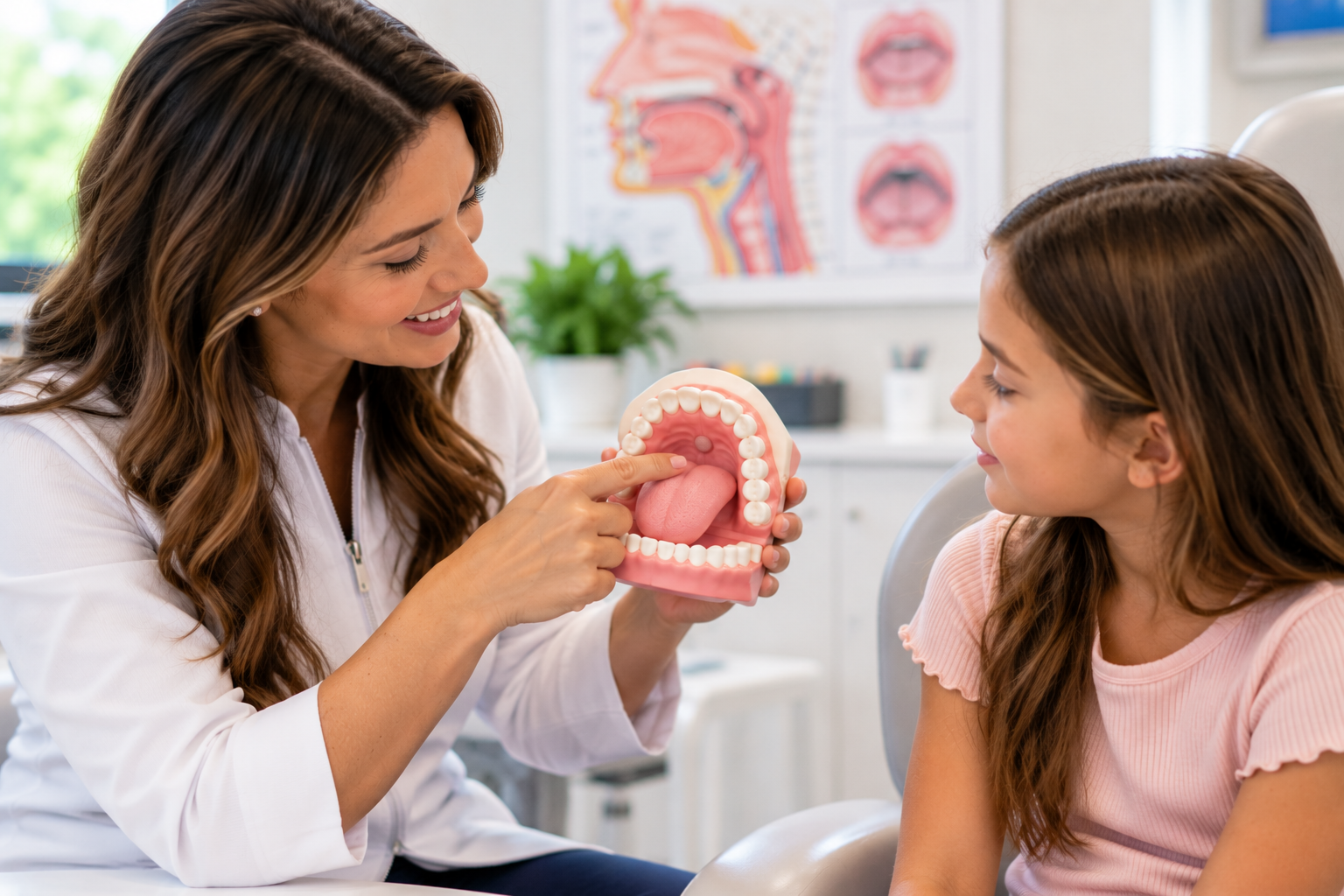
Developing proper tongue posture requires awareness, coordination, and consistent practice.
Establishing proper tongue resting posture is one of the foundational goals of orofacial myofunctional therapy. Yet, for many patients, understanding where the tongue belongs is only the beginning. The greater challenge is developing the awareness, coordination, and consistency needed to maintain that position throughout daily life.
Patients may successfully perform exercises during therapy sessions but continue to demonstrate low tongue posture, anterior tongue resting patterns, tongue thrust swallowing, or poor oral awareness when they return to their normal routines.
In an Airway Circle Thursday Night Live presentation, Toni-Ann Antoniato, speech-language pathologist and certified lactation counselor, shared how tactile feedback can support neuromuscular retraining through Spot Pal, a custom-designed tongue-training appliance developed to complement traditional myofunctional therapy.
Toni-Ann serves as the SLP Director and business partner at Long Island Speech and Myofunctional Therapy, where she leads evaluations and supervises clinician training. She has also taught in the speech-language pathology master's program at Stony Brook University.
Spot Pal was developed alongside Janine Stiene, a licensed speech-language pathologist and trained myofunctional therapist with more than 20 years of experience. Janine founded and expanded Long Island Speech and Myofunctional Therapy into a large multidisciplinary practice with nine locations and an extensive teletherapy program.
Their work highlights an important principle in myofunctional therapy: teaching patients where to place their tongue is not the same as helping them develop a lasting functional habit.
For myofunctional therapists, dentists, orthodontists, speech-language pathologists, and other airway-focused professionals, this presentation explored how tactile guidance may support tongue posture, swallowing, speech, oral habits, and long-term functional carryover.
Understanding Orofacial Myofunctional Disorders
Orofacial myofunctional disorders (OMDs) involve atypical patterns of movement, posture, or function within the muscles of the face and mouth.
These disorders may affect the tongue, lips, jaw, cheeks, and surrounding structures involved in breathing, chewing, swallowing, speaking, and oral rest posture.
Common clinical findings include:
- Low or forward tongue resting posture
- Mouth breathing
- Inadequate lip seal
- Anterior or lateral tongue thrust
- Atypical swallowing patterns
- Tongue sucking or other oral habits
- Reduced tongue-palate contact
- Difficulty coordinating oral movements
- Speech sound distortions
These patterns may coexist with malocclusion, narrow dental arches, open bite, speech difficulties, and other functional concerns.
One of the challenges for clinicians is determining why these patterns developed.
A low tongue position may be associated with nasal obstruction, limited tongue space, restricted mobility, reduced oral awareness, or established habits.
Similarly, tongue thrust may be a learned movement pattern, but it may also reflect an adaptation to the patient's anatomy or airway needs.
Successful treatment requires identifying the underlying contributors rather than focusing exclusively on the visible movement.
Why Tongue Resting Posture Matters
The tongue is involved in much more than swallowing and speaking.
Its position at rest interacts with the palate, dental arches, lips, jaw, and surrounding facial muscles.
When the tongue rests comfortably against the palate, it provides a functional relationship between the tongue and maxillary structures.
When the tongue consistently rests low or forward, patients may experience difficulty maintaining lip closure or coordinating more appropriate swallowing patterns.
These patterns may also coexist with narrow palates, dental crowding, or altered craniofacial growth.
However, tongue posture does not independently determine facial development. Genetics, airway anatomy, skeletal relationships, oral habits, and other factors contribute to the clinical picture.
For myofunctional therapists, the goal is to help patients develop comfortable, functional oral rest patterns while addressing anatomical or respiratory limitations that may interfere with those goals.
The Challenge of Establishing Long-Term Tongue Posture
One of the most common challenges in myofunctional therapy is helping patients maintain the correct tongue position outside the therapy session.
A patient may understand exactly where the tongue tip should rest when prompted by the therapist.
They may perform tongue elevation, suction, or swallowing exercises successfully during an appointment.
But once they become distracted by school, work, conversation, or daily activities, the original pattern often returns.
This is particularly challenging in pediatric patients who may have difficulty consistently remembering verbal instructions.
Motor learning requires repetition, sensory awareness, coordination, and practice across different environments.
Toni-Ann discussed how tactile feedback can help patients recognize when the tongue is in the intended position and when it has moved away from that position.
This concept became the foundation for Spot Pal.
What Is Spot Pal?
Spot Pal is a custom-fit tongue-training appliance designed to provide tactile feedback during myofunctional therapy.
The concept originated in 2020 when Janine Stiene recognized the need for an additional tool to help patients establish and maintain tongue resting posture.
As the COVID-19 pandemic accelerated the transition toward virtual therapy, the team began developing a device that could support patients outside traditional in-person appointments.
After approximately two years of clinical development and in-house use, Spot Pal was introduced to the public in 2023.
The appliance was designed around several foundational principles:
- Supporting nasal breathing when the airway is patent
- Encouraging appropriate oral resting posture
- Improving awareness of tongue position
- Supporting functional orofacial muscle coordination
- Reinforcing learning through repeated practice
Rather than replacing myofunctional therapy, Spot Pal is intended to provide additional sensory guidance that helps patients apply what they learn during treatment.
How Spot Pal Works
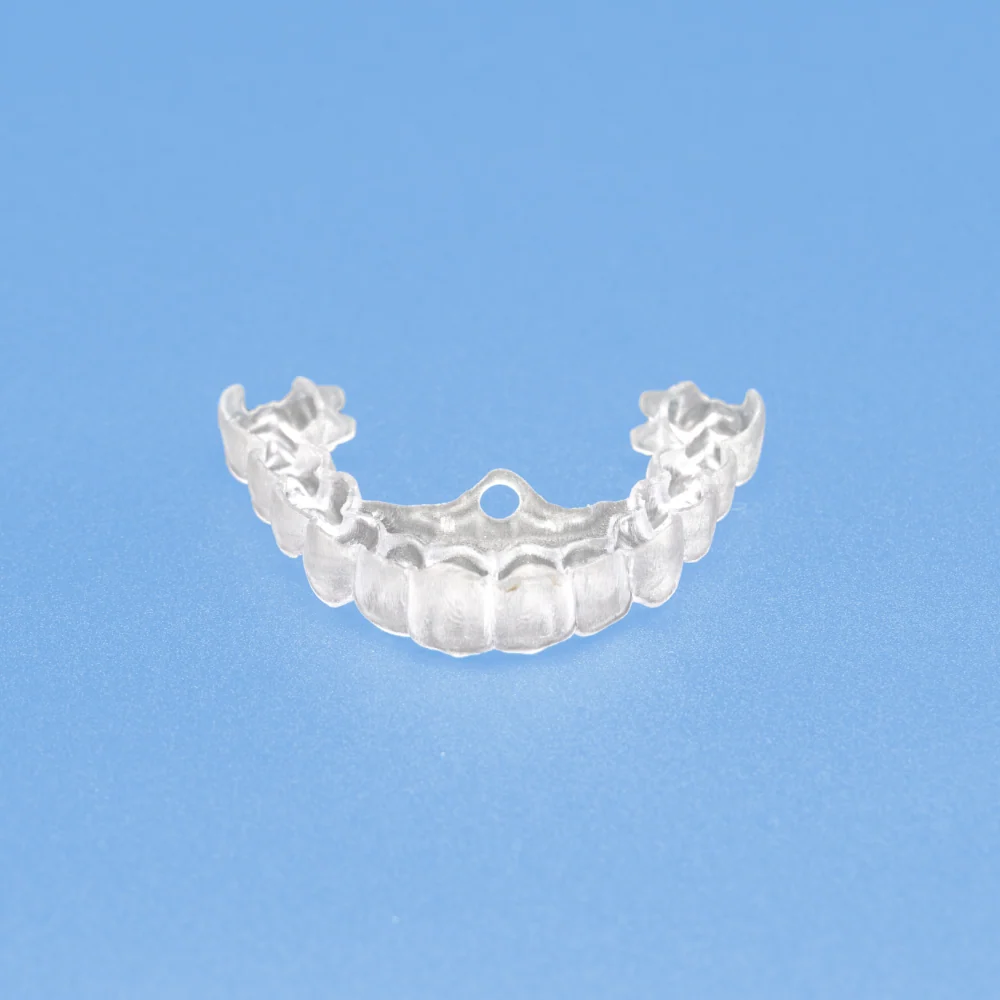
Customized tactile features provide sensory cues that support awareness of tongue placement.
Spot Pal uses customized tactile features to help patients recognize tongue placement.
The appliance is manufactured using an intraoral dental scan or an impression of the patient's upper dental arch.
Its design includes two primary features: the Spot Dot and Tongue Pokes.
The Spot Dot
The Spot Dot is a small opening positioned near the incisive papilla, just behind the upper front teeth.
Its placement is customized to the patient's anatomy.
For many patients, finding the appropriate resting position of the tongue tip can be surprisingly difficult.
Some patients press against the front teeth, while others position the tongue too far posteriorly or struggle to recognize where the tongue should make contact.
The Spot Dot provides a tactile landmark that helps the patient identify the intended position.
This may be especially helpful for younger children or patients who benefit from sensory guidance rather than verbal instructions alone.
Tongue Pokes
Tongue Pokes are small, customizable tactile projections placed along the inner surface of the appliance.
They act as reminders when the tongue pushes against or rests too far forward on the teeth.
The goal is not to create pain or force the tongue into position.
Instead, these features provide sensory feedback that makes the patient more aware of an established movement pattern.
The appliance can also be customized to address lateral tongue positioning, and the tactile projections may be modified or omitted depending on the patient's clinical needs.
Tactile Feedback and Neuromuscular Re-Education

Guided myofunctional exercises help patients develop awareness, coordination, and motor learning.
Myofunctional therapy involves more than muscle strengthening.
It also involves motor control, sensory awareness, coordination, and the development of new functional patterns.
For patients to change an established habit, they must first recognize the difference between their habitual movement and the desired movement.
Tactile feedback may help make that difference more noticeable.
For example, a patient with anterior tongue thrust may not recognize how frequently the tongue contacts the front teeth.
A tactile reminder may help the patient become aware of the movement and practice a different pattern.
Over time, repeated practice may help reinforce motor learning.
However, the long-term effectiveness of Spot Pal specifically requires further controlled research.
The underlying principle is clinically relevant: patients cannot consistently modify a movement pattern they do not recognize.
Different Spot Pal Designs for Different Patients
During the presentation, Toni-Ann explained that Spot Pal is available in several variations designed for different ages, stages of dentition, and therapeutic needs.
The standard Spot Pal is generally intended for children approximately six years and older, as well as adults. It typically covers the upper six anterior teeth and is designed primarily for daytime tongue training.
Spot Pal Junior accommodates children in mixed dentition, including those with missing or erupting permanent teeth.
Spot Pal Mini was developed for younger children, approximately two to four years old. It uses a more flexible material and incorporates a caregiver handle that may also provide tactile guidance for lip closure.
For patients requiring additional dental coverage, the Full Arch Bite variation was presented as an option for orthodontic retention or situations in which nighttime wear is being considered.
The team also developed Speech Pal, which incorporates tactile landmarks intended to support speech sound placement, particularly for sounds requiring precise tongue positioning.
Another variation, Sport Pal, was designed for athletic use, combining dental protection with awareness of oral posture.
Although these appliances share a similar philosophy, their clinical use should be individualized.
Particular care is needed when considering removable oral appliances for young children, patients with developing dentition, or individuals with sleep-disordered breathing.
Spot Pal as a Complement to Myofunctional Therapy
Toni-Ann emphasized that Spot Pal was designed as an adjunct to treatment rather than a replacement for a trained myofunctional therapist.
A comprehensive myofunctional evaluation considers the patient's breathing pattern, tongue mobility, oral resting posture, lip competence, swallowing, chewing, oral habits, and structural limitations.
The appliance may then be incorporated to support a specific therapeutic objective.
According to the presentation, Spot Pal includes an eight-week exercise program with video instructions.
The recommended wear time discussed was up to two hours daily, divided into shorter periods.
The intention is to provide intermittent tactile reminders while encouraging patients to maintain improved oral awareness after removing the appliance.
This distinction is important.
A patient should not need an appliance in place continuously to demonstrate a functional change.
The ultimate goal is improved independent performance.
When Should Spot Pal Be Introduced During Therapy?
One of the practical questions discussed during the presentation was when a tongue-training appliance should be introduced.
Toni-Ann explained that its use may vary depending on the patient's progress.
At the beginning of therapy, the appliance may help patients identify the correct tongue resting position more quickly.
During therapy, it may provide additional sensory information when a patient is struggling with awareness or consistency.
Toward the end of therapy, it may help reinforce functional habits as the patient transitions away from structured exercises.
The decision should depend on the individual's needs.
For example, a patient with inadequate tongue space may not be able to achieve comfortable tongue-palate contact until the underlying structural limitation is addressed.
Similarly, a patient with significant nasal obstruction may not be able to maintain closed-mouth rest posture comfortably.
An appliance should support the treatment plan, not substitute for addressing the underlying problem.
Tongue Thrust and Swallowing Dysfunction
Tongue thrust is a common reason patients are referred for myofunctional therapy.
It generally describes an atypical tongue movement or placement pattern during swallowing, often involving forward or lateral pressure against the teeth.
Some patients demonstrate the pattern primarily during swallowing, while others also maintain a forward tongue position at rest.
Toni-Ann shared clinical demonstrations in which Spot Pal's tactile features appeared to help patients recognize their tongue movement and achieve more coordinated suction against the palate.
These observations suggest a possible role for appliance-assisted sensory feedback during swallowing retraining.
However, tongue thrust should not automatically be considered the primary cause of malocclusion.
Patients may develop compensatory swallowing patterns because of limited oral space, airway obstruction, skeletal discrepancies, or other functional concerns.
A thorough evaluation is essential before treatment begins.
Spot Pal and Speech Articulation
Tongue placement is also central to speech production.
Certain speech sounds require precise movement and contact between the tongue and specific regions of the oral cavity.
For example, /t/, /d/, /n/, and /l/ involve coordinated tongue contact near the alveolar ridge.
Other sounds require more complex tongue positioning, shaping, and airflow control.
Toni-Ann explained that Speech Pal was developed to provide tactile cues for selected articulation goals.
For patients who struggle to understand verbal placement instructions, sensory landmarks may help reinforce what the therapist is teaching.
This may be useful in selected cases involving speech sound distortions or difficulty identifying appropriate tongue placement.
However, the appliance should be used within an individualized speech-language pathology treatment plan.
It is not a substitute for evaluating phonological development, speech motor control, hearing, or other factors contributing to articulation difficulties.
Spot Pal and Tongue-Tie Rehabilitation
The presentation also explored how Spot Pal may complement myofunctional therapy before and after tongue-tie release.
Patients with restricted tongue mobility may develop compensatory movement patterns or difficulty achieving certain oral motor tasks.
Following a clinically indicated release, therapy may help patients develop awareness of their available mobility and practice functional movements.
Toni-Ann presented the case of a 23-year-old patient with a significant tongue restriction who had experienced jaw discomfort, neck and back tension, migraines, and sleep concerns.
The patient received myofunctional therapy supported by Spot Pal before and after a lingual frenectomy.
The presenter reported improvements in several symptoms following the combined treatment plan.
This case demonstrates how clinicians may coordinate functional training with surgical treatment.
However, because multiple interventions occurred, the improvement cannot be attributed to Spot Pal or frenectomy alone.
The broader clinical lesson is that changes in anatomy and changes in function should be evaluated together.
Orthodontic Treatment and Functional Stability
Maintaining orthodontic results is another area of interest for myofunctional therapists.
After orthodontic expansion, braces, or aligner treatment, some patients continue to demonstrate the same low tongue posture, tongue thrust, mouth breathing, or oral habits that were present before treatment.
Toni-Ann discussed how Spot Pal may provide additional feedback during orthodontic treatment or retention.
The intention is to encourage more appropriate tongue position and reduce habitual pressure against the teeth.
However, the role of tongue-training appliances in preventing orthodontic relapse has not been firmly established.
These tools should not replace prescribed retention without the orthodontist's approval.
Instead, myofunctional therapists and orthodontists can collaborate to address both dental stability and functional adaptation.
Tongue Posture, Nasal Breathing, and Airway Health
The relationship between tongue posture and breathing is particularly relevant to airway-focused providers.
Patients with persistent mouth breathing may demonstrate low tongue posture because the tongue and jaw adapt to facilitate oral airflow.
Similarly, patients with limited nasal patency or inadequate oral space may struggle to achieve comfortable tongue-palate contact.
During the webinar, Toni-Ann discussed how tactile reminders may encourage patients to recognize tongue posture and lip closure.
These goals can support myofunctional treatment when nasal breathing is possible.
However, a tongue-training appliance does not independently establish airway improvement or treat obstructive sleep apnea.
Patients presenting with snoring, witnessed apneas, restless sleep, or persistent mouth breathing should receive appropriate airway and sleep evaluation.
Improving oral function is one component of care, not a substitute for diagnosing airway obstruction.
Clinical Applications and Patient Outcomes
Throughout the presentation, Toni-Ann shared feedback from clinicians using Spot Pal in practice.
Reported observations included improved tongue awareness, more consistent palatal suction during exercises, and reduced forward tongue movement in selected patients.
These examples help illustrate how sensory feedback might support therapeutic learning.
However, they represent clinical experiences rather than controlled evidence of long-term effectiveness.
Future studies comparing traditional myofunctional therapy with appliance-assisted treatment would be useful.
Important outcomes to investigate include:
- Changes in tongue resting posture
- Improvements in swallowing patterns
- Speech articulation outcomes
- Patient adherence
- Independent motor carryover
- Long-term functional stability
- Patient satisfaction
Measuring these outcomes would help determine which patients are most likely to benefit from tactile training appliances.
The Importance of Individualized Treatment
One of the central lessons from this presentation is that no single appliance or exercise is appropriate for every patient.
A patient with poor tongue awareness may benefit from tactile guidance.
A patient with nasal obstruction may need ENT care before working toward consistent nasal breathing.
A patient with a narrow palate may require orthodontic evaluation.
A patient with a tongue restriction may need a comprehensive functional assessment to determine whether treatment is indicated.
A child with a speech disorder may require individualized speech-language pathology intervention.
The appliance should fit the clinical objective.
The clinical objective should never be determined by the appliance.
Clinical Questions for Healthcare Professionals
When considering a tactile tongue-training appliance, providers may ask:
- Does the patient demonstrate low or forward tongue resting posture?
- Is tongue thrust present during swallowing or at rest?
- Can the patient identify the intended tongue resting position?
- Does the patient maintain tongue posture without reminders?
- Is there adequate space for comfortable tongue-palate contact?
- Can the patient breathe comfortably through the nose?
- Is tongue mobility sufficient for the targeted exercise?
- Are there underlying orthodontic or skeletal limitations?
- Would tactile feedback improve motor awareness?
- Is the patient developmentally ready to use an oral appliance safely?
- How will progress be measured without the appliance?
- Would collaboration with a speech-language pathologist, orthodontist, dentist, or ENT improve treatment planning?
These questions help clinicians determine whether an appliance may provide meaningful support within a comprehensive therapy program.
Key Takeaways for Healthcare Professionals
Tongue resting posture is an important component of orofacial myofunctional assessment and treatment.
Developing a lasting oral habit requires awareness, repetition, coordination, and functional carryover.
Spot Pal is a custom tongue-training appliance designed to provide tactile feedback during myofunctional therapy.
The Spot Dot helps patients identify a tongue resting landmark, while customizable Tongue Pokes provide reminders when the tongue moves against the teeth.
The appliance can be introduced at different stages of therapy based on the patient's needs.
Tactile guidance may be useful for selected patients with tongue posture difficulties, tongue thrust, speech articulation concerns, or challenges maintaining functional patterns.
Underlying structural, respiratory, and functional limitations must be addressed before expecting consistent changes in oral rest posture.
Tongue-training appliances should complement professional treatment rather than replace comprehensive evaluation or individualized therapy.
Clinical observations are promising, but controlled research is needed to establish long-term outcomes.
Interdisciplinary collaboration remains essential.
The Airway Circle Perspective
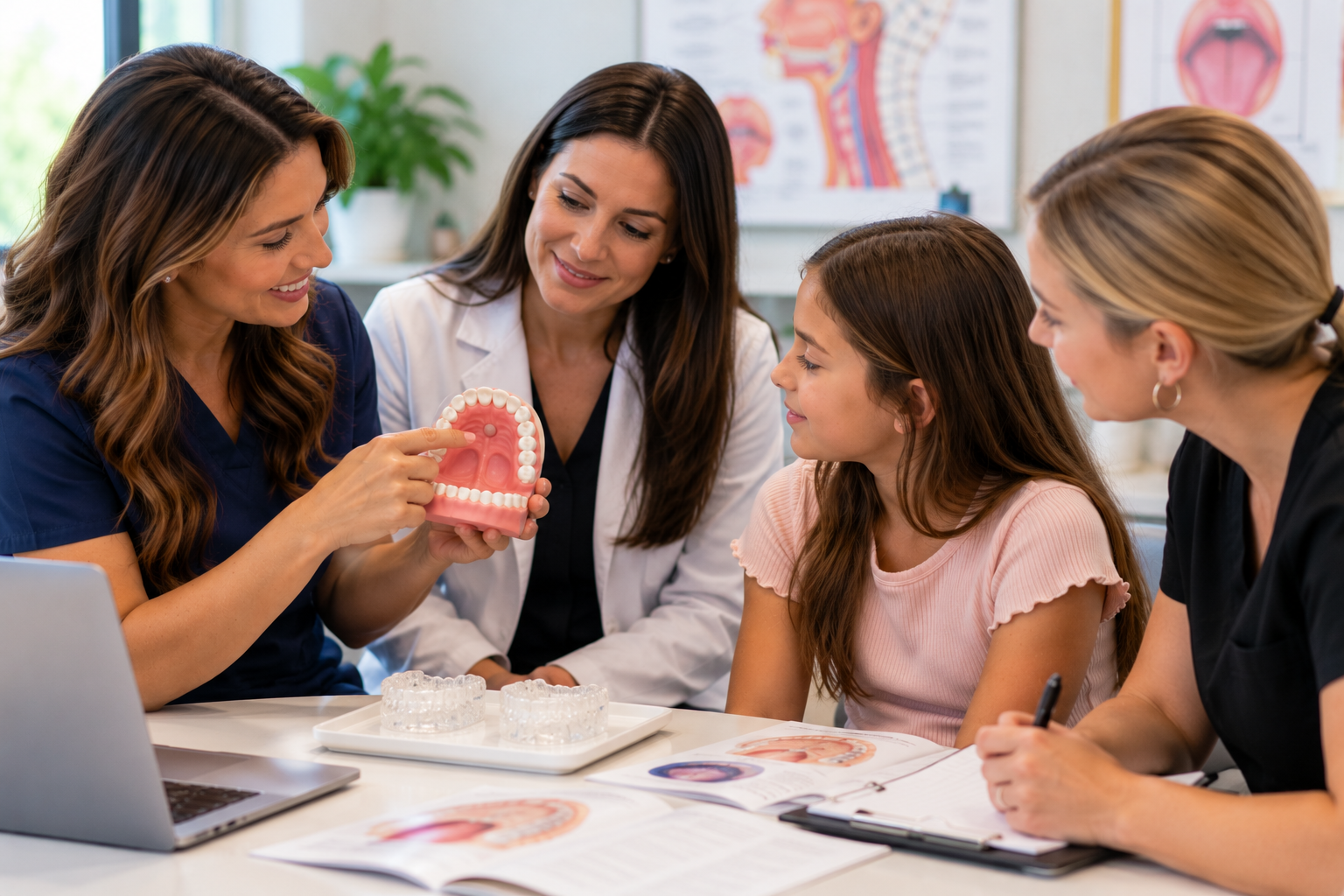
Individualized myofunctional care combines patient education, functional assessment, and interdisciplinary collaboration.
At Airway Circle, we believe myofunctional therapy is about more than teaching exercises.
It is about understanding why a patient developed a particular movement pattern and helping that patient build the awareness and coordination needed for better function.
Toni-Ann Antoniato's presentation reminds us that some patients need more than verbal instructions to recognize and change their oral habits.
For some patients, tactile feedback may provide an additional learning opportunity.
For others, the most important step may be creating adequate tongue space, improving nasal patency, addressing a structural limitation, or refining the therapy program.
The goal is not to use more tools.
The goal is to select the right tools for the right patient.
As myofunctional therapy continues to evolve, technologies and appliances that support motor learning may become useful additions to clinical practice.
But the foundation should always remain individualized assessment, functional treatment, and interdisciplinary collaboration.
Final Thoughts
Helping patients achieve appropriate tongue resting posture requires more than asking them to place the tongue in the correct position.
It requires motor learning, awareness, repetition, and the ability to maintain functional patterns throughout daily life.
Spot Pal offers one approach to supporting that process through customized tactile feedback.
As clinicians explore new tools for myofunctional therapy, the priority should remain clear: improvements must extend beyond the therapy session and translate into meaningful functional outcomes.
The success of myofunctional therapy is not measured by how well a patient performs an exercise while being watched. It is measured by how well that function carries over into everyday life.
Need Guidance With Tongue Posture, Breathing, or Myofunctional Therapy?
Finding the right support for tongue posture, mouth breathing, swallowing difficulties, tongue-tie concerns, oral habits, or orofacial myofunctional disorders does not have to feel overwhelming.
Whether care involves myofunctional therapy, speech-language pathology, airway-focused dentistry, orthodontics, ENT evaluation, or other functional support, the goal is to identify the underlying contributors and develop an appropriate treatment plan.
With the right guidance, patients and families can better understand their concerns and explore the next best steps toward improved oral function.