
The Modern Orthodontist: Why Comprehensive Airway Evaluation in Children Should Be the Gold Standard
Aug 02, 2026
Modern orthodontics looks beyond straight teeth to evaluate growth, airway, sleep, breathing, and oral function.
Orthodontics is no longer just about straight teeth.
For healthcare professionals working in airway health, pediatric dentistry, orthodontics, myofunctional therapy, speech therapy, sleep medicine, ENT, lactation, and craniofacial development, one thing is becoming increasingly clear: the way a child breathes can directly influence the way the face, jaws, teeth, and airway develop.
In an Airway Circle Thursday Night Live presentation, Dr. Alena Larios shared her perspective on the modern orthodontist and why every child should receive a comprehensive airway evaluation as part of orthodontic assessment.
Her message was powerful: when orthodontists evaluate only the teeth, they may miss the deeper reason the malocclusion developed in the first place.
A truly modern orthodontic evaluation looks at the teeth, jaws, airway, tongue posture, nasal breathing, craniofacial growth, sleep symptoms, and the whole child.
Orthodontics and Airway Health Have Always Been Connected
The connection between mouth breathing, malocclusion, and craniofacial growth is not new.
Dr. Larios shared that orthodontists have been discussing mouth breathing and nasal obstruction since the early days of the profession. As early as 1907, Edward Angle, one of the fathers of orthodontics, described mouth breathing as one of the most powerful causes of malocclusion.
Today, we have more advanced tools, better imaging, digital planning, myofunctional therapy collaboration, and a deeper understanding of pediatric sleep-disordered breathing. Yet the principle remains the same:
How a child breathes affects how a child grows.
When a child chronically mouth breathes, has nasal obstruction, low tongue posture, enlarged tonsils or adenoids, or sleep-disordered breathing, the jaws and face may adapt around that dysfunction.
Why Airway Evaluation Should Be Part of Every Pediatric Orthodontic Exam
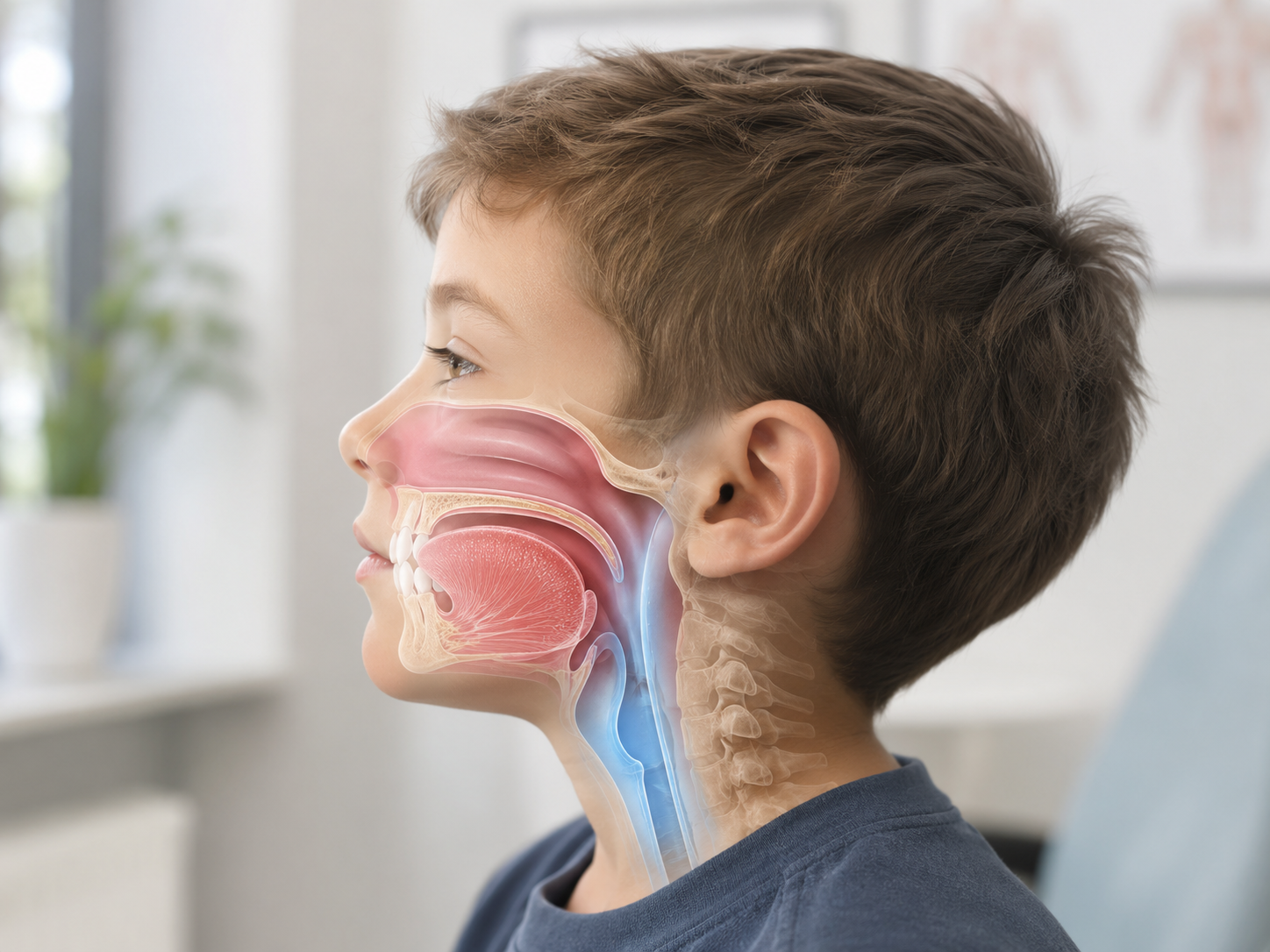
Crowding, narrow arches, mouth breathing, and poor tongue posture may be clues that airway function needs to be evaluated.
A comprehensive airway evaluation helps providers ask a critical question:
Why did this orthodontic problem develop?
Crowding, narrow arches, open bites, underbites, crossbites, deep bites, flared teeth, lip incompetence, vertical growth, and poor oral posture are not random findings. They may be signs of altered function, poor nasal breathing, airway obstruction, tongue dysfunction, or disrupted craniofacial growth.
Dr. Larios emphasized that orthodontic diagnosis should go beyond looking at teeth alignment. A modern pediatric orthodontic evaluation should consider:
- Nasal breathing
- Mouth breathing
- Snoring
- Bedwetting
- Fatigue
- Hyperactivity
- Tongue posture
- Lip seal
- Tonsils and adenoids
- Nasal congestion
- Craniofacial growth pattern
- Arch form
- Palatal width
- Crowding
- Dental compensation
- Sleep-disordered breathing symptoms
When these signs are identified early, treatment can become more preventive, more functional, and more interdisciplinary.
The Role of 3D Imaging in Airway-Focused Orthodontics
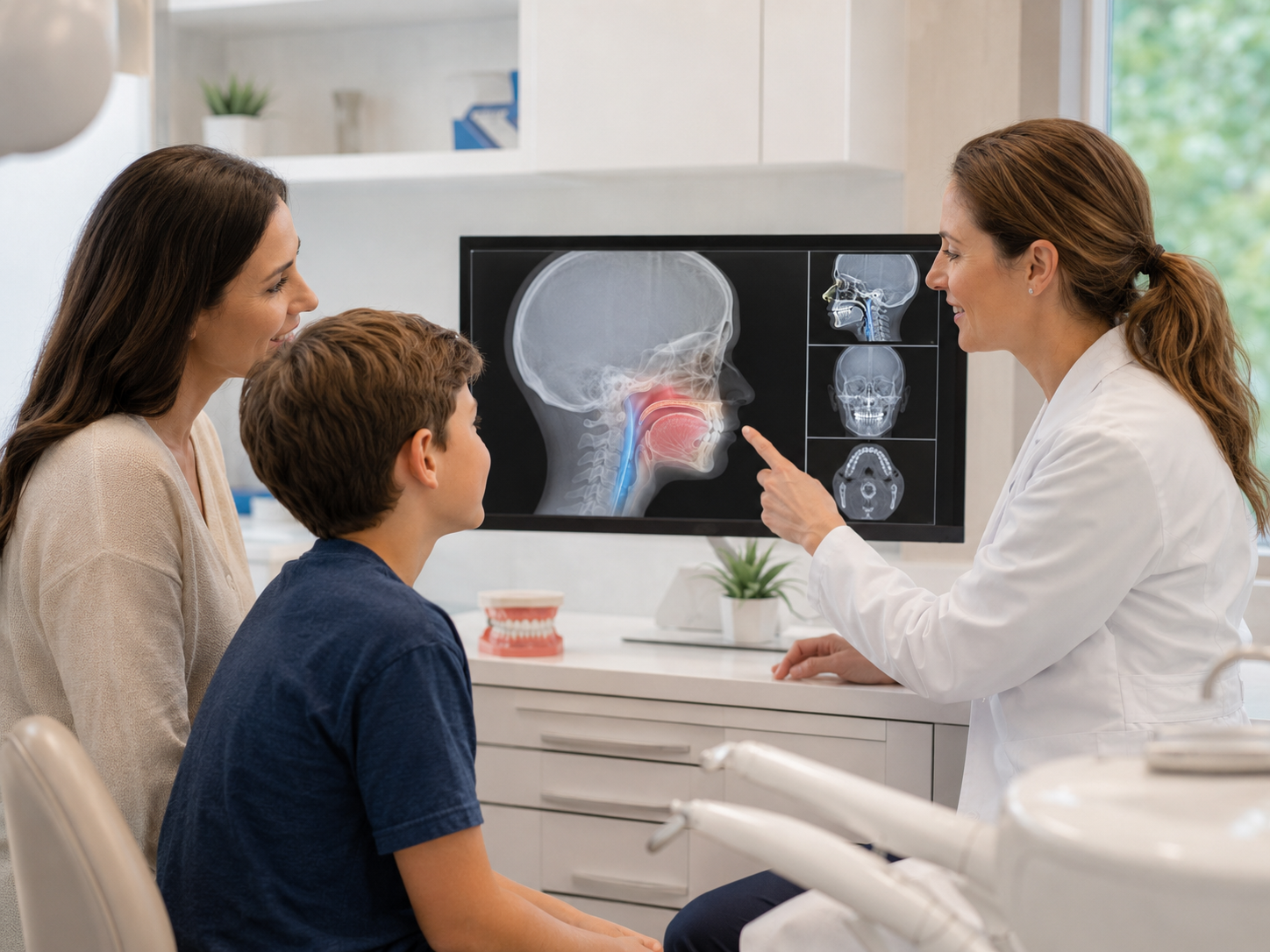
3D imaging can help providers evaluate airway space, sinuses, adenoids, jaw development, root position, and skeletal relationships.
One of the major shifts in modern orthodontics is the use of 3D imaging.
Dr. Larios explained that her practice uses CBCT imaging to evaluate patients in three dimensions. This allows providers to see important structures that traditional 2D imaging may not fully capture, including the airway, sinuses, adenoids, tonsils, jaws, roots, palate, and craniofacial relationships.
With 3D imaging, providers can better evaluate:
- Nasal airway space
- Sinus findings
- Adenoid size
- Tonsil contribution
- Jaw development
- Dental root position
- Palatal width
- Skeletal discrepancies
- Airway-related anatomy
- Expansion needs
- Biological limits of tooth movement
This information helps create more individualized treatment plans and reduces the risk of treating symptoms without understanding the underlying cause.
Phase One Orthodontics: More Than Making Space
Phase one orthodontic treatment is typically done when a child still has a mix of baby and adult teeth. However, Dr. Larios shared that her practice is seeing younger children as well, sometimes as young as three to five years old, when symptoms are present.
In airway-focused orthodontics, phase one treatment is not simply about straightening teeth. In many cases, the teeth are used as anchors to guide arch development, support better jaw growth, create space, and reduce airway-related risk factors.
For younger children, treatment may be considered when there are signs such as:
- Snoring
- Mouth breathing
- Bedwetting
- Fatigue
- Hyperactivity
- Crossbite
- Narrow palate
- Severe crowding
- Open bite
- Underbite
- Low tongue posture
- Lip incompetence
- Poor craniofacial growth pattern
Depending on the child, the care pathway may include orthodontic expansion, ENT evaluation, myofunctional therapy, sleep study, nasal hygiene, or interdisciplinary collaboration.
Tooth-Borne vs. Bone-Borne Expansion
One of the key clinical topics Dr. Larios discussed was the difference between tooth-borne and bone-borne expansion.
Tooth-borne expanders use the teeth as the primary anchor. These appliances can be helpful in many children, especially younger patients. However, some of the expansion may occur through dental tipping rather than true skeletal expansion.
Bone-borne expanders, such as MSE-style expanders, are designed to achieve more expansion at the skeletal level. Dr. Larios explained that in her practice, bone-borne expansion is often considered when children have symptoms, severe crowding, significant skeletal discrepancies, underbites, or when the goal is to maximize orthopedic change.
This matters because airway-focused orthodontics is not only about creating room for teeth. It is about developing the arches, supporting the jaws, improving skeletal balance, and creating a better environment for nasal breathing and tongue posture.
Why Arch Form Matters
A narrow, V-shaped palate can limit tongue space and contribute to poor oral posture, mouth breathing, and dental crowding. When the tongue does not rest properly in the palate, the upper jaw may not receive the natural functional stimulation it needs for healthy development.
This can contribute to a cycle of dysfunction:
- Nasal obstruction or mouth breathing
- Low tongue posture
- Narrow palate
- Crowding
- Poor lip seal
- Sleep-disordered breathing risk
- More mouth breathing
The goal of early orthodontic intervention is to help interrupt this cycle and guide development in a healthier direction.
Myofunctional Therapy and Orthodontics Work Together

Orthodontics can support structure, while myofunctional therapy helps support the function needed for stability.
Dr. Larios emphasized the importance of collaboration with myofunctional therapists.
Orthodontics can change structure. Myofunctional therapy helps support function.
After expansion, the tongue has a new space to adapt to. If the tongue continues to rest low, thrust forward, or function improperly during swallowing, chewing, or speech, the orthodontic result may be less stable.
Myofunctional therapy can support:
- Nasal breathing
- Tongue posture
- Lip seal
- Swallowing patterns
- Chewing function
- Oral rest posture
- Post-expansion adaptation
- Long-term orthodontic stability
- Airway-supportive habits
This is especially important in children with open bites, tongue thrust, mouth breathing, low tongue posture, oral restrictions, and sleep-disordered breathing symptoms.
As Dr. Larios explained, myofunctional therapy may be needed before, during, or after orthodontic treatment, depending on the child’s needs.
Pediatric Sleep-Disordered Breathing and Orthodontic Red Flags
Orthodontic providers are in a unique position to identify signs of pediatric sleep-disordered breathing.
Children may not always present like adults with sleep apnea. Instead of obvious daytime sleepiness, they may show signs such as hyperactivity, behavioral challenges, bedwetting, mouth breathing, restless sleep, poor focus, or fatigue.
In the mouth and face, providers may notice:
- Narrow palate
- Crowding
- Crossbite
- Open bite
- Underbite
- Deep bite
- Vertical growth pattern
- Lip incompetence
- Mentalis strain
- Low tongue posture
- Enlarged tonsils or adenoids
- Forward head posture
- Dental compensations
These findings should prompt further screening and possible referral.
Why Early Evaluation Matters
One of the most important takeaways from Dr. Larios’ lecture is that children should be evaluated earlier.
Waiting until all adult teeth erupt may mean missing a critical window for growth guidance. By the time severe crowding, gum recession, open bites, or skeletal discrepancies are obvious, the child may already have experienced years of compensatory growth and function.
Early evaluation allows providers to:
- Identify airway red flags
- Support nasal breathing
- Guide jaw growth
- Create space for developing teeth
- Improve arch form
- Reduce dental compensation
- Refer to ENT when needed
- Coordinate with myofunctional therapy
- Monitor sleep-disordered breathing symptoms
- Reduce the risk of more invasive treatment later
Early treatment does not mean every young child needs orthodontic appliances. It means every child deserves a comprehensive evaluation.
The Modern Orthodontic Model
According to Dr. Larios, the modern orthodontist should evaluate more than tooth alignment.
A modern airway-focused orthodontic model includes:
- 3D imaging when appropriate
- Detailed health history
- Airway screening
- Sleep symptom screening
- Evaluation of nasal breathing
- Assessment of tongue posture
- Assessment of lip seal
- Evaluation of craniofacial growth
- Identification of tonsils, adenoids, and sinus concerns
- Interdisciplinary referral network
- Collaboration with myofunctional therapists
- Awareness of periodontal health
- Treatment planning within biological limits
- Long-term growth guidance
This type of care helps providers move beyond “How do we straighten the teeth?” and toward “Why did this develop, and how can we support healthier growth and function?”
Key Takeaways for Healthcare Professionals
- Orthodontic problems in children may be signs of underlying airway, breathing, sleep, or oral function issues.
- Mouth breathing can affect craniofacial growth, tongue posture, arch form, and malocclusion.
- Comprehensive airway evaluation should be part of pediatric orthodontic assessment.
- 3D imaging can help identify airway, sinus, adenoid, skeletal, dental, and root position concerns.
- Phase one treatment may support growth guidance, arch development, nasal breathing, and space for erupting teeth.
- Bone-borne expansion may offer advantages in certain patients who need skeletal expansion.
- Myofunctional therapy is essential for supporting function after structural change.
- Early evaluation helps providers identify problems before they become more complex.
- The future of orthodontics is interdisciplinary, airway-aware, and function-focused.
The Airway Circle Perspective

Children benefit most when providers collaborate across orthodontics, airway, sleep, oral function, and growth.
At Airway Circle, we believe that airway health belongs at the center of pediatric growth and development conversations. Orthodontists, dentists, myofunctional therapists, ENTs, sleep physicians, pediatricians, speech therapists, and other airway-focused providers all play an important role.
Dr. Alena Larios’ presentation reminds us that modern orthodontics is not simply cosmetic. It is developmental, functional, and deeply connected to breathing, sleep, oral posture, and whole-body health.
When orthodontists ask better questions and collaborate with the right providers, children receive care that supports not just a straighter smile, but healthier growth.
Final Thoughts
A comprehensive airway evaluation in children should be the gold standard because airway health influences how children breathe, sleep, grow, and function.
Orthodontic findings such as crowding, narrow arches, crossbites, open bites, underbites, lip incompetence, and poor tongue posture should not be viewed in isolation. They may be clinical clues pointing toward airway dysfunction, sleep-disordered breathing, nasal obstruction, or myofunctional disorders.
The modern orthodontist does more than align teeth.
The modern orthodontist evaluates growth, airway, function, sleep, structure, and long-term stability.
And when that approach is combined with myofunctional therapy and interdisciplinary care, children have a better opportunity to breathe, sleep, grow, and thrive.
Need Guidance With Airway, Orthodontics, or Myofunctional Therapy?
Finding the right support for airway health, breathing, sleep, tongue function, orthodontic concerns, or oral restrictions does not have to feel overwhelming. With the right guidance, patients and providers can better understand the clinical picture and explore the next best steps.
Whether care involves myofunctional therapy, airway-focused orthodontics, ENT evaluation, sleep testing, expansion, tongue-tie assessment, or referrals to the right provider, the goal is to improve function and quality of life.
Your journey to better breathing, better sleep, and better oral function starts here.