
The Skull-Brain Connection: How Airway Dysfunction May Influence Complex Disease
Jul 26, 2026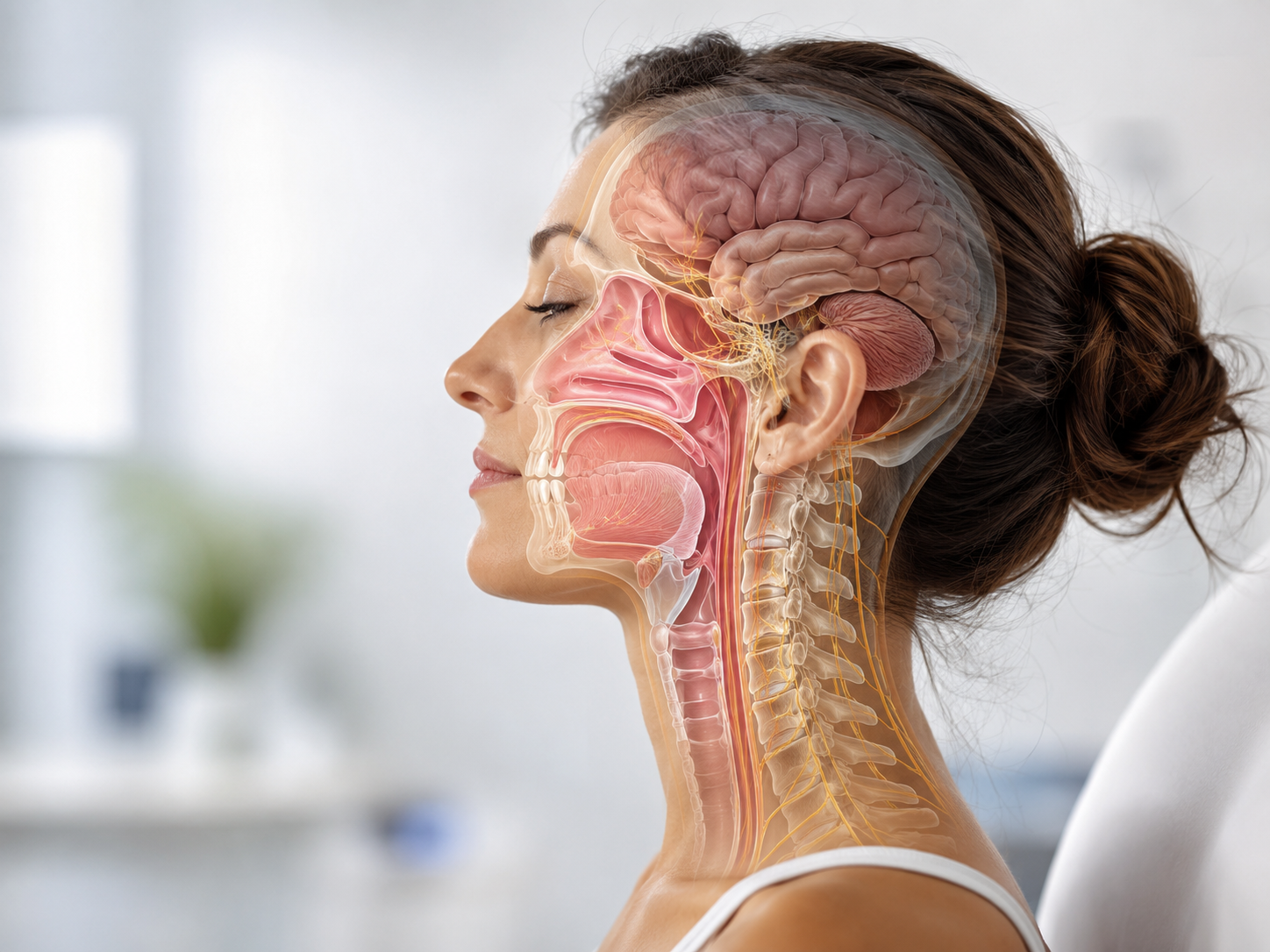
Airway health is connected to the skull, brain, sinuses, oral function, posture, and nervous system regulation.
Airway health is often discussed through the lens of sleep apnea, mouth breathing, tongue posture, orthodontics, and craniofacial growth. But what if the airway conversation is even bigger than that?
What if airway dysfunction is also connected to brain function, mental health, chronic pain, autoimmune patterns, digestive issues, dysautonomia, and complex disease?
In an Airway Circle Thursday Night Live presentation, Dr. Cheng Ruan, a board-certified internal medicine physician and founder of Texas Center for Lifestyle Medicine, shared a powerful perspective on what he calls the skull-brain connection.
His message was clear: the airway is not an isolated system. The way we breathe, chew, sleep, posture, and use the oral and craniofacial structures may influence the brain and the body in profound ways.
For healthcare professionals working in airway health, myofunctional therapy, dentistry, orthodontics, sleep medicine, functional medicine, ENT, bodywork, speech therapy, and complex care, this conversation expands the clinical lens.
Why the Skull-Brain Connection Matters
The skull is not simply a protective structure around the brain. It houses the nasal airway, sinuses, cranial nerves, oral cavity, teeth, jaw, craniofacial bones, and fascial connections that influence breathing, chewing, posture, sleep, and neurological regulation.
Dr. Ruan emphasized that the brain depends on more than blood flow alone. It also depends on oxygen, carbon dioxide exchange, hydration, nutrients, nitric oxide, mineral balance, and proper airway function.
This is where the sinuses become especially important.
The nasal passages and sinuses are part of the airway system. They help support airflow, nitric oxide production, and nasal breathing. When the nasal airway is compromised by chronic sinus inflammation, enlarged turbinates, deviated septum, congestion, mouth breathing, or poor craniofacial development, the brain and body may be affected.
For airway professionals, this reinforces an essential point: nasal breathing is not just about airflow. It is about physiology.
The Role of Nitric Oxide in Airway and Brain Health
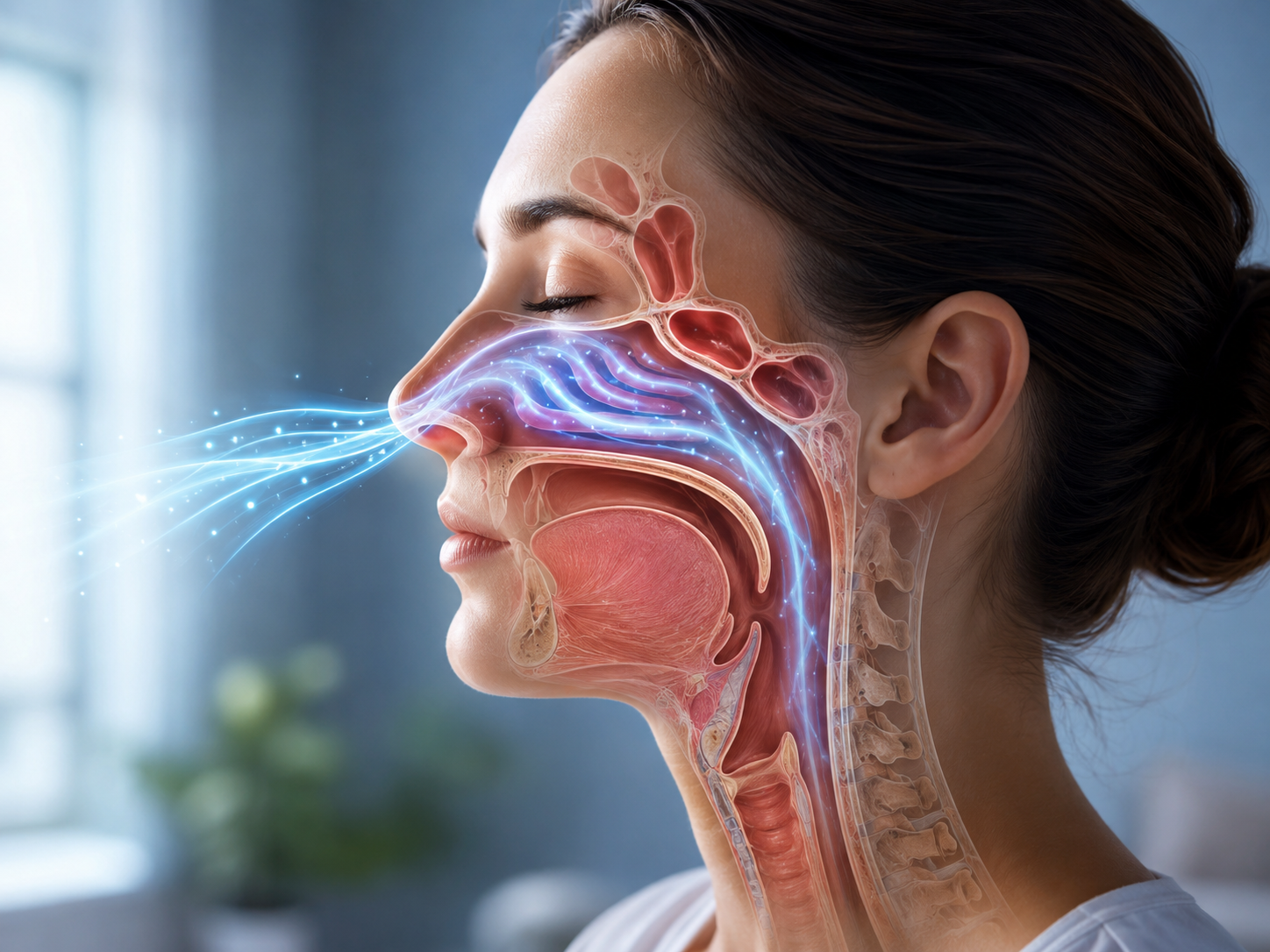
Nasal breathing supports airflow, nitric oxide exchange, immune function, and whole-body physiology.
Nitric oxide plays a critical role in respiratory physiology, blood flow, immune function, and cellular signaling. Dr. Ruan discussed how the sinuses contribute to nitric oxide production and how nasal breathing supports this process.
When patients chronically mouth breathe, they may lose some of the physiological benefits associated with nasal breathing and nitric oxide exchange.
This may be relevant for patients with:
- Brain fog
- Poor concentration
- Fatigue
- Sleep-disordered breathing
- Chronic sinus issues
- Dysautonomia
- Headaches
- Mood symptoms
- Poor sleep quality
- Inflammatory patterns
While airway dysfunction is not the only cause of these conditions, it may be an important contributing factor in complex cases.
Airway, Sleep, and Brain Mapping
Dr. Ruan shared his work using quantitative EEG, also known as brain mapping, to better understand patterns associated with sleep-disordered breathing, brain fog, mental health concerns, narcolepsy, dysautonomia, and complex chronic disease.
Quantitative EEG has historically been used in neurology and psychiatry, but Dr. Ruan applies it through a broader medical and functional lens. He described how certain brain patterns may correlate with sleep apnea, sleep-disordered breathing, chronic sinusitis, periodontal disease, and neurological symptoms.
This does not replace traditional sleep testing or medical diagnosis. Rather, it may provide another layer of information about how airway and sleep patterns are affecting brain function.
For clinicians, this raises an important question:
Are we fully considering airway and sleep when patients present with brain-based symptoms?
Symptoms That May Point Back to Airway Dysfunction
Dr. Ruan discussed several clinical patterns that may be associated with airway obstruction, sleep-disordered breathing, or compensatory physiology.
These may include:
- Brain fog
- Fatigue
- Poor focus
- ADHD-like symptoms
- Mood changes
- Bruxism
- TMJ symptoms
- Nighttime urination
- Fibromyalgia-like pain
- Forward head posture
- Tight hamstrings
- Plantar fasciitis
- Chronic neck tension
- Chronic sinus inflammation
- Mouth breathing
- Sleep apnea
- Poor sleep quality
- Dysautonomia-like symptoms
These symptoms do not automatically mean the airway is the root cause. However, for healthcare professionals, they should raise the question of whether airway screening, sleep screening, nasal evaluation, oral function assessment, or interdisciplinary referral is warranted.
Bruxism, TMJ, and the Nervous System
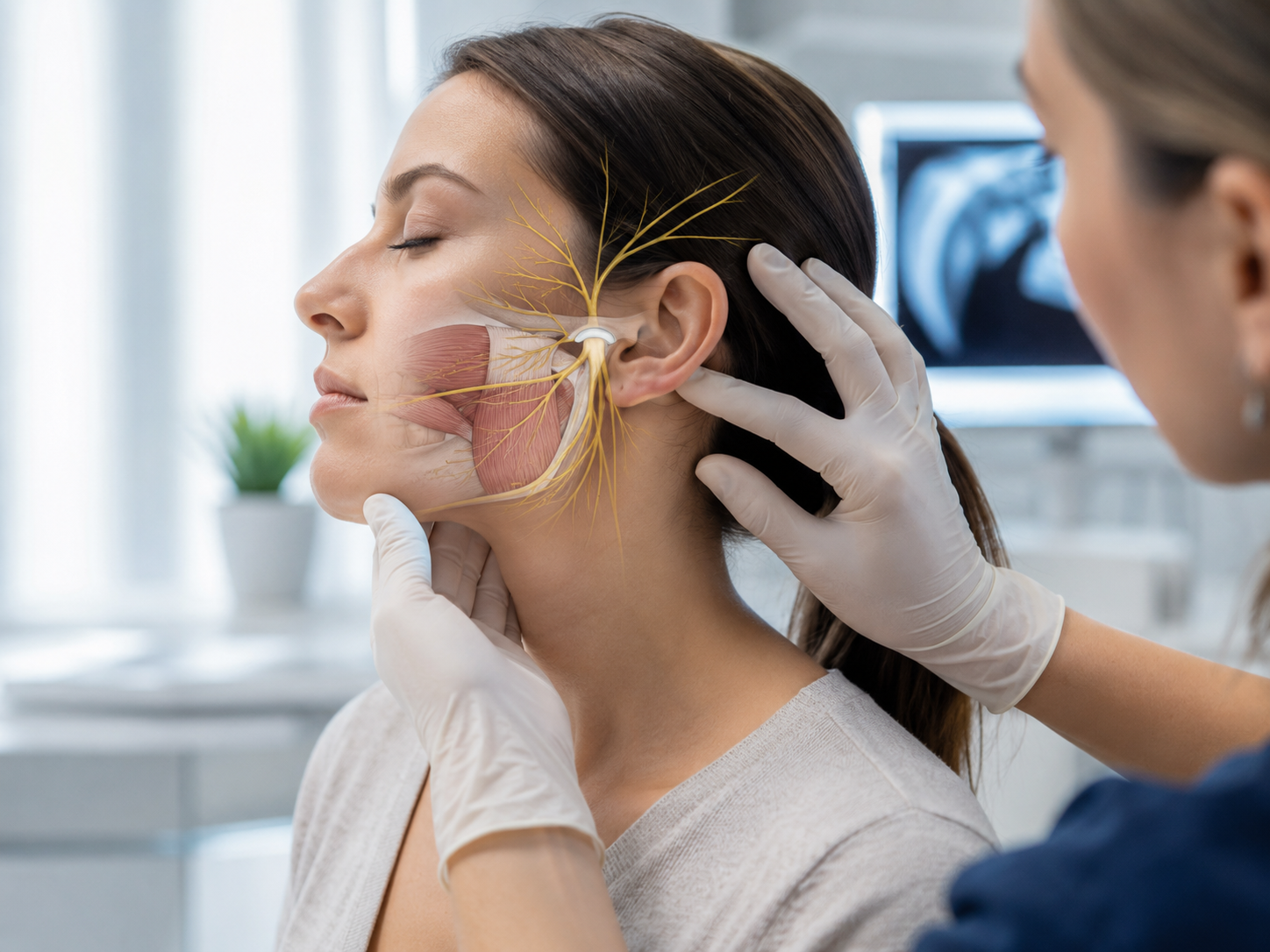
Bruxism may reflect airway demand, nervous system stress, bite instability, or craniofacial compensation.
Bruxism is often discussed as a dental, airway, stress, or occlusal issue. Dr. Ruan added another layer by discussing the relationship between clenching, cranial nerves, the trigeminal nerve, vagal tone, and the nervous system.
He explained that the bite and oral structures send sensory information back to the brain through the trigeminal nerve. The trigeminal system has deep connections with facial sensation, chewing, nasal airflow, oral function, and nervous system regulation.
When the bite is unstable, the airway is compromised, or the nervous system is under stress, patients may clench or grind in an attempt to regulate, stabilize, or compensate.
This may be especially relevant in patients with:
- Sleep-disordered breathing
- TMJ dysfunction
- Chronic stress
- PTSD patterns
- Neurodivergence
- Sensory overload
- Facial tension
- Malocclusion
- Tongue restriction
- Poor nasal breathing
Dr. Ruan emphasized that bruxism should not be reduced to a single cause. It may reflect airway demand, nervous system regulation, perception, stress, occlusion, or craniofacial structure.
The Trigeminal Nerve, Vagus Nerve, and Airway Health
One of the most fascinating parts of Dr. Ruan’s presentation was his explanation of how the trigeminal nerve may influence broader nervous system function.
The trigeminal nerve is heavily involved in facial sensation, chewing, oral structures, nasal airflow, and craniofacial input. It communicates with brain regions that influence regulation, autonomic function, and vagal tone.
The vagus nerve is often discussed in relation to digestion, heart rate, inflammation, and parasympathetic regulation. Dr. Ruan explained that oral function, bite force, trigeminal input, and craniofacial structure may influence how the body regulates through these pathways.
This matters because many complex patients present with symptoms that involve both airway and autonomic regulation, including:
- Dysautonomia
- POTS-like symptoms
- Digestive dysfunction
- Food sensitivities
- Anxiety
- Poor sleep
- Chronic inflammation
- Fatigue
- Brain fog
- Chronic pain
For airway professionals, this reinforces the need to think beyond the mouth and airway alone. The oral-craniofacial system may influence whole-body regulation.
Sinuses, Mold, Chronic Inflammation, and Airway Resilience
Dr. Ruan also discussed the relationship between sinus health, environmental exposure, mold, chronic inflammation, and brain symptoms.
In complex patients, chronic sinus inflammation may affect nasal airflow, nitric oxide production, sleep quality, and neurological symptoms. Environmental exposures such as mold, volatile organic compounds, and post-viral inflammatory changes may worsen airway obstruction or sinus dysfunction in susceptible patients.
This is especially important in patients with:
- Chronic congestion
- Postnasal drip
- Brain fog
- Fatigue
- Sleep-disordered breathing
- Mold sensitivity
- Long COVID symptoms
- Chronic sinusitis
- Inflammatory conditions
From an airway standpoint, clinicians should consider whether the nasal airway and sinus system are supporting or limiting the patient’s ability to breathe, sleep, recover, and regulate.
Chewing, Oral Microbiome, and Digestion
Dr. Ruan also highlighted the importance of chewing and oral function in digestion and microbiome health.
Digestion begins before food reaches the stomach. Visualizing food, salivating, chewing, and properly breaking down food all influence downstream digestive processes. When patients rely heavily on smoothies, pouches, soft foods, or poorly chewed meals, they may bypass important oral-sensory and digestive signals.
For airway professionals, this is highly relevant because many children and adults with airway dysfunction also present with:
- Low tongue tone
- Poor chewing
- Texture aversions
- Open-mouth chewing
- Mouth breathing
- Feeding challenges
- Restricted diets
- Poor oral motor function
- Digestive complaints
The oral microbiome, nasal microbiome, gut microbiome, chewing, breathing, and sleep are interconnected. This reinforces the importance of oral function in whole-body health.
Tongue Restriction, Facial Tension, and Complex Cases
During the discussion, Dr. Ruan shared that facial tension often appears alongside tongue restriction or poor tongue function. However, he also emphasized that not every case is solved by a tongue-tie release.
This is a critical point for healthcare professionals.
Tongue restriction may be part of the problem, but complex patients often require a broader evaluation that may include:
- Myofunctional therapy
- Airway assessment
- ENT evaluation
- Orthodontic evaluation
- TMJ assessment
- Craniofacial development assessment
- Sleep testing
- Medical evaluation
- Bodywork
- Functional medicine support
- Nervous system regulation
- Evaluation for connective tissue disorders or systemic inflammation
A tongue-tie release without addressing the broader functional, airway, structural, and neurological context may not lead to the desired outcome.
Complex Disease and the Airway Lens
Dr. Ruan’s presentation emphasized that many patients with complex chronic illness may have overlooked airway or craniofacial contributors.
These may include patients with:
- Autoimmune disease
- Fibromyalgia
- Chronic fatigue
- Dysautonomia
- POTS
- Ehlers-Danlos syndrome
- Brain fog
- Mood disorders
- ADHD-like symptoms
- Chronic sinusitis
- Sleep-disordered breathing
- TMJ dysfunction
- Food sensitivities
- Chronic pain
Airway dysfunction does not explain every complex disease. But it may be one of the missing clinical layers in patients who have not responded to conventional care.
For providers, the goal is not to over-attribute every symptom to the airway. The goal is to remember that airway, sleep, oral function, craniofacial development, nervous system regulation, and systemic health are connected.
Key Takeaways for Healthcare Professionals
- Airway health is deeply connected to brain function, sleep quality, nervous system regulation, and whole-body physiology.
- Nasal breathing and sinus health may influence nitric oxide production, brain function, and sleep quality.
- Quantitative EEG brain mapping may offer additional insight into patterns related to sleep-disordered breathing and complex neurological symptoms.
- Bruxism may reflect airway demand, nervous system regulation, stress, perception, bite instability, or craniofacial compensation.
- The trigeminal nerve and vagus nerve are important pathways connecting the oral-craniofacial system with autonomic regulation.
- Chewing, oral function, and the oral microbiome influence digestion and whole-body health.
- Tongue restriction may contribute to facial tension and airway dysfunction, but tongue-tie release should be considered within a broader clinical context.
- Complex disease often requires interdisciplinary collaboration.
Clinical Questions to Consider
When evaluating patients with airway, sleep, or complex symptoms, healthcare professionals may consider asking:
- Does the patient breathe through the nose comfortably?
- Is there chronic nasal congestion or sinus inflammation?
- Does the patient snore, grind, or wake unrefreshed?
- Are there signs of sleep-disordered breathing?
- Is the patient experiencing brain fog, fatigue, or poor focus?
- Is there TMJ tension, facial tension, or bruxism?
- Is the bite stable and functional?
- Is the tongue restricted, low resting, enlarged, or poorly functioning?
- Does the patient chew effectively?
- Are there signs of dysautonomia, chronic pain, or complex inflammatory patterns?
- Has the patient had orthodontic extractions or craniofacial underdevelopment?
- Would this patient benefit from an interdisciplinary airway team?
These questions help move care beyond symptom management and toward root-cause thinking.
The Airway Circle Perspective

Complex airway cases often require collaboration across sleep, oral function, craniofacial development, nervous system regulation, and systemic health.
At Airway Circle, we believe that airway health belongs in every conversation about whole-body wellness, sleep, oral function, craniofacial development, and complex care.
Dr. Cheng Ruan’s presentation reminds us that the skull, brain, airway, sinuses, oral structures, cranial nerves, posture, microbiome, and nervous system are not separate systems. They work together.
When healthcare professionals understand these relationships, they can identify red flags earlier, make better referrals, and collaborate more effectively.
This is especially important for patients who have complex symptoms and have been told that “everything looks normal” despite still feeling unwell.
Final Thoughts
The skull-brain connection gives airway professionals a broader framework for understanding complex disease.
Airway dysfunction may influence far more than breathing. It may affect sleep, brain function, inflammation, nervous system regulation, digestion, posture, oral function, and overall health.
For healthcare professionals, the call to action is clear:
- Screen for airway.
- Ask about sleep.
- Evaluate nasal breathing.
- Look at oral function.
- Pay attention to the bite, tongue, sinuses, posture, and nervous system.
- Collaborate with providers who understand complex cases.
The airway may not be the whole story, but in many patients, it may be one of the most important chapters.
Need Guidance With Airway, Sleep, or Myofunctional Therapy?
Finding the right support for airway health, breathing, sleep, tongue function, facial tension, oral restrictions, or complex symptoms does not have to feel overwhelming. With the right guidance, patients and providers can better understand the clinical picture and explore the next best steps.
Whether care involves myofunctional therapy, airway-focused dentistry, ENT evaluation, sleep testing, tongue-tie assessment, TMJ support, or referrals to the right provider, the goal is to improve function and quality of life.
Your journey to better breathing, better sleep, and better oral function starts here.