
Pregnancy-Induced Sleep Apnea: Why Airway Health Should Begin Before Birth
Jul 12, 2026
Airway health begins before birth, and maternal sleep quality can influence both mother and baby.
Airway health does not begin in childhood. It begins before birth.
In an Airway Circle Thursday Night Live presentation, Dr. Mark Cannon shared a powerful message for healthcare professionals: pregnancy-induced sleep apnea, oral-systemic health, the maternal microbiome, periodontal inflammation, and airway development are deeply connected.
For dentists, hygienists, myofunctional therapists, lactation professionals, pediatric providers, ENTs, sleep physicians, orthodontists, and airway-focused clinicians, this topic deserves more attention.
Pregnancy is a critical window of development. When a pregnant mother experiences snoring, mouth breathing, obstructive sleep apnea, oral dysbiosis, periodontal inflammation, or nasal obstruction, these issues may affect not only her health, but also fetal development, birth outcomes, infant feeding, craniofacial growth, and long-term airway risk.
Dr. Cannon’s message was clear: if we want to improve pediatric airway health, we must also pay attention to maternal airway health.
Why Pregnancy-Induced Sleep Apnea Matters

Snoring during pregnancy should be viewed as a clinical clue, not simply a normal pregnancy symptom.
Sleep-disordered breathing during pregnancy is more common than many providers realize. Snoring can increase during pregnancy, especially in the third trimester, due to changes in weight, inflammation, fluid retention, hormones, nasal congestion, and upper airway resistance.
However, snoring during pregnancy should not be dismissed as “normal.”
Pregnancy-induced sleep apnea may be associated with increased risk of:
- Preeclampsia
- Gestational hypertension
- Gestational diabetes
- Cesarean delivery
- Placental complications
- Impaired fetal growth
- NICU admission
- Longer hospital stays
- Neurodevelopmental concerns
- Airway and craniofacial development concerns in the child
For healthcare professionals, one of the simplest and most important screening questions may be:
“Do you snore?”
This question can open the door to identifying airway risk during pregnancy before complications develop.
The Oral-Systemic Connection in Pregnancy
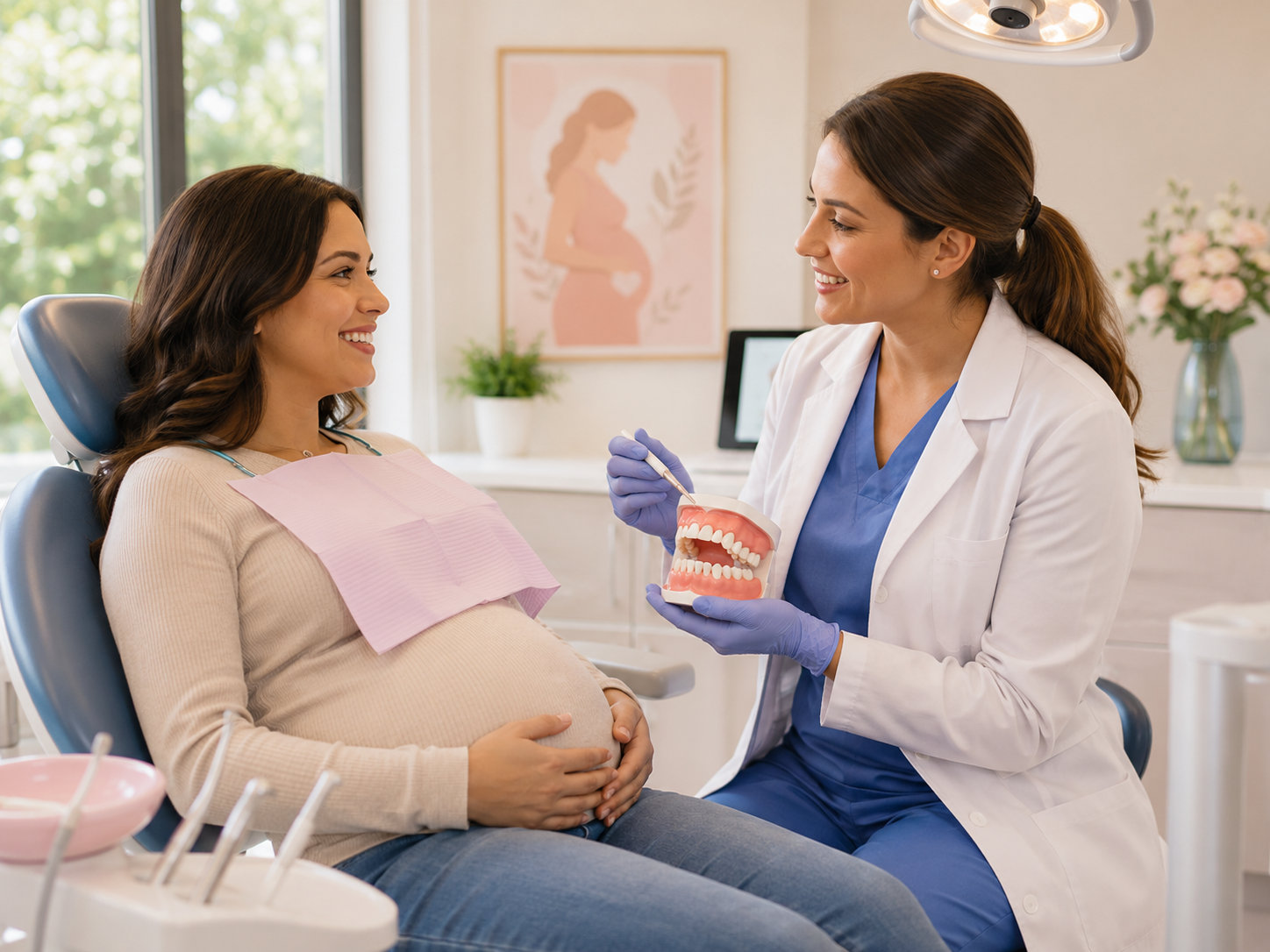
Oral health, periodontal inflammation, airway health, and pregnancy outcomes are deeply connected.
Dr. Cannon emphasized that oral health is systemic health. The mouth is not separate from the body, and the oral microbiome plays a significant role in inflammation, immune function, pregnancy outcomes, and infant development.
During pregnancy, hormonal changes can alter the oral environment and increase the growth of certain periodontal pathogens. When oral dysbiosis and periodontal inflammation are present, the inflammatory burden may affect maternal health and potentially contribute to pregnancy complications.
This is especially relevant because periodontal disease and obstructive sleep apnea often overlap. Both conditions are associated with inflammation, vascular stress, and systemic health consequences.
For dental professionals and hygienists, this reinforces the importance of supporting women before and during pregnancy with:
- Oral health screening
- Periodontal assessment
- Airway screening
- Nasal breathing evaluation
- Nutritional guidance
- Microbiome education
- Referral when sleep-disordered breathing is suspected
The Maternal Microbiome and Infant Health
One of the most important themes in Dr. Cannon’s presentation was the role of the maternal microbiome.
The oral microbiome influences the gut microbiome, nasal microbiome, placental microbiome, and ultimately the infant’s developing microbiome. A healthy maternal microbiome may support immune development, digestive health, airway function, and overall infant resilience.
When the maternal microbiome is disrupted, the infant may be more vulnerable to challenges related to inflammation, immune function, feeding, allergies, gut health, and airway development.
Dr. Cannon discussed the importance of beneficial bacteria, prebiotics, probiotics, and dietary patterns that support microbial balance. He also emphasized how added sugar, ultra-processed foods, preservatives, mouth breathing, and oral dysbiosis can negatively affect the microbiome.
For airway professionals, this matters because the microbiome can influence nasal breathing, tonsillar and adenoid health, oral inflammation, immune response, and the child’s ability to breathe comfortably through the nose.
Mouth Breathing, Nasal Breathing, and the Microbiome
Mouth breathing is not just a habit. It can alter the oral environment, increase dryness, change microbial balance, contribute to dental disease, and influence airway inflammation.
Dr. Cannon explained that the oral, nasal, and gut microbiomes are connected. When nasal breathing is impaired, mouth breathing may increase oral dysbiosis. Oral dysbiosis may then affect the nasal and gut microbiome, creating a cycle that can worsen inflammation and airway dysfunction.
This is especially concerning in children because chronic mouth breathing is associated with:
- High narrow palate
- Altered craniofacial growth
- Increased dental caries risk
- Gingival inflammation
- Sleep-disordered breathing
- Poor tongue posture
- Orthodontic relapse risk
- Myofunctional disorders
- Behavioral and developmental concerns
For pregnant mothers, nasal obstruction and sleep-disordered breathing may also affect oxygenation, sleep quality, blood pressure regulation, and fetal development.
Airway Screening Should Start Earlier
Airway health is often addressed only after symptoms become obvious. A child begins snoring, grinding, mouth breathing, struggling with attention, developing a narrow palate, or showing signs of sleep-disordered breathing.
Dr. Cannon’s presentation challenges providers to think earlier.
Instead of waiting until the child presents with airway symptoms, healthcare professionals can begin by screening mothers before and during pregnancy.
Important questions may include:
- Do you snore?
- Did your snoring begin or worsen during pregnancy?
- Do you wake up tired?
- Do you breathe through your mouth at night?
- Do you wake up with dry mouth?
- Do you have nasal congestion?
- Do you have high blood pressure during pregnancy?
- Do you have gestational diabetes?
- Do you have periodontal inflammation or bleeding gums?
- Do you have a history of sleep apnea?
These questions are simple, but they may help identify patients who need further evaluation.
The Role of Dental Hygienists and Dental Teams
Dr. Cannon emphasized that dental hygienists and dental teams are in a pivotal position to support women of childbearing age.
Many women see their dentist or hygienist more regularly than other healthcare providers. This creates an opportunity to educate patients about the connection between oral health, airway health, sleep, pregnancy outcomes, and infant development.
Dental teams can help by:
- Screening for periodontal disease
- Asking about snoring and sleep quality
- Identifying mouth breathing
- Supporting oral hygiene before pregnancy
- Discussing nutrition and sugar exposure
- Educating about xylitol and oral health support when appropriate
- Encouraging medical evaluation for suspected sleep apnea
- Collaborating with OB-GYNs, sleep physicians, ENTs, and airway professionals
Airway screening should not be reserved only for children with obvious craniofacial concerns. It should be part of preventive healthcare.
Sleep Apnea in Pregnancy: Treatment Considerations
When pregnancy-induced obstructive sleep apnea is suspected, referral for appropriate evaluation is important. Dr. Cannon discussed that home sleep apnea testing may be a useful and practical option for many pregnant patients when clinically appropriate.
Treatment may include:
- Medical sleep evaluation
- CPAP therapy
- Oral appliance therapy in select cases
- Nasal breathing support
- Nutritional and microbiome support
- Management of inflammation
- Collaboration between dental and medical providers
Because pregnancy is a time-sensitive developmental window, early identification matters. Waiting until after delivery may mean missing an opportunity to support maternal and fetal health.
Why This Matters for Pediatric Airway Development
Many airway-focused professionals see children with mouth breathing, narrow arches, retrognathic mandibles, high palates, feeding issues, tongue dysfunction, enlarged tonsils and adenoids, sleep-disordered breathing, and myofunctional disorders.
Dr. Cannon invited providers to ask a deeper question:
Could some of these concerns begin before birth?
Research discussed in the presentation suggests that maternal sleep-disordered breathing and intermittent hypoxia may influence fetal growth, mandibular development, craniofacial structure, and neurodevelopmental outcomes.
This does not mean every pediatric airway issue is caused by pregnancy-induced sleep apnea. It does mean that maternal airway health should be part of the bigger conversation.
For providers working with children, birth history and maternal pregnancy history may offer important clues.
Key Takeaways for Healthcare Professionals
- Pregnancy-induced sleep apnea is underrecognized and should be taken seriously.
- Snoring during pregnancy is a clinical clue, not just a normal pregnancy symptom.
- Maternal oral health, periodontal inflammation, and the oral microbiome can influence systemic health and pregnancy outcomes.
- Mouth breathing affects the oral and nasal microbiome and may contribute to airway dysfunction.
- Dental hygienists and dental teams are in a unique position to screen women before and during pregnancy.
- Airway health begins before birth, and prevention should start earlier.
- Interdisciplinary collaboration is essential between dentistry, medicine, sleep, OB-GYN, pediatrics, lactation, myofunctional therapy, and airway-focused care.
The Airway Circle Perspective

The future of airway care begins with earlier screening, better questions, and interdisciplinary collaboration.
At Airway Circle, we believe airway health requires a whole-body, interdisciplinary perspective. Pregnancy-induced sleep apnea is not only an obstetric issue. It is also an airway issue, an oral-systemic health issue, a microbiome issue, and a pediatric development issue.
Dr. Mark Cannon’s presentation reminds us that healthcare professionals have the opportunity to intervene earlier, educate more effectively, and support healthier outcomes for both mothers and children.
When we screen for airway dysfunction before symptoms become severe, we shift from reactive care to preventive care.
That is the future of airway health.
Final Thoughts
Pregnancy-induced sleep apnea should be part of the airway health conversation. Snoring, mouth breathing, oral inflammation, periodontal disease, nasal obstruction, and microbiome disruption during pregnancy may have implications for both maternal and child health.
For healthcare professionals, the call to action is simple:
- Ask better questions.
- Screen earlier.
- Collaborate more.
- Educate women before pregnancy.
- Support nasal breathing, oral health, sleep health, and microbial balance.
When we begin airway care before birth, we create the possibility for healthier breathing, better sleep, improved oral development, and stronger long-term outcomes.
Need Guidance With Airway, Sleep, or Myofunctional Therapy?
Finding the right support for airway health, breathing, sleep, tongue function, or oral restrictions does not have to feel overwhelming. With the right guidance, patients and providers can better understand the clinical picture and explore the next best steps.
Whether care involves myofunctional therapy, airway-focused dentistry, sleep evaluation, tongue-tie assessment, nasal breathing support, or referrals to the right provider, the goal is to improve function and quality of life.
Your journey to better breathing, better sleep, and better oral function starts here.