
TMJ Considerations in Airway Development and Function
Jul 05, 2026
The TMJ plays an important role in jaw growth, airway support, oral function, posture, and sleep.
Airway health is not only about the nose, throat, tonsils, or sleep study results. For many patients, especially children in active growth and development, the temporomandibular joint, or TMJ, may play a critical role in craniofacial growth, mandibular position, occlusion, posture, sleep-disordered breathing, and long-term airway function.
In an Airway Circle Thursday Night Live presentation, Dr. Michelle Weddle shared an important clinical perspective on the relationship between TMJ health, airway development, sleep-disordered breathing, myofunctional therapy, and craniofacial growth.
Her message was clear: airway-focused providers need to understand the TMJ because the joint may influence how the face grows, how the mandible develops, how the airway is supported, and how patients compensate when breathing is compromised.
For dentists, orthodontists, myofunctional therapists, hygienists, speech-language pathologists, sleep professionals, and other healthcare providers working in airway health, TMJ screening should be part of the larger clinical conversation.
Why the TMJ Matters in Airway Health
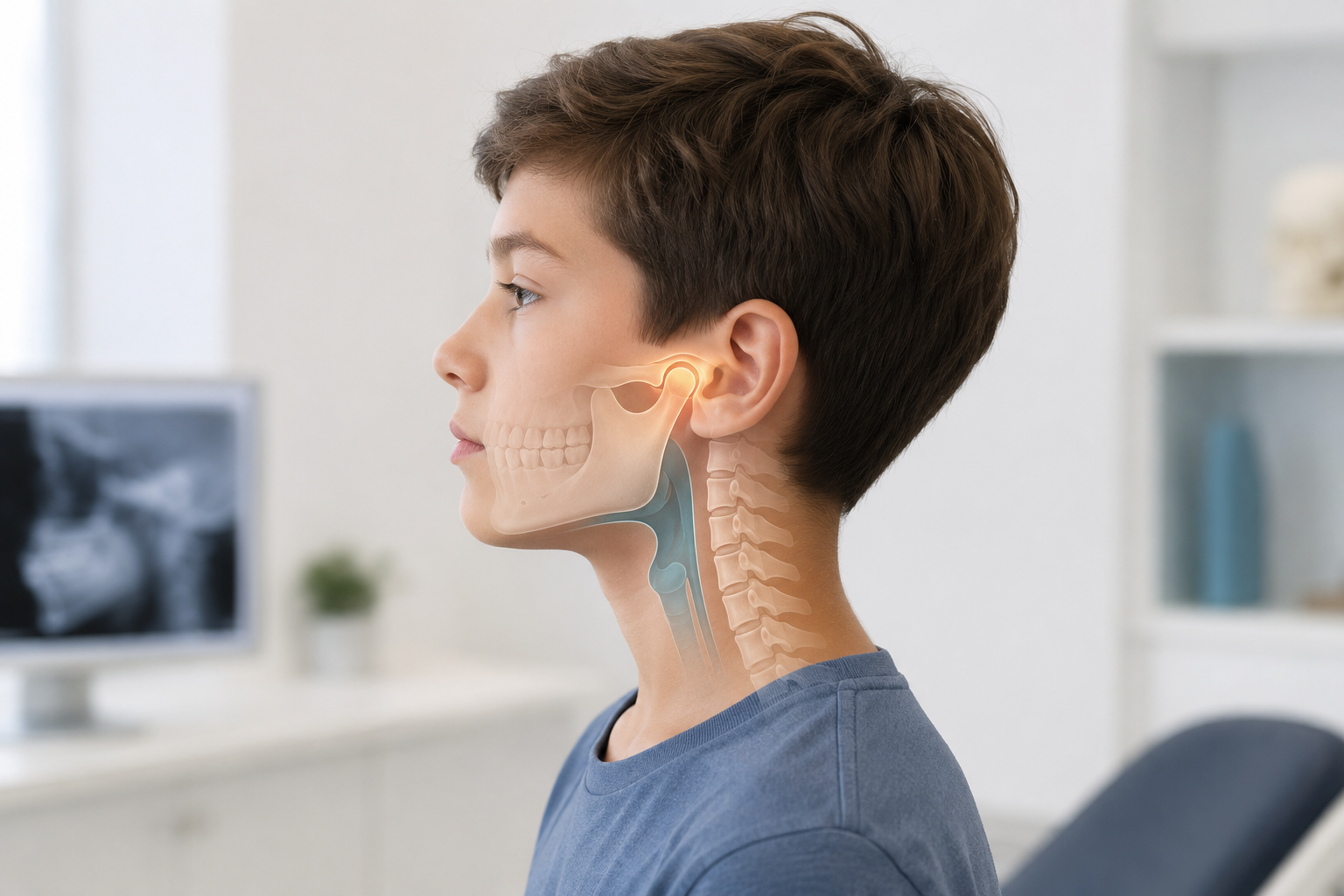
Mandibular position, craniofacial growth, and airway space are closely connected.
The TMJ is the joint located in front of each ear, where the mandible connects to the skull. It includes the condyle, the fossa, the articular disc, retrodiscal tissue, muscles, ligaments, and surrounding structures.
When the TMJ functions well, the jaw can open, close, translate, and move laterally with coordination. When the joint is compromised, patients may present with clicking, popping, pain, limited opening, deviation on opening, clenching, grinding, headaches, jaw tension, or altered mandibular growth patterns.
In airway patients, this becomes especially important because the mandible is directly related to airway space. A retrognathic mandible, narrow arches, deep bite, crossbite, or altered craniofacial growth pattern can reduce airway support and increase the risk for sleep-disordered breathing.
Dr. Weddle emphasized that TMJ health, craniofacial development, and airway function cannot be evaluated in isolation.
Key Takeaways for Airway-Focused Healthcare Professionals
1. Dentists and Dental Teams Are in a Unique Position to Screen for Airway Risk
Dental professionals often see children and adults regularly, which gives them a valuable opportunity to identify early signs of airway dysfunction.
Dr. Weddle referenced the importance of screening for clinical signs such as tonsillar hypertrophy, crossbite, convex facial profile, retrognathic mandible, worn dentition, narrow arches, tongue restriction, and sleep-disordered breathing symptoms.
These are signs that may be visible during routine dental, orthodontic, hygiene, or myofunctional evaluations.
Healthcare professionals should be looking for:
- Mouth breathing
- Snoring
- Restless sleep
- Tonsillar hypertrophy
- Crossbite
- Narrow maxillary arch
- Convex facial profile
- Retrognathic mandible
- Deep bite
- Worn dentition
- Clenching or grinding
- Forward head posture
- Poor tongue posture
- Limited oral function
Early identification can help guide appropriate referrals and support better long-term outcomes.
2. TMJ Injury May Affect Craniofacial Growth
One of the most important points from Dr. Weddle’s lecture was the relationship between TMJ injury and mandibular growth.
The mandibular condyle acts as a growth center. If the TMJ is injured during childhood, growth of the mandible may be affected. This may contribute to asymmetry, altered ramus length, retrognathic mandibular development, malocclusion, and airway vulnerability.
Historically, many providers believed that malocclusion caused TMJ problems. Dr. Weddle explained that newer imaging and clinical observation suggest the opposite may also be true: TMJ changes or injury may happen first and contribute to altered jaw growth and malocclusion.
This is especially relevant in children who have had falls, chin trauma, facial injuries, clenching, grinding, or repetitive microtrauma.
For airway providers, this means a retrognathic mandible or developing malocclusion should not be viewed only as an orthodontic issue. The TMJ may need to be evaluated.
3. Clicking and Popping Are Clinical Clues
A TMJ click is not just a noise. Dr. Weddle explained that clicking is often related to disc displacement with reduction, meaning the disc is displaced and then returns to position during movement.
When the disc does not reduce, the joint may become more restricted, and the patient may experience limited opening, deviation, pain, or degenerative changes.
Common signs of TMJ dysfunction include:
- Clicking
- Popping
- Pain in or around the joint
- Muscle tenderness
- Limited opening
- Deviation on opening
- Reduced lateral movement
- Difficulty chewing
- Jaw fatigue
- Headaches
- Signs of clenching or grinding
For healthcare professionals, these signs should prompt further screening and referral to a dentist or specialist trained in TMJ diagnosis and management.
4. Airway Patients May Place More Demand on the TMJ
Patients with airway compromise often compensate. They may posture the head forward, clench, grind, or move the jaw during sleep in an attempt to maintain airway patency.
These compensations can increase load on the TMJ and surrounding musculature.
Dr. Weddle explained that some patients may have underlying TMJ problems that are not symptomatic until the system is stressed. For example, a patient may begin using an oral appliance for sleep apnea or airway support, and TMJ symptoms may emerge because the joint was already vulnerable.
This is why TMJ screening is so important before oral appliance therapy, orthodontic treatment, expansion, myofunctional therapy, or other airway interventions.
5. Posture, Airway, and TMJ Are Connected
Forward head posture is frequently seen in airway patients. It may be a compensation to open the airway, but it can also influence mandibular position and condylar position.
Dr. Weddle discussed research showing that forward head posture can move the condyle posteriorly and may increase activity in muscles such as the masseter and digastric muscles.
In pediatric patients, posture can provide important clues. Forward head posture, shoulder asymmetry, mandibular deviation, and altered oral posture may all point toward a larger airway and TMJ picture.
For myofunctional therapists and airway-focused providers, posture should be part of the evaluation.
6. Range of Motion Screening Is Simple and Valuable
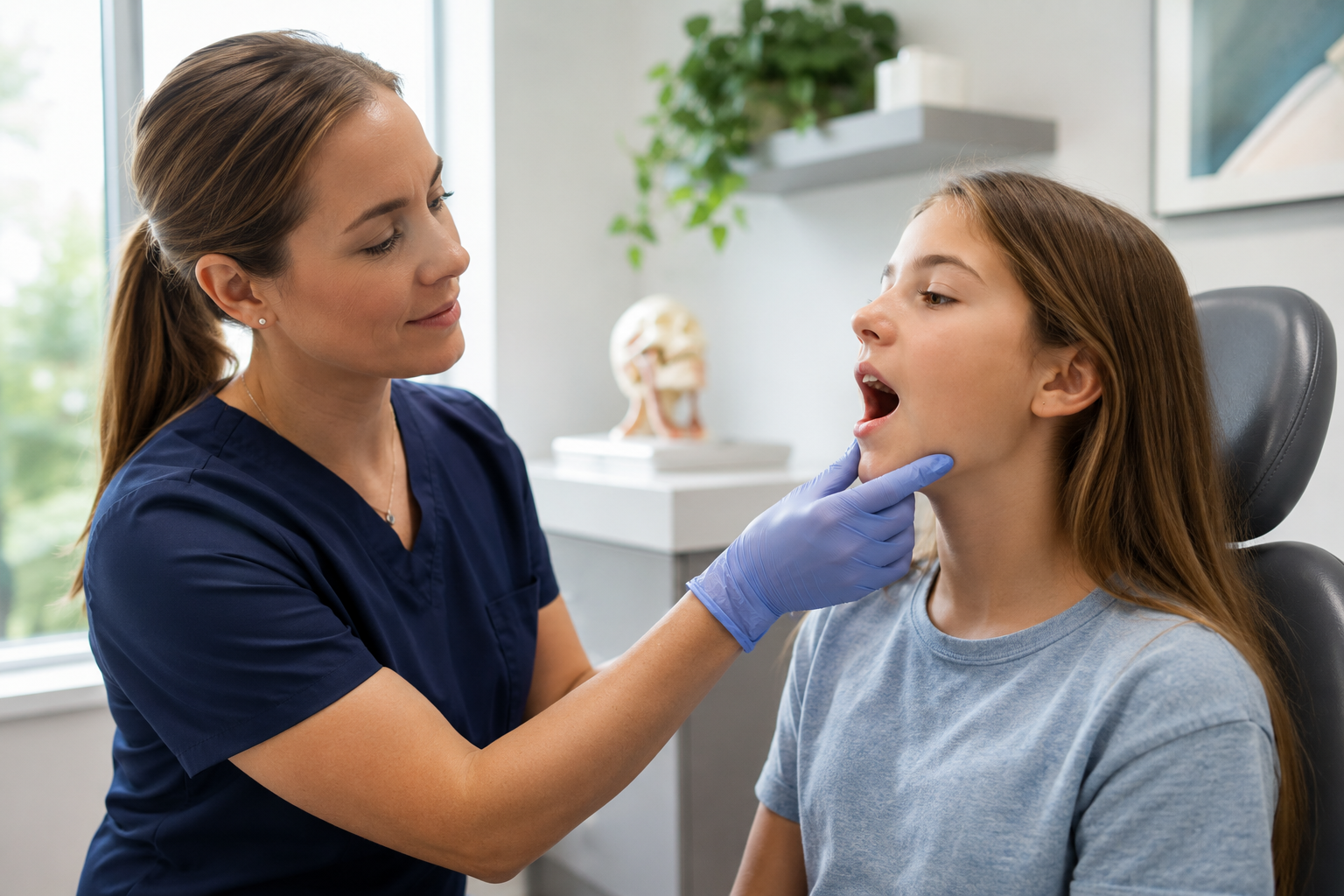
Simple range-of-motion screening can help providers identify when further TMJ evaluation may be needed.
Dr. Weddle emphasized that providers can screen TMJ function by evaluating mandibular range of motion.
Important clinical observations include:
- Maximum opening
- Lateral movement to the right
- Lateral movement to the left
- Deviation during opening
- Pain with movement
- Clicking or popping
- Midline shifts
- Limited movement
When a patient opens and the jaw deviates to one side, the jaw often points toward the joint that is not translating well. When lateral movement is restricted, the opposite TMJ may be involved.
For example, if the patient has limited movement to the right, the left TMJ may not be functioning well. If the patient has limited movement to the left, the right TMJ may be involved.
This type of screening does not replace diagnosis, but it helps providers identify when referral is appropriate.
7. CBCT and MRI Provide Different Information
Dr. Weddle also explained the difference between CBCT and MRI when evaluating the TMJ.
CBCT is useful for evaluating bone. It can show condylar shape, asymmetry, degenerative changes, bone remodeling, and structural changes that have already occurred.
MRI is useful for evaluating soft tissue. It can show the disc, inflammation, and earlier soft-tissue changes that may not be visible on CBCT.
A helpful way to think about this is:
- CBCT shows what has happened to the bone.
- MRI helps evaluate what may be happening in the soft tissue.
For comprehensive TMJ evaluation, both may be useful depending on the patient’s symptoms, clinical findings, and treatment plan.
8. Myofunctional Therapy Is an Important Part of Comprehensive Airway Care
Dr. Weddle highlighted the importance of collaboration with myofunctional therapists. In her practice, patients receiving orthodontic care, TMJ care, or sleep-related care often receive some level of myofunctional therapy.
This reinforces a critical point for airway professionals: structure and function must be addressed together.
Myofunctional therapy can support:
- Nasal breathing
- Tongue posture
- Lip seal
- Swallowing patterns
- Oral rest posture
- Chewing function
- Post-treatment stability
- Sleep-disordered breathing support
- Oral appliance and orthodontic outcomes
However, if a patient has TMJ instability, pain, limited mobility, or significant joint changes, these factors must be considered when planning therapy.
Clinical Red Flags to Watch For
Healthcare professionals should consider further TMJ and airway evaluation when patients present with:
- Retrognathic mandible
- Convex facial profile
- Deep bite
- Crossbite
- Narrow arches
- Mandibular asymmetry
- Uneven ramus height
- TMJ clicking or popping
- Jaw deviation on opening
- Limited mouth opening
- Reduced lateral movement
- Jaw pain or muscle tenderness
- Bruxism or clenching
- Headaches
- Forward head posture
- Shoulder asymmetry
- Mouth breathing
- Snoring
- Restless sleep
- Sleep apnea symptoms
- Poor orthodontic stability
These signs may indicate that the patient needs collaborative care involving a dentist trained in TMJ, an airway-focused orthodontist, a myofunctional therapist, ENT, sleep physician, physical therapist, or other appropriate provider.
The Airway Circle Perspective

Airway care works best when providers collaborate across TMJ health, sleep, orthodontics, myofunctional therapy, posture, and oral function.
At Airway Circle, we believe airway health requires a collaborative, interdisciplinary approach. TMJ dysfunction, sleep-disordered breathing, craniofacial development, tongue function, oral restrictions, posture, and myofunctional patterns are deeply connected.
Dr. Michelle Weddle’s presentation reminds us that the TMJ is not a separate issue from airway health. It may be one of the critical pieces influencing how a child grows, how an adult compensates, and why some patients struggle with breathing, sleep, pain, or function.
When providers understand the relationship between TMJ health and airway development, they can screen earlier, refer more appropriately, and support more comprehensive treatment planning.
Final Thoughts
TMJ considerations should be part of airway health evaluation, especially in children with developing craniofacial structures and adults with sleep-disordered breathing, bruxism, jaw pain, malocclusion, or postural compensations.
The TMJ can influence mandibular growth, occlusion, airway support, oral function, and treatment outcomes. For healthcare professionals, recognizing the signs of TMJ dysfunction may help uncover an important missing piece in the patient’s airway story.
The future of airway care is not isolated treatment. It is collaboration.
By integrating TMJ screening, myofunctional therapy, airway-focused dentistry, orthodontics, sleep medicine, and appropriate referrals, healthcare professionals can better support patients with breathing disorders, sleep apnea, oral dysfunction, and craniofacial growth concerns.
Need Guidance With an Airway or Myofunctional Therapy Case?
Finding the right support for airway health, breathing, sleep, tongue function, TMJ concerns, or oral restrictions does not have to feel overwhelming. With the right guidance, you can better understand the clinical picture and explore the next best steps.
Whether care involves myofunctional therapy, airway-focused dentistry, orthodontics, TMJ evaluation, tongue-tie assessment, sleep support, or referrals to the right provider, the goal is to improve function and quality of life.
Your journey to better breathing, better sleep, and better oral function starts here.